Life is short,have fun!!!

Lifestyle, Travel & Photography. If you want a lifetime memory, take a photo.

Archive for the month “May, 2012”

BOKO HARAM: A war caught in ambiguity – Alkasim Abdulkadir

Alkasim Abdulkadir an experienced international freelance journalist blogs about his first encounter with the Boko Haram spokesman Abul Qaqa;

I remember when news filtered in that Nigeria’s former President –Olusegun Obasanjo had visited the family of Yusuf Mohammed, Boko Haram’s ideological leader killed under extrajudicial circumstances by the State. Obasanjo was not the President his successor Umaru Yaradua was. As the piece of news settled in I wonder what was going through the minds of the upper echelon of the group. During the telephone interview I had with the spokesperson of the group Abul Qaqa for CNN I had asked him if the group was willing to negotiate. He had remarked that even the Prophet had laid down guidelines before negotiating with his adversaries; in their case he said only the Federal Government’s unconditional release of all their members held captive can guarantee a step to the process of negotiations.

The twelve minutes interview was the most courageous act I had ever done in my entire life, as I asked shakily –choosing my words carefully I tried to reconcile the carnage I had seen at the UN building bomb site. I struggled to reconcile the voice on the phone sounding almost serenely and courteous as he gave me the details of Mohammed Abul Bara  the 27 years old man from Yobe who had driven the Honda Accord car loaded with explosives. The detail shocked me to no end. Aside the shock it also meant outside the group this was the first time they were revealing the identity of the UN House bombing to any one! It was  I scribbled fast and hard –my hand trembling. I asked some more questions forgetting others that had formed in my mind. When I asked what was the rationale of their acts he quoted in Arabic Surah Tauba Verse 14 which states: Fight them; Allah will pinish them by your hands and bring them to disgrace, and assist you against them and heal the hearts of a believing people.

This is the rallying point of all the attacks they had carried out all year long. It is the thinking and motivation of Mohammed Manga as he attempted to ram his car into the police headquarters that resulted in his death and the injuries of several policemen. It is sadly also the motivation of several hundreds of members of Boko Haram. In the words of Abul Qaqa, they are mere mortals being used by God to fight the injustice and inequality in the land; an injustice in which the UN known for its global oppression was partnering with the Nigerian government.  Before he dropped the phone he had a word for journalists and radio stations –they most stick to facts of the matter. They should get in touch with them to verify issues before going to the Press. Boko Haram didn’t want to be on a collision course with media he added. I closed my note pad and breathed in and out. The phone call sounded surreal as the images of the UN House flashed again before me. After cross-checking editorial ethics CNN released the news and the global media retold the narrative. The Security agencies released the pictures of two people that had been arrested and a man hunt for a called Mamman Nur ensued.

A typical scenario to the pointer of a city under siege is Fridays at the Abuja Central Mosque, if one was ever in doubt of the clear and present danger the scene painted here brings it closer home. That of semi-automatic gun wielding SS operative asking motorists not to park beside the mosque aided by a member of the Anti-Terrorist Squad  (ATS) checking those with bags while operatives others sit at alert in a van with the lettering ‘Anti-bomb squad’.

It’s a simple fact that ours is a case of a reactive intelligence, when those the security agents are up against are always ahead of the curve and are left to always play catch up. Our intelligence needs to move to more covert style operation, not the obvious I-am-an-S-S-guy type that we have around. This coupled with a proactive community intelligence gathering technique can change the tide of things. This should not only be applicable to militancy or terrorism alone but it should be applicable to the unsolved assassinations and even armed robberies that have bedevilled the country.

Our total lack of preparedness to tackle disasters came to fore in the wake of the UN bombing, the underbelly of our emergency response was exposed to highlight our ineffectual state.  This is despite the fact we don’t suffer from raging bush fires, tsunami, hurricanes, mudslides, volcanic eruption and earth quakes. The mere meaning of the word ‘emergency’ points to the fact that it is unexpected, but it is as if the denotation is lost on our security agencies and health care system. One of the biggest problems is not that we don’t know what to do, but how to do it. I remember begging and shouting at two policemen to allow some Red Cross officials enter the UN premises after they had begged on end. Another instance was when an Army General accosted a Civil Defence man walking with Sniffer dogs and barked at him ‘who authorized him to bring the dogs to the scene’.   The entire FCT health system which is a model to the rest of the country wasn’t prepared for an emergency of this magnitude. It didn’t expect 8 intensive care patients and more the 70 people with various degrees of injuries from the blasts as such the blood bank soon started calling for donations to augment their supply. As residents heeded the call to donate blood this in turn angered the crowd of sympathisers that had already gathered at the National Hospital.

At the UN House blast site near the epicentre rescue operation was in full uncoordinated swing with members of the FRSC disagreeing with the fire service and the  Anti-Terrorist Squad watching in disbelief, the Army and Police all trying to do  their to secure the perimeter of the building. The bottom line remained that their efforts weren’t coordinated as a team on rescue and evacuation. There were too many weak links. I remember a NEMA top official complaining that people were tampering with the evidence; I had to tell him as the NEMA official in charge of the operation he should ask them to leave and come behind the accident tape barrier. However, it was a lot of courage for the men who did the rescue and evacuation, ferrying so many injured and dead people, gathering mangled flesh in body bags required more than a requisite training but also deep humanity.

The hospitals on the other hand were and still ill equipped and under staffed by an ill motivated work force. The latter coupled with an inept and sluggish bureaucracy is the distressing quartet that is Nigeria’s red tape to a viable health sector.

The sad aspect of the aforementioned is how doctors in Nigeria get paid pittance and end up working twice as hard as they should. It is this scenario that makes doctors join the brain drain wagon to practice in other climes where their trade is highly appreciated and well remunerated.   This singular absence of inspiration is the reason for the impersonal and near loathsome nature of nurses, midwives and other paramedics towards patients.

Information management during emergencies is one area that needs tightening NEMA and the security agencies should set up a Joint Communication and Data Centre that will be authorised to give out reliable information to news agencies, relatives and the general public. Not until FCT PRO Jimoh Moshood rallied the journalists present for an on the spot briefing by Police Commissioner Micheal Zoukomor -the first official statement almost 4 hours after the explosion; before then we had gathered the bits of evidence and at some point journalists had more information than the officials. Even though Channels, AIT, ITV and even NTA were on ground and had started covering the blast.  The Nigerian Television Authority, Africa’s largest TV network located about 20 minutes from the blast site was showing the Osogbo Festival while I had already gone live on CNN. I received a call from Kristoffer Rønneberg of Aftenposten, a Norwegian Newspaper. They called after seeing my tweet on the death of a Norwegian lady later identified as Ingrid Midtgaard. They calls kept coming from BBC Wales, BBC TV, CNN Wires and later at about 8 pm I was a guest on the BBC Have Your Say Program. The last interview came at 10 PM on France 24. It is inexcusable that we wait for others to tell our people the narratives of our tragedy. The days of NTA’s editorial guidelines asking it to be pro-government should have ended in 1999.

I have always advocated for dialogue in this on going war in which we are not ready for. Military action as exemplified by similar examples in other parts of the world has the tenacity to breed more foot soldiers. Each deadlier than the last; pacifism is also a strategy.

The army of unskilled, uneducated, unemployable disenchanted young men growing in Nigeria –especially in Northern Nigeria must be giving hope beyond measure. The only war we can fight against future insurrection and the only fruitful engagement we can with future armies that may rise in this nation is to deliver continuously on the mandate of good governance and accountability. We must pray hard in order to get it right. Afterwards we must get it right.

This article first appeared in Ynaija magazine in 2011.

Alkasim Abdulkadir: has worked as a Producer for the BBC-WST he has also contributed stories to CNN, BBC and France24. He also contributes regularly to the Nigerian Dialogue online platform.
Canadians Dominate World’s 10 Strongest Banks – Bloomberg

http://www.bloomberg.com/news/2012-05-02/canadians-dominate-world-s-10-strongest-banks.html

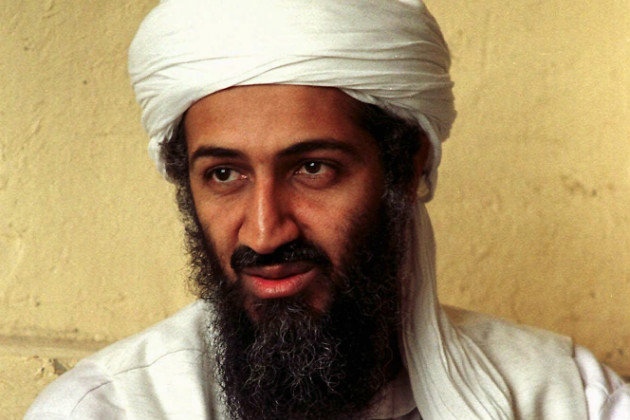
Osama bin Laden documents released: trove of more than 6,000 Al-Qaida files declassified

More than 6,000 documents seized during the May 1, 2011 raid that killed Osama bin Laden were released on Thursday by West Point’s Combating Terrorism Center, giving the public a rare glimpse into the Al-Qaida leader’s terror plans and largely solitary life.

The raw documents–both the Arabic originals and versions translated into English–were posted on the center’s website shortly before 9 a.m. ET.

As was previously reported, the documents show that bin Laden had ordered the assassinations of President Barack Obama and U.S. Gen. David Petraeus, but did not have the resources to carry out the killings.

“Obama is the head of infidelity and killing him automatically will make Biden take over the presidency,” Bin Laden wrote in a message to one of his top lieutenants, the Washington Post noted. “Biden is totally unprepared for that post, which will lead the U.S. into a crisis.”

“What you get is that bin Laden would come up with an idea but it was a very broad aspirational idea,” an administration official told NBC ahead of the West Point release. “And then he’d turn it over to somebody and there was always some sort of disconnect.”

By the end of 2010, the official added, “there was certainly a sense of loss in terms of the senior leaders that perished, a sense that the midlevel cadre had been decimated.”

Click here to to view the files on the Combating Terrorism Center website.

20120503-232047.jpg

Gunmen Attack Potiskum Cattle Market In Yobe State, Killing 34 People-AFP


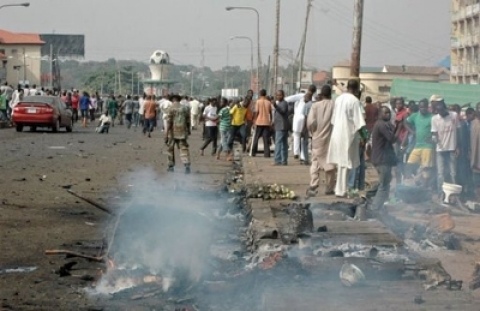
An attack on a cattle market in northeastern city of Potiskum by gunmen armed with explosives has left at least 34 dead and the toll is likely to climb, an emergency source said on Thursday.

“Thirty-four bodies were deposited at the hospital,” the official said on condition of anonymity of the attack late Wednesday in Potiskum because he was not authorised to speak publicly.

He said the toll was likely to be more than 50 dead because families were also burying relatives’ bodies without bringing them to the hospital.

A gang of gunmen with explosives have attacked a cattle market in the city of Potiskum, burning it down and leaving a number of people dead, residents and police said Thursday.

The attack late Wednesday was said to be in reprisal for an incident earlier in the day, when the gang sought to rob the market but were fought off by traders who caught one of the attackers, a police source said.

The man who was caught was doused in petrol and a tyre was placed around his neck before he was burnt to death, according to the source and residents.

“There was an attack on Potiskum cattle market yesterday by suspected armed robbers who threw explosives and burnt down the market with all the livestock,” the police official said on condition of anonymity.

“It is too early to say how many people were affected in the attack, which happened at night.”

Residents reported seeing bodies being taken away, but the number of casualties was unclear.

(AFP)
caption: A chaotic scene after a militant attack in northern Nigeria

#Nigeria Guidelines for Number Portability Released

220312T.ncc-logo.jpg - 220312T.ncc-logo.jpg

NCC logo


By Emma Okonji

The Nigerian Communications Commission (NCC) has released guidelines for the planned introduction of number portability across networks.

The new rule exempts subscribers from paying any fee that may be charged by telecoms operators, when subscribers make request to telecoms operators, asking for number porting from one network to another.

According to the guidelines released on the NCC’s website recently, a service provider is responsible for maintaining appropriate records to satisfy the billing and audit requirements of Mobile Number Portability (MNP).

Services and traffic terminated to ported numbers on an individual recipient operator’s network must be charged the same as for traffic and services terminated to non-ported numbers of the same recipient operator. Neither recipient operators nor donor operators may make a charge to the customer for porting their number.

Addressing customer care in number porting, the document explained that a customer who ports their number from one mobile service provider to another should be treated in the same way as a customer who ceases service with one mobile service provider and begins service with another.

According to the document, where customers suffer disruption to their mobile service, and it is unclear in which network the problem lies, the mobile service providers will cooperate in good faith to locate and resolve the problem.

In addressing customer complaints as regards challenges that customers may face during number porting, the NCC document stipulated that complaints specifically related to the porting process should be directed to, and be dealt with by the recipient operator who has submitted the porting transaction to the central order handling system, following their normal internal processes. Otherwise, non-porting process related complaints that relate to the provision of services to the customer should be referred to the party that is providing the contracted service that is the subject of the customer’s complaint.

In the case where it is unclear to whom the complaint should be directed and the complainer is unclear who their contracted service provider was at the particular time the issue occurred, then the complaint should be directed to the recipient operator.

The document, however, explained that the recipient and donor operators should cooperate in good faith to resolve the complaint between them and the complainer.

The objective of the guidelines, according to NCC, is to ensure protection of consumer interest through the development, monitoring and enforcement of compliance with regulations by telecommunications service providers in order to ensure better quality services, fair pricing and competition, and in line with the provisions of section 128 of the NCC Act 2003, which vests the NCC with the exclusive right to regulate numbers and number portability in Nigeria.

In telecoms parlance, number porting is the movement of subscribers’ number from one network to another without losing the original number. A customer with a particular network may decide to migrate his or her telephone number to another network, if the customer is unsatisfied with the service delivery of the initial network, and the customer does so while still retaining the initial number on the new network.

Source : Thisday

#Nigeria Naira Stable on Forex Inflow

2202F03.Naira-Notes.jpg - 2202F03.Naira-Notes.jpg

Naira notes


By Obinna Chima

The naira was stable on both the Central Bank of Nigeria’s (CBN)-regulated Wholesale Dutch Auction System (WDAS) and interbank market Wednesday due to inflow of the greenback into the system.

Similarly, the behaviour exhibited by the local currency yesterday was also attributed to an increase in the supply of the dollar by the CBN at the bi-weekly auction.

In fact, at the first WDAS session for May held yesterday, the naira closed at N155.69 to a dollar, the same amount it was at the end of Monday’s auction.

The CBN offered a total of $150 million to the 15 banks that participated in the auction. This represented an increase by 25 per cent, over the $120 million it had offered to 19 banks on Monday.

On the other hand, the local currency maintained its position at the interbank as it closed at N157.40 to a dollar, the same value it was on Monday.

The market did not open on Tuesday, due to the public holiday that was declared to commemorate the workers’ day.

Dealers said the liquidity position of the market was influenced by the sale of about $194 million to banks by two multinational oil companies. The companies were identified as Mobil and Agip.

Meanwhile, the CBN yesterday disclosed plans to auction treasury bills worth N145.05 billion next week Thursday. The bills would range between 3-month to 1-year maturities at its bi-monthly auction. Specifically, the apex bank said it would issue N32.05 billion in 91-day bills, N53 billion in 182-day bills and N60 billion in 364-day bills.

The CBN issues treasury bills regularly to tame inflationary pressure, to ensure that it reduces the volume of money supply in the economy, amongst others.

The CBN had auctioned treasury bills worth about N141 billion at the previous auction. It had sold 91-day paper, 182-day bills and 364-day bills. Yields at the previous auction fell across various tenors. This was then, driven by strong demand from offshore and local institutional investors.
“We expect the CBN to maintain tight monetary conditions and mop up excess liquidity. This means the CBN will not reduce treasury bills or Open Market Operation (OMO) rates as long as there is no turnaround in the fiscal path,” a source said.

Okorocha, The Magician by Olusegun Adeniyi

On Monday, Governor Rochas Okorocha declared a four-day holiday for workers in Imo State. According to a statement by the Commissioner for Information and Strategy, Mr. Obinna Duruji, the workers are to use this week to go to their communities and partake in the take-off of the Community Council Government (CCG), which the governor recently instituted in the state. And for this extra-constitutional fourth-tier of government, Okorocha has already approved the disbursement of N5 million to each of the communities in the 27 local councils from a subvention of N3 billion.

Of course, the N3 billion is not captured in the Imo State Appropriation Bill for 2012 which has not even been passed. But then that is a small matter in a state where the governor has practically become the sole administrator, expending public money and coming up with all manner of bizarre ideas without any legislative oversight. Almost every day now, Governor Okorocha awards multi-billion Naira contracts for roads, for schools, for hospitals, for hotels, for farms etc. and you wonder where the money to fund all these projects is coming from.

Governor Okorocha is evidently a populist and there is nothing wrong with populism except that it has to be rooted in realistic expectations. Okorocha for instance tells his Imo people that his state which still depends largely on its meagre allocation from the Federation Account is very buoyant. And with minimal internally generated revenue, he has declared free education at all levels in Imo State and has even decided to be paying salaries to primary school pupils! In fulfillment of that pledge, he actually went to some schools where the pupils lined up for him to pay them N100 each.

In Imo State today, it is one day, one promise. Okorocha is going to build a megacity in Okigwe; he will build two palm oil plantations; he will construct a 25-storey hotel; he will build three universities for the state; he will construct an ecumenical centre; and he has already taken over all federal roads in the state for which he has awarded contracts without any documentation!

I was in the United States during the April 2011 elections but I followed all the drama in Imo and actually wanted Okorocha to win. So when he did, I was very happy. Unfortunately, right from his first day in office, Okorocha started giving people cause for concerns as to whether he understands his brief as governor. I recall that as early in the day as August last year, his brand of governance was a subject of discussion at our editorial board. We marveled at some of his antics and actually did an editorial to remind him of his responsibilities. “His most notable achievement to date has been to make headline news for all sorts of gaffes. From daubing himself in blood and disguising himself ala ‘Aluwe’ while pretending to be a victim of road accident just to make a point about service delivery at the Federal Medical Centre, Owerri, to whimsical decisions on traditional and academic institutions, Okorocha is literally making a mockery of his office and does not seem to care what people think or say,” we wrote.

We were also worried about the unwieldy nature of his political appointments. In addition to 17 commissioners and 14 Senior Special Assistants, Okorocha had appointed a further 80 men and women as Special Assistants and members of various Mayoral Affairs Committees. For example, he has a Senior Special Assistant on Lagos Liaison office and a Special Assistant on Lagos Affairs; Senior Special Assistant, NDDC and Special Assistant on Niger Delta; and of course he appointed for the state a Chief Comedian who is also a Special Assistant! And while swearing them in, the governor said they would have to source for funds with which to run their offices thus effectively turning them to no more than executive touts.

On March 24 this year, Okorocha was in Kosovo where he signed a Memorandum of Understanding (MoU) with their government to construct housing estates, establish an agro-processing plant and build an independent power plant, all in Imo state. When completed, according to the governor, this planned power plant would supply the state with 500 megawatts of electricity! But as I watched the video clip on AIT, something struck me as odd. His host, the Deputy Prime Minister of Kosovo, Mr. Behgdey Pacconi, had spoken in Albanian, the main official language of his country thus needing an interpreter. When it was the turn of Okorocha to respond, he apparently felt he also needed an interpreter so he decided to speak in Igbo language. A former senator on his delegation now had to interpret into English for the Kosovo interpreter to now translate into Albanian. The whole episode reminded me of ‘Icheoku’, arguably one of the best television drama series in the eighties.

But Okorocha is not without redemption as he is also a passionate man. I guess that is why he wants to achieve results quickly. But he must also realize that this is a democracy where planning, transparency and processes are also important for him to leave any lasting legacy. He cannot continue to run his administration by whims as is the case right now.

There is no doubt that Governor Okorocha came to office with a popular mandate and I believe he is in haste to make a difference in his state. But to do so, he must understand that running a government requires having in place proper structures which will enable him to promote transparency and accountability. He must also align the direction and goals of his administration within the available. I sincerely want Governor Okorocha to succeed but for him to do that, he needs to sit down to reflect on the kind of legacy he wants to bequeath to his state when his tenure is done.

Courtsey – Thisday

But Where is Happyboy?

Olusegun-Adeniyi-Back-Page.jpg - Olusegun-Adeniyi-Back-Page.jpg

The Verdict according to Olusegun Adeniyi. Email, olusegun.adeniyi@thisdaylive.com.


The moment Yemi Akinsuyi saw me inside the premises of THISDAY Abuja office that looked more like a scene out of Iraq, she said, “oga, we cannot find Happyboy. He was inside the premises when the bomb exploded and now he is not picking his calls.”

Happyboy Ohije is one of those circulation boys you find in newspaper houses. They are called inserters since they help to collate the papers when it is being printed but they also run all manner of errands for people in the newsroom. With minimal education, Happyboy is very dutiful and everyone knew I was fond of him. He had come to me one day that he had a challenge concerning his education, a rather moving story but I liked the confidence with which he approached me and the manner in which he presented his problem. After offering him some little assistance, we became close, especially since he told everyone about my intervention.

Last Thursday, it was quite natural that I would be very worried about the fate of Happyboy. It turned out that he was sleeping when the bomb exploded and he eventually emerged from the rubble in a pool of his blood. But his was not the only miracle. Nurudeen, the security man seated at the exact spot where the suicide bomber exploded the vehicle is injured but alive. Incidentally, we did not know at the time and I recall one security man asking me: “Nurudeen’s wife has been calling me repeatedly and I cannot pick. What do I tell her?” His colleague by the gate, Christopher Sadiq was, however, not so lucky. Neither were some of the mechanics who had set shop behind THISDAY premises. They died along with a passer-by as the vehicle exploded.

The whole drama started for me at about 11.08 when I got a call from an hysterical Ms Avershima Ahenjir, an advert executive, saying, “they have just bombed our office.” According to what I was told when I reached the office, a vehicle came in to deliver tiles that was meant for some work at about 11am. While they were still trying to offload the tiles, the suicide bombers drove into the premises and the rest, as they say, is now history. But as everyone pointed out to me last Thursday, I would have been caught by the bombing but for the fact that I was preparing for my trip to Ibadan for the burial of my mother-in-law later that day.

I have watched on YouTube the video clip released by Boko Haram on how THISDAY was bombed, especially the moment when the vehicle entered our premises and exploded. Incidentally, the clip displayed my photograph along with my statement following the incident. I have also read their declaration of war on the media but I fail to understand why. The charge is that we have taken sides with the Nigerian state. But do we have any choice in this matter?

In an unusual backpage editorial last Sunday, the Trust newspaper put the issue in perspective: “A violent campaign to target and kill security agents, to overthrow the Constitution of the Federal Republic and ultimately to dismember Nigeria cannot be supported by the Nigerian news media, which derives a lot of its legitimacy, protection and privileges from the same Constitution. As for Nigeria itself, there cannot be a ‘Nigerian media’ if there is no Nigeria”.

That exactly is the position to which all journalists subscribe but many of us are becoming increasingly worried for our country. It is therefore incumbent on all men of goodwill who can intervene to end this cycle of violence to do so now in the interest of our corporate existence as a nation. As for THISDAY, in my 13 years here, we have seen some dark days and have come out stronger from all the tragedies. I remember our midnight plane crash right in the middle of Maiduguri desert in 2001 when the Board of Editors decided on a “Meet the Nation” tour; the fire incident that consumed our corporate headquarters in Apapa and the death of Mr. Godwin Agbroko. In each of these events, we were shattered and broken. But we never gave up the ideal for which we stand.

Where do we stand? When Bayero University Kano was attacked last Sunday, our thoughts and sympathy were with the victims of the attack and when Jalingo was attacked the next day, we took sides with the people. On the killing field that Maiduguri has become, we are one with the innocent people of that ancient city who are now besieged. We have made that very clear. But we have also been professional in our reportage while advocating dialogue with Boko Haram, believing that any and every aggrieved Nigerian deserves a hearing. What we oppose is violence and bloodletting of innocent people for no just cause. Even at this most difficult period, we remain persuaded that common sense will still prevail in the interest of our nation and its good people

Beyond Aregbesola’s Treason Trial

Femi-Falana(1).jpg - Femi-Falana(1).jpg


Ogbeni Rauf Aregbesola, the candidate of the Action Congress of Nigeria (ACN), was elected the governor of Osun State in 2007. But since it was a “do or die” election for the Peoples Democratic Party (PDP),  its candidate, Prince Olagunsoye Oyinlola, was falsely returned by the Independent National Electoral Commission. The illegal declaration was fought in a protracted legal battle. Eventually, the Court of Appeal restored Aregbesola’s mandate after three and a half years.

Two months later, the appeal filed by the 30 chairmen elected on the platform of the PDP against the verdict of the Court of Appeal, which had ordered their removal from office, was dismissed by the Supreme Court. Having handled the case for the Osun State chapters of the Action Congress, National Conscience Party and All Nigeria Peoples Party from the High Court to the apex court, Aregbesola asked for my interpretation of the Supreme Court judgment in the case of Osun State & Ors v Action Congress & 2 Ors (2011) 10. Notwithstanding the pressure mounted on the governor by his party leaders to dissolve the council chairmen and councilors on the basis of the judgment he refused. He directed that they be allowed to remain in office since they had only one month left to complete their tenure.
The governor’s handling of two other issues confirmed his political maturity. The ACN members had vehemently opposed the appointment of a top lawyer in the ministry of justice in the state on the ground that she was used by the ousted regime to prosecute its political opponents including the governor. He made the appointment on the ground that the prosecutor was discharging her duty at the material time. In the same vein, he dismissed the objection of his party leaders on the appointment of a significant number of children and wards of PDP members in the state employment scheme. He made it clear that he is the governor the state and not the chairman of the ACN.

THE TREASON CHARGES
As far as the PDP leaders were concerned the stat Aregbesola of recruited 20,000 thugs under the pretext of job creation. It was also alleged that his decision to rebrand the state of Osun and design a flag, anthem and coat of arms were treasonable. It was, however, intriguing that the Director-General of the State Security Service, Mr. Ita Ekpeyong, who had discharged his duty without fear or favour, decided to team up with the ruling party in justifying the monstrous allegation that the governor had concluded arrangements to dismember the Federal Republic of Nigeria by excising Osun State there from. In a tendentious report  Aregbesola was alleged to be associating with a Muslim group, which is linked with the Boko Haram sect.
Although no one has referred to the specific provisions of any law violated by the governor, it is pertinent to examine the legal implications of the rebranding of Osun state in the context of the relevant laws. It is unfortunate to note that those who compiled the security report on  Aregbesola are not familiar with the constitutional history of Nigeria. Otherwise they would have found that in the First Republic, the Constitution of the Federal Republic of Nigeria existed side by side with regional constitutions and that there were regional police forces.

Apart from the embassies of the Federal Government the federating units had consulates and properties in some foreign countries.  Even under the defunct military dictatorship when to keep Nigeria one was a task that required absolute loyalty every state had their own coat of arms. At a time that there were 12 states in Nigeria it was only the western state, which established a regional Court of Appeal, which served as an intermediary court between the State High Court and the Supreme Court. But in line with the tenets of federalism the remaining 11 states did not establish any Court of Appeal. Under the current political dispensation the Olagunsoye Oyinlola Administration in Osun State set up the Customary Court of Appeal in 2010. No other state in the south-west has set up such an appellate court even though it is provided for in the Constitution.
Another ridiculous allegation is that   Aregbesola dispatched some Osun State indigenes for training in Cuba. In spite of her economic difficulties aggravated by the economic blockage imposed by the United States over 50 years ago,  Cuba is acknowledged to have excelled in the areas of education, medicine and peace keeping operations. Because of his implicit confidence in the Cuban educational system  Aregbesola sent his first son, Abdul,  to Havana for his first degree in informatics before proceeding to the United Kingdom for post -graduate studies. For over a decade, the Cuban government has awarded scholarships to scores of Nigerian youths to study in Cuba. The federal ministry of education, which administers the scholarship scheme, has always appreciated the generosity and solidarity of the Cuban government. It is curious that the SSS has not accused the Federal Government of engaging in treason by allowing Nigerian youths to acquire education in Cuba!

IN DEFENCE OF AREGBESOLA
A few weeks ago, I attended the convocation ceremony of the Ekiti state university (ESU) at Ado, Ekiti state. Unlike most universities in the country which have commercialised their honorary degrees the ESU conferred doctorate degrees honoris causas on three distinguished Africans  namely Mr. John Dramani Mahama, Vice President of Ghana, Dr. Kandeh Kolleh Yumkella, Director General of UNIDO and Professor Tekena Tamuno, former vice chancellor of the University of Ibadan.

On that occasion the anthems of Ghana, Nigeria and Ekiti State were played to mark the commencement and conclusion of the ceremony. The state governor, and  the Visitor to the university, Dr. Kayode Fayemi, was present at the occasion.  Last week,  Fayemi presented the staff of office to the Oba of my home town, the Alawe of Ilawe Ekiti, Oba Adebanji Alabi. The anthems of Nigeria, Ekiti and Ilawe were played to the delight of the audience. My wife asked me if the SSS would not accuse  Fayemi of treason for leading the audience to sing the Ekiti anthem. I reminded her that no one has ever been charged with any crime for singing the famous Egba anthem, which was composed by Fela Anikulapo’s grand father several years before Nigeria was born.
In a country where religious bodies, schools, trade unions, political parties, clubs and other friendly societies have their constitutions, anthems, mottos and emblems it is bunkum to accuse a governor of committing treason for causing a state to have a flag, coat of arms and an anthem. Indubitably, section 1(2) of the Constitution prohibits any person or a group from taking over the government of Nigeria or any part of it. Having contested and won the governorship election of Osun State  Aregbesola cannot be said to have taken government by force.

It is also submitted that the 68 items in the exclusive legislative list in the Constitution on which only the National Assembly can legislate does not include flag, coat of arms and anthem. To that extent,  Aregbesola cannot be said to have usurped the legislative powers of the federal government. Neither has his decision to call the state the “State of Osun” violated Section 3 (2) of the Constitution, which states that there shall be ” a Federation consisting of states and a Federal Capital Territory”. In the United States of America from where Nigeria copied her Constitution most of the states have their courts of appeal, supreme courts, flags, coat of arms, police forces etc. Even counties (local governments) and corporate bodies including universities have their own police or quasi military institutions without being accused of courting treason.
The attempt by the SSS to link Aregbesola with the Boko Haram sect is dangerous. It should not be taken lightly as it was deliberately designed to promote religious crisis in a peaceful environment. No doubt, Aregbesola is a devout Muslim  but certainly not a fanatic. On the day of his inauguration he led the huge crowd at Osogbo to sing many Christian songs while thanking God for restoring his mandate. Last year, I attended a public function at Osogbo presided over by the governor. Before the commencement of the event he invited a pastor, an imam and an Ifa priest to pray for Osun state and the Federal Republic of Nigeria. To the embarrassment of the Christian and Muslim members in the hall there was a prolonged ovation when the Ifa priest said prayers in undiluted Yoruba language. At the end of the programme a born again Christian friend walked up to the governor and questioned his blasphemous policy of promoting idolatry. To which Aregbesola replied “you saw the reaction of the audience. The people were not clapping for the Ifa priest. They were applauding our decision to recognise and promoting traditional religion. That is in line with section 10 of the Constitution which states that the State shall not adopt any particular religion”.
It is germane to draw the attention of security forces to section 37 of the Criminal Code Act which defines treason as the act of levying war  against the State, in order to intimidate or overawe the President or the Governor of a State, and any person involved in the offence is liable to the punishment of death. In Dokubo-Asari v Federal Republic of Nigeria (2007) 30 WRN 1 at 75 the Supreme Court held that “a charge of treasonable felony is a very serious offence and is prejudicial to national security”. The late jurist, Dr. Akinola Aguda was of the view that a person accused of treason  “must be shown to have had the intention to intimidate or overawe the President or any state governor by any physical or unlawful means”. On intimidating or overawing the President the learned author opined that it “involves creating a situation where the government feels compelled to choose between yielding to force or exposing its members or the public to a very serious danger”.
From the foregoing a charge of treason or treasonable felony cannot be sustained against Aregbesola for having a state flag, coat of arms and anthem. So far no scintilla of evidence has been adduced to show that the governor has planned to levy war against the State with a view to intimidating or overawing the President. Instead of demonising the governor he should be commended for embarking on massive job creation in a country where mass unemployment has led to unprecedented wave of armed robbery, kidnapping, terrorism and other violent crimes.

However, it is ironical that while the state security service was reading treason into the Osun State Aregbesola of treason the World Bank led officials of the federal government and 15 states to Osogbo to understand the employment generation programme of his administration.

•Falana is a lawyer and member of THISDAY Editorial Board.

-Thisday

Post Navigation