Life is short,have fun!!!

Lifestyle, Travel & Photography. If you want a lifetime memory, take a photo.

Archive for the month “May, 2012”

#Nigeria CAN to Fed Govt: stop Boko Haram now

•Oritsejafor ... yesterday •Oritsejafor … yesterday

By Gbenga Omokhunu, Abuja

Under fire from Islamist group Boko Haram’s insurgency, Christians yesterday vowed to withdraw their co-operation with the government, if the activities of the deadly sect are not checked.

Intimidation, killings, bombings and wanton destruction by Boko Haram must stop, the Christian Association of Nigeria (CAN) declared in what its President, Pastor Ayo Oritsejafor, described as “final call” to the Federal Government.

The latest attack on churches was at the Bayero University old campus in Kano on Sunday.

Worshippers were bombed and shot at by men believed to be members of Boko Haram. One Professor – Andrew Leo Ogbonyomi – and 15 others died in the attacks. The sect also on Monday infiltrated the convoy of Taraba State Police Commissioner Mr Mamman Sule. Eleven people died in that attack.

On Tuesday, Boko Haram released a video on Youtube, threatening media houses with attacks.

Oritsejafor spoke in Abuja after a three-hour meeting of officials of the association to review the security situation in the country. He said: “The church leadership has hitherto put great restraint on the restive and aggrieved millions of Nigerians but can no longer guarantee such co-operation, if this trend is not halted immediately.”

Pastor Oritsejafor said it had become irrelevant whether the root cause of Boko Haram insurgency is political, religious, ethnic or ideological, adding: “The question we have always asked is this; of the 51 years of existence of Nigeria as a nation, who have governed this country most? Most of them are from a particular section of the North. What did they do with the opportunities they had? What did they do with the resources they had? We need to ask questions. The people themselves need to ask questions.

“The Almajiris, if they could read and write and understand what is happening, need to ask questions. The realities are these: we know that the bottom of all this is a radical religious ideology. We want that settled but as it is right now, it has gone beyond trying to address why this happened or where it is coming from. It has gone beyond whether it is political or about poverty. The truth is that this situation must stop.

“I will now make a final call, a final call; I repeat. I will now make a final call to the Nigerian government to use all resources available to it to clearly define and neutralise the problem as other nations have done.

“It is the ideas that people coin from the Koran and are being used to terrorise the world. Now we cannot deny that these are Muslims. That is not to say that there are no good Muslims; there are. But the truth must be told. When we keep running from the truth, we will never solve the problem.

“You will recall that at our last news conference on March 6, we told the nation that the bombings and killings of innocent Nigerians may be termed senseless, but that it is not without sense for those sponsoring the act. We also said the killings and bombings were being done according to their plans in order to instil fears with the subsequent aim of eradicating religious freedom, democratic liberties with the church and Christians as the primary target.

“We have persistently pleaded with government to take courage and act to stop the surge of terror,” Pastor Oritsejafor said.

Courtesy- The Nation

#Nigeria CBN denies paying N844b to NNPC

Sanusi Lamido Sanusi Lamido


The row over an N844.9billion fuel subsidy has deepened with the Central Bank of Nigeria (CBN) denying payment of the cash to the Nigerian National Petroleum Corporation (NNPC).

The apex bank also alleged that the Petroleum Products Pricing and Regulatory Agency (PPPRA) made N999million suspicious 128 payments (totalling N127.872billion) to marketers between January 12 and 13, 2009.

It insisted that by its records, the PPPRA paid N1.73trillion to other marketers – as at December 2011.

The CBN made the clarifications in a four-page letter to the Speaker of the House of Representatives, Alhaji Aminu Tambuwal, and the Chairman of the House Ad Hoc Committee on the Monitoring of Subsidy Regime, Mallam Farouk Lawan.

The letter, dated April 27, 2012 and exclusively obtained by our correspondent, is the CBN’s response to some observations and recommendations of the Ad Hoc Committee.

The letter indicated that neither the CBN nor the NNPC is accepting the N844.944b liability, which the House Ad Hoc Committee asked NNPC to refund.

As at yesterday, it was unclear who drew the ‘strange’ N844.9b fuel subsidy uncovered by the committee.

The Farouk Lawan Committee in its report alleged that the NNPC might have been drawing fuel subsidy from two sources.

The committee said: “Contrary to the earlier official figure of subsidy payment of N1.3 trillion, the Accountant-General of the Federation put forward a figure of N1.6trillion, the CBN N1.7trillion while the committee established subsidy payment of N2.587.087trillion as at December 31, 2011 amounting to more than 900per cent over the appropriated sum of N245billion.

“The figure of N2.587.087trillion is based on the CBN figure of N844.944b paid to NNPC in addition to another figure of N847.942billion reflected as withdrawals by NNPC from the Excess Crude Naira Account as well as the sum of N894.201billion paid as subsidy to marketers.

“The figure of N847.942billion quoted above strongly suggests that NNPC might have been withdrawing from two sources especially when the double withdrawals were also reflected both in 2009 and in 2010.”

The CBN letter reads: “Please be informed that following the submission of the ad-hoc committee’s report on the above subject to the House, the CBN hereby responds to some of the observations and recommendations contained in the Report, as it affects the Bank

“The CBN in its submission to the Committee on January 25, 2012 gave a figure of N1.73trillion comprising direct deductions and Sovereign Debt Notes(SDNs), issued by the Petroleum Products Pricing and Regulatory Agency (PPPRA) to other marketers as at  December 2011.

“According to the Nigerian National Petroleum Corporation (NNPC) such subsidy approvals are credits due to the Corporation towards the cost of its domestic crude allocation.

“There was no time CBN paid any money to NNPC in respect of subsidy claim. It is pertinent to note that NNPC started advising CBN of subsidy deductions from October 2009 after the states had complained at various Federation Account Allocation Committee (FAAC) meetings of lack of transparency in the management of the subsidy regime.

“Our figure presented to the Committee was therefore from October 2009 to December 2011.

“Direct deductions by NNPC as per CBN records between October 2009 and December 2011, shows a total figure of N844, 944,448,471.72 before transfers to Federation Accounts were made.

“CBN does not make any payment to the NNPC on fuel subsidy. The Corporation deducts at source before remitting to the Federation Account.”

Regarding N999million suspicious 128 payments of totaling N127.872billion between January 12 and 13, 2009, the CBN said it was done by the PPPRA which has accepted blame for it.

It added: “A review of the statements of the account operated as PPPRA/PSF Account showed that these were instruments issued by the PPPRA and drawn on the account at CBN Abuja branch.

“The PPPRA has already issued an official statement taking ownership of the payments which has already been acknowledged by the House Committee.”

On the recommendation of warped budget management by the Federal Ministry of Finance which led to the N2.587trillion incurred on fuel subsidy in 2011, the CBN said it might not be in a position to talk on that.

It added: “This recommendation falls within the purview of the Fiscal authorities and NNPC. CBN is not in a position to comment on extra budgetary spending.”

Regarding the allegation that the CBN created avenue for easy falsification of records by marketers through its forex policy, the apex bank said: “The CBN under the leadership of Governor Sanusi Lamido Sanusi was commended for discharging its responsibility well under the scheme.”

A top source in NNPC said: “We hope the House will look at the records very well, this corporation did not receive double payments for fuel subsidy at all.

“The NNPC cannot refund what it did not receive. We have also sent a note to the House leadership and the Ad Hoc Committee on this controversial fuel subsidy fund.”

Anxiety over bomb scare at Lagos airport

 Murtala Muhammed Airport (MM2)

A bomb scare at the Murtala Muhammed Airport (MM2) and the General Aviation Terminal (GAT) caused anxiety among passengers, motorists and airport workers yesterday.

The scare of a possible explosive around both the new and old domestic terminals propelled security agencies, including the police, the Air Force and para-military agencies, to deploy their men on the road leading to the airport.

They screened all cars coming into both terminals.

The intense security checks, with the use of a mobile anti-explosive device caused traffic gridlock.

To beat the traffic gridlock, most passengers, especially those who had flights to board, trekked some metres to enter  the terminals.

The Police Commissioner in charge of the airport, Mr. Olatunji CaulCrick, said the exercise became important due to security reports received by the command.

CaulCrick  said the police would not leave anything to chance in ensuring a seamless travel experience for airport users.

A passenger, who simply identified himself as Chukwuemeka, decried the alleged crude manner the Anti-Bomb Squad carried out the exercise.

He said: “This is most absurd. The anti-bomb squad who were supposed to actually check the vehicles themselves did not take the bomb scare seriously; otherwise, they wouldn’t have allowed the other guys carry out the checks. It is even pathetic that they don’t even have their own material. As you can see, they ‘d rather choose to look into the booths of the cars. This is a crude method of carrying out checks when they are supposed to be fully equipped.”

The Nation

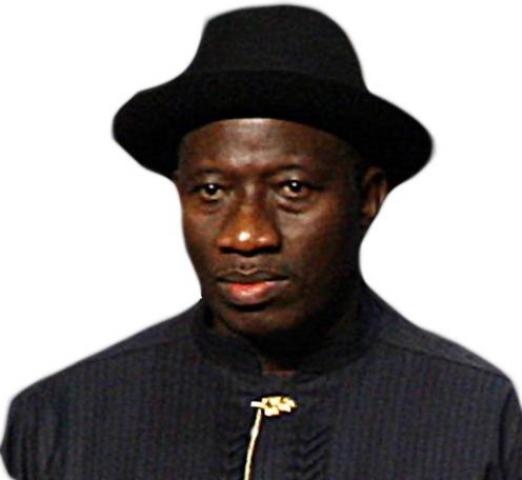
Anxiety grips ministers as Jonathan plans shake-up

Dr. Jonathan
Dr. Jonathan


THE President may drop some ministers in a proposed cabinet shake-up, it was learnt last night.

The reshuffle may take place after the first anniversary of the administration on May 29.

A list of would-be ministers is being compiled and security checks are being carried out on them, according to sources.

President Goodluck Jonathan is said to be unhappy with the performance of about 17 ministers in his 42-man cabinet. But a senior government official, who confirmed the imminent shake-up last night, said: “Yes; it is likely, but it won’t be that massive.”

Besides security reports and random assessment of the ministers, the President has taken “a deep interest in the submissions of ministers” at the ongoing stewardship programme organised by the Federal Ministry of Information.

It was learnt that Jonathan is disappointed that some of his ministers could not give account of their performance so far.

Another source, who spoke in confidence, said: “I think there might be a cabinet reshuffle either a week before May 29 or a week after it.

“As I am talking to you, at least 17 of the ministers may be shown the way out. These ministers have not performed up to the benchmark set by the President. “

The fuel subsidy probe is believed to have shown to the President some of the challenges in some of the Ministries, Departments and Agencies (MDAs).

At the ongoing stewardship platform of the Federal Ministry of Information, some of the ministers could not list their achievements, The Nation learnt.

The President is said to be unhappy with the pace of development in one of the ministries, considering the huge budgetary allocation to it last year.

A team was sent from the Presidency to conduct an appraisal of developments in the ministry and the verdict was not “encouraging”.

Jonathan, it was said, was shocked that the New Maitama Extension District in the Federal Capital Territory (FCT) was named after him. “He has decided to reject it because he does not want any minister to personalise governance,” it was said.

Said the source: “There was also a particular incident abroad when a minister did not live up to expectations of a public officer. There is no rationale for retaining such a minister.”

Responding to a question, the source said: “What the President is after is for ministers to be able to say exactly how many roads have been constructed; significant steps in the provision of housing; access to basic needs, such as water and electricity; and a situation where ministers in strategic ministries would have impacted on the lives of Nigerians.”

Pressed to give more insight into the imminent shake-up, the source identified some of the ministers. Some are said to have got hints of plans to drop them and have started lobbying to be retained.

Many people are making a strong case for the Minister of Education, Prof. Ruqqayyat Rufai, who was able to stave off the Academic Staff Union of Universities (ASUU) crisis and initiate reforms.

The source said: “Although going by the assessment report before the President, the Minister of State for Education, Nyisom Wike, is rated higher in performance than Prof. Rufai, some forces are pushing for the retention of Rufai, in view of the synergy between the two ministers.

“The team work in the Ministry of Education between the two ministers has been fairly better than the case in the past.

“A strong case is also being made for the retention of the Minister of Works Mike Onolememen who has succeeded in fixing some roads, which had been written off. Some forces believe that Onolememen has performed better than most of his predecessors. But the President does not like a situation where some vital roads are about 40-52 per cent completed.”

Some of those who may join the cabinet, if there are favourable security checks on them, are a former Executive Secretary of the Petroleum Technology Development Fund(PTDF), Hamisu Mai Rago;  the immediate past acting National Chairman of the Peoples Democratic Party (PDP), Alhaji Kawu Baraje;  former Deputy Governor of Imo State Ada Okwuonu; former National Chairman Dr. Okwesilieze Nwodo; ex-Governor Chukwuemeka Ezeife, former PDP National Organising Secretary Uche Secondus; former PDP National Publicity Secretary Prof. Rufai Alkali;  former PDP National Legal Adviser Olusola Oke; Senator Abba Aji and some of the aspirants who withdrew for the National Chairman of the PDP, Alhaji Bamanga Tukur, at the last National Convention.

But another source added that some members of the President’s kitchen cabinet are opposed to bringing “deadwoods” to the cabinet. The source said: “There are fears that some of the names being peddled may not add value to the cabinet.

“So, in the next few weeks there will be more amendments to the list of new hands to be injected into the cabinet.”

-The Nation

#Nigeria Fayemi: For Ekiti, Agriculture is a Business

020512F1.Kayode-Fayemi.jpg - 020512F1.Kayode-Fayemi.jpg

Gov. Kayode Fayemi at the forum

At a recent forum in Washington DC, Ekiti State Governor, Kayode Fayemi, outlined a comprehensive plan by his administration to turn around the economy of the state using modernized agriculture as the catalyst, reports Tokunbo Adedoja

With a population of over 2.7 million and a total land area of 5,307km2, of which about 4,596km2 is considered suitable for agriculture, and dual agro-climatological condition suitable for cultivation of almost all varieties of crops, Ekiti no doubt is graciously endowed by nature with all that is needed to feed its people and to be economically viable.

But at a Washington forum on “Nigeria: Tranforming Agric-Business Through Investment”, organised by the Nigerian Embassy in US, in conjunction with the the Corporate Council on Africa and the US Exim Bank, Ekiti State Governor, Kayode Fayemi, lamented that in spite of such agricultural goldmine bestowed on the state by nature, commercial farming was less than 4,000 hectares.

He would however not allow himself to be trapped in the quagmire of lamentation. Fayemi has taken up the cudgels to clear the way for the transformation of the state’s economy using agriculture as the springboard.  He said the state had taken the bold step of recognising agriculture as a business, and also focused on developing platforms that would transform subsistence low productivity farming and processing into modenized, commercial and technology-driven operations that would guarantee job and wealth creation.

The importance attached to modernizing agriculture by his administration could further be attested to by its prime location on the 8-point Agenda of the state government. Coming after governance and infrastructural development, modernizing agriculture is listed as Agenda 3 on the road map to Ekiti recovery. For him, that represents a significant step in his administration’s pursuit of repositioning the state and in driving prosperity through agri-business operations for the purpose of eradicating economic poverty and meeting the millennium development goals.

On how this would be achieved, Fayemi, apparently not oblivious of the failures of past administrations, said this would be private sector-driven. He said targeted efforts would be made to promote access to land, inputs and equipment needed to increase productivity, while also overcoming bottlenecks in value chains that result in low returns to potential farmers.

The governor said it would also include increasing  proportion of land under commercial cultivation, increasing the proportion of high value produce, and increasing value added within the state.

With a presentation at the Marriot Wardman Park Washington DC – venue of the forum – Fayemi took advantage of the opportunity presented by the gathering to canvass for agriculture sector investors for his state. He told potential investors that, interms of comparative advantage in major commodity value chains in Nigeria, Ekiti had the highest yield per hectare for casava and the best grade cocoa.

Apart from such comparative advantage in terms of high yield crops, Fayemi also listed, as  Ekiti’s strong points, its vantage market position, which places it in good proximity to consumers in Nigeria’s major cities of Lagos, Ibadan and Abuja, and the growing supportive infrastructure like rail and aiport in neighbouring states, power grids network, dam facility, and planned provision of agro-processing hubs with functional industrial estates and parks.

The abundance of skilled labour at an economic cost and unskilled labour at comparatively lower cost, coupled with a stable political and security environment, he said, naturally made Ekiti investors’ destination.

His government is however not banking on these huge agricultural potentials alone. A comprehensive package of incentives and supportive platforms to attract both local and foreign investments had been developed. Such incentives and supportive platforms include  tax breaks that exempt new industries from rates and levies in their first three years of operations, one-stop-shop for investors to streamline bureacracy and regulatory environment, and dedicated committee to fast -track investment proposals.

Others include facilitation of agricultural and agro-processing land acquisition,  community mobilisation with a view to supporting and facilitating linkages and partnerships with local agricultural communities, and financial institutions for credit facilities, equipment acquisition and information support.

In the old Western Region, the area now known as Ekiti State was believed to have accounted for over 40 per cent of cocoa products. To him, modernizing agriculture would involve reviving cocoa plantations to make Ekiti a world leader in cocoa production again, and make agriculture contribute 50 per cent of internally generated revenue, while also employing and training 20,000 youths in mechanized agriculture by 2014.

Interms of immediate investment potentials and offerings, he said the state would be focusing on production and processing of high value crops with a planned target for processing of high quality cassava flour, cassava chips, ethanol, and high quality rice and cocoa products.

The state’s immediate investment potentials and offerings also include the development of 464,100 hectares of available agricultural land for mechanised farming operations and mobilisation of new investment in modern and profitable agriculture production and agro-processing of key value crops in which its has comparative advantages like vegetables, rice, palm oil and cashew, among others.

Fayemi also listed the forestry value chain as one of the state’s valuable sectors with growth potentials for international private plantations and forestry investment. Noting the active space in tree planting in Ekiti for private investors, he said with a scheduled forest reserve size of almost 30,000 hectares, the state was rich in high value timber which is in huge demand both within and outside Nigeria.

For interested investors, Fayemi also seized the opportunity provided by the forum to reel out a list of abandoned  government facilities for private sector take-over. These include the largest seed processing plant in Southwest, a moribund dairy farm, three medium scale cassava starch processing mills, a rice mill, farm settlement centres with land and uncompleted silo projects, a fish farm, a poultry hatchery, a  feed mill and other livestock facilities.

The commisssioner for Agriculture and Natural Resources, Jide Arowosafe, also took steps to consolidate on the gains of the forum by following up with potential investors. After the forum had ended, Arowosafe held a business reception for potential investors to provide a platform for those that might want to seek further clarifications about the numerous opportunities in the state.

-Thisday

Kano: SSS Operatives Arrest Suspected Supplier of Bomb Making Chemicals

210312T.recovered-weapons-by jtf.jpg - 210312T.recovered-weapons-by jtf.jpg

The JTF shows off some explosives recovered from an earlier raid


By Ibrahim Shuaibu

State Security Service (SSS) operatives in Kano have arrested a middle aged man, Ayuba Usman suspected to be the chief supplier of chemicals used in making IEDs by Boko Haram members .

State Director of the SSS, Mr Bassey Eteng said in Kano on Wednesday while parading the suspect before reporters, that “based on investigation the suspect is believed to have links with some extremist elements in the state.

“Also based on statements made by some of the suspects in our custody, the suspect has been providing chemicals being used by the terrorists to make IEDs.”

According to him, the suspect was apprehended on Wednesday with 35 drums of chemicals and other materials which were highly inflammable in one of the markets in Dala Local Government Area.

According to the director: “Chemicals are controlled or sold to individuals to make economic gains.

“But when we find individuals selling such materials to individuals who turn to harm innocent people, the security will be concerned and that is why we are concerned.”

He said the SSS operatives in the state would dig deeper in order to know their network with a view to tracking down their accomplices, adding that investigation would continue until the perpetrators of such illegal activities were arrested.

-Thisday

Deep pockets, deeper ambitions by Sylvia Pennington

The DeepFlight Super Falcon submersible.

Undersea dreams

The DeepFlight Super Falcon submersible.

  • The DeepFlight Super Falcon submersible.
  • Tom Perkins pictured beside the DeepFlight Super Falcon submersible.
  • James Cameron emerges from the Deepsea Challenger submersible after his successful solo dive in the Mariana Trench, the deepest part of the ocean.
  • Filmmaker James Cameron emerging from the hatch of Deepsea Challenger during testing of the submersible in Jervis Bay, south of Sydney, Australia.
  • Sir Richard Branson and explorer Chris Welsh (L) attend a press conference in Newport Beach, California in 2011 to announce plans to take a solo piloted submarine to the deepest points in each of the wolrd's five oceans.
  • Late Swiss deep sea explorer and inventor Jacques Piccard posing on the deck of his pocket submarine F.A Forelon the Lake of Geneva near Cully on June 31, 1995.

While jet skies and motorbikes satisfy the average bloke’s need for petrol-powered thrills, the uber-rich are sinking to greater depths to get theirs.

The recreational submarine has become the boy-toy of choice for a swag of adventure-seeking Forbes rich list fellas including Sir Richard Branson, the Russian oligarch Roman Abramovich and the Silicon Valley mogul Tom Perkins.

Branson has turned his attention away from racing into space to exploring the mystery of what lies beneath. The Virgin founder plans to take his self-piloted mini-sub 20,000 leagues down, to the deepest part of each of the world’s five oceans, beginning with the Puerto Rico Trench in the Atlantic, later this year.

Hollywood royalty is in on the act as well. The Titanic director, James Cameron, first went below the waterline in 1997 in a former Russian military submersible to film his blockbuster. He returned to the watery depths in March this year to complete the first solo voyage to the bottom of the Mariana Trench, a 10-kilometre deep ditch off Guam in the western Pacific.

For some others, the sub is an add-on purchase; something to throw on the back of the super-yacht before setting sail on the high seas. On Abramovich’s $1 billion super-yacht Eclipse, the world’s largest at nearly 170 metres, the submarine jostles for room with two helicopter pads, two swimming pools and bunks for 20 guests.

Submersible prices start at about $US750,000 ($724,900) for entry-level craft and soon rise into seven figures for customised models; a snip compared with the nine- and ten-figure price tags of the big boats.

The editor-in-chief at Britain’s online charter service SuperYachts.com, Ben Roberts, said the inclusion of a private submersible could give luxury voyages a fillip.

“Vessels with submarines on board often receive a lot of attention on the charter market and it’s understandable as to why.

“Super yachts offer an untold amount of luxurious freedom to their owners … but imagine having the ability to travel both across the sea and under it; exploring the abyss of an unknown world, like Jacques Cousteau with friends or guests, on the perfect personal cruise.”

For the octogenarian venture capitalist Perkins, a former Hewlett-Packard board member and one-time husband of the romantic novelist Danielle Steel, it’s this sense of liberty that keeps sending him down for more.

Perkins’s latest yacht, Dr No, has been retrofitted as a carrier for his DeepFlight Super Falcon submersible, which he has already tested off Mexico, the Virgin Islands and in the South Pacific. “I love scuba diving, however scuba does not allow you to cover the depth and range of the DeepFlight Super Falcon submersible,” he says.”The fact that [it] is flown like a plane gives you a marvellous freedom of accessing three-dimensional space that you cannot get otherwise.”

Designed to dive to between 100 metres and 300 metres, recreational submersibles offer a relaxed view of the depths.

Perkins says his sub has research as well as recreational functions – he plans to use it to study the behaviour of whales and other large ocean animals.

For those whose budget does not stretch to a personal submarine, a super yacht to store it on, or the four-person crew needed for launch and recovery, a San Francisco submersible designer provides the chance to get in the pilot’s seat for a fraction of the price.

Hawkes Ocean Technologies offers one, two and three-day underwater “flight schools” in locations including the Bahamas, Mexico, Jordan and Lake Tahoe on the California/Nevada border. The three-day course costs $US15,000.

“The owners we have sold submersibles to have been interested in piloting the sub themselves but they also train their boat crew or resort crew to pilot the sub so there are multiple pilots,” the Hawkes marketing chief, Karen Hawkes, says.

-The Sydney Morning Herald.

Commonwealth Bank cuts 40bp from borrowing rates

Commonwealth bank.Commonwealth Bank … Borrowing rates to drop 40 basis points, but deposit rates remain “under review”. Photo: Jessica Shapiro

Commonwealth Bank will lower its standard variable interest rate by 40 basis points – joining National Australia Bank in holding back some of the Reserve Bank’s 50 basis-point cut earlier this week.

Standard variable rate loans at CBA drop to 7.01 per cent, effective from Friday, May 11. Notably, the bank did not reveal its rate changes for deposits, saying those rates remain under review.

Today’s CBA move outpoints NAB, which yesterday cut 32 basis from its borrowing rates. Westpac and ANZ are yet to announce their decisions, with ANZ delaying its decision until next Friday.

“In making this decision, the group has continued to balance the interests of its 1.8 million home loan borrowers with those of its 11 million depositors,” CBA said in a statement.

The lending rate move leaves the bank’s standard variable rate 2 basis points higher than National Australia Bank’s standard variable rate of 6.99 per cent.

The RBA on Tuesday slashed its official cash rate by 50 basis points to 3.75 per cent in a bid to spur the faltering economy. The size of the central bank’s cut was interpreted by commentators as giving the big four banks scope to retain more of their margin when trimming their mortgage rates.

A 40 basis-point cut on a standard 25 year, $300,000 variable rate mortgage would trim the monthly repayments by $81 to $1,998, according to RateCity.

Deposit rates

While NAB lowered its borrowing rates by 32 basis points, the bank cut its deposit rates by the full 50 basis points.

Commonwealth Bank said this morning that its deposit rates “remained under review” but no changes had been made to them in conjunction with today’s mortgage rate announcement.

Today’s announcement from the CBA comes as Westpac posted a bumper first-half profit as it and ANZ consider how much of this week’s official interest rate cut to pass on to customers.

Westpac’s first-half cash profit came in at $3.195 billion, up 1 per cent from a year earlier, and slightly more than the $3.12 billion profit expected by analysts.

Westpac will reveal its interest rate plans on Friday, chief executive Gail Kelly said today.

The Westpac result followed a day after ANZ Bank reported first-half underlying profit of just under $3 billion, a bumper result that added pressure on the bank to pass on in full the RBA’s official interest rate cut.

czappone@theage.com.au

Businessman posts $1.5m bail but authorities hold onto $40m assets

A MILLIONAIRE businessman charged over a $63 million tax evasion and money laundering scheme has been allowed to return to his Gold Coast mansion after posting bail of $1.5 million. But more than $40 million in luxury assets, including houses, cars and yachts owned by Michael John Issakidis, 67, and an associate will remain in the hands of the authorities after being seized in raids last month. The Australian Federal Police and Australian Tax Office say the seven-month investigation into Mr Issakidis is the largest under Project Wickenby, the federal government’s pursuit of wealthy alleged tax evaders. Advertisement: Story continues below Prime real estate in Sydney and on the Gold Coast as well as several Rolls-Royces, a Lamborghini, an Aston Martin, a Mercedes-Benz and yachts have been seized under the new federal proceeds of crime laws, the AFP said. Mr Issakidis faced Central Local Court last week charged with dealing in the proceeds of crime of more than $1 million and conspiring to cause loss to the Tax Office. Magistrate Antony Townsden granted him bail on the condition he live at his Paradise Point home on a $1 million bail. Rhonda Laraine Issakidis and Nance Beverley Toope also agreed to each post $250,000 with the court. Earlier this year, Mr Issakidis sued ”Baby” John Burgess for $30,000 in unpaid rent the former TV host owed on his sub-penthouse in the Gold Coast’s Q1 building. Greek-born Mr Issakidis is the managing director of NeuMedix Health Group, a group of investment and health technology companies. His bail conditions prevent him from contacting NeuMedix’s co-founder and director Anthony James Dickson. NeuMedix is involved in a program at Griffith University‘s botanical medicine for population health, which is developing herbal medicine to treat dengue fever. Wickenby investigators allege from 2006 Mr Issakidis, through a complex unit trust structure, over-inflated the prices of Australian patents once they were transferred offshore and claimed corresponding depreciation expenses of $63 million. They further allege these funds were laundered through an account in Britain and accounts in Hong Kong before being transferred back into Australia. Mr Issakidis will reappear in the Downing Centre Local Court on August 7.
Courtesy: Sydney Morning Herald

Henry Okah insists President Jonathan masterminded two bomb attacks

02/05/2012 09:43:00 Elor Nkereuwem & Ini Ekott

Premium Times.

President Goodluck Jonathan
Mr. Okah says the President and his aides organized the attacks in a desperate political strategy to demonize political opponents, and win popular sympathy ahead of the 2011 elections.

Henry Okah, the detained leader of the Movement for the Emancipation of the Niger Delta (MEND), blamed for the 2010 Independence Day bomb that killed at least 10 people with many more injured, is to tell a South African court the attacks were sponsored by President Goodluck Jonathan.

That, he said, came after the president and those working for him, had engineered similar attacks earlier in March 2010.

“It is my belief that President Goodluck Jonathan’s government working with a faction of MEND planned and executed the bombings of 14 March 2010 and 1 October 2010,” Mr. Okah said in an affidavit deposed at a South African court.

The president’s spokesperson, Reuben Abati, could not be reached to comment for this story. Calls to his mobile telephone was neither answered nor returned.

The sworn affidavit is expected to be filed at the court between Tuesday and Wednesday as Mr. Okah renews his bid to secure a bail after spending more than one year in a South African jail.

His trial is set to start October 1, 2012, exactly two years since a devastating blast that occurred less than a kilometer from the Eagles Square in Abuja where President Jonathan was attending Nigeria’s 50th anniversary.

The militant group, MEND, which authorities said Mr. Okah headed, claimed responsibility for the attack. Mr. Okah has denied membership of the group and plotting the attacks.

Instead, in a shocking deposition that further deepens the complexity of an already convoluted case, Mr. Okah, who lives in South Africa, said Mr. Jonathan and his aides organized the attacks in a desperate political strategy to demonize political opponents, and win popular sympathy ahead of the 2011 elections.

“The purpose of the 14 March 2010 bombing in my opinion was to create an atmosphere of insecurity in the Niger Delta where President Goodluck Jonathan at that time, was fighting to oust the governor Mr. Emmanuel Uduaghan whom President Goodluck Jonathan intended to replace with his Minister for Niger Delta, Mr Godsday Orubebe,” Mr. Okah said in a 194-page affivadavit obtained by PREMIUM TIMES.

“The bombing on 1 October 2010 was a platform for the elimination of political opposition from the north in the form of General Ibrahim 8abangida. The bombing of 1 October 2010 was also intended by the President Goodluck Jonathan Government to create anti North sentiments nationwide in order to galvanize support from other sections of Nigeria against other northern candidates in the Presidential elections,” he said.

The allegations first came to light in an interview Mr. Okah granted Arabic satellite television, Al Jazeera in October 2010 weeks after the blast. In the interview, he blamed the attacks on Mr. Jonathan’s aides and claimed he was arrested for refusing to influence MEND, to retract its claim of responsibility.

Since then, Mr. Okah has been denied bail at least twice, with one at the South Gauteng High court, Johannesburg where he is filing a new application for bail based on “new facts.”
Ahead of the start of trial October, Mr. Okah confirmed he has been availed with the details of evidences planned to be used against him.

The statements and exhibits, contained in a police docket obtained by the investigating officer, bear allegations the Nigerian government- now through its South African counterpart- put forward against the alleged former militant leader.

The previously known details contain claims of alleged phone communication between Mr. Okah and the those who carried out the attacks, allegedly on his orders, computer records, photographs purporting to show incriminating images and other materials.

His new appeal for bail is based on those evidences which he describes as being “extremely weak”. Mr. Okah said none of the exhibits had been substantiated to be linking him to the crime, and concluded that based on those claims, “It was unlikely that the state will be successful in a criminal prosecution against me.”

Despite Mr. Okah’s repeated denials of links to MEND and its attacks, his narration paints a picture of a former powerful figure whose influence over ex-militants, was courted by politicians, in the same breath regarded as a threat.

He spoke with Mr. Jonathan several times on phone, a telltale aspect of a long-standing relationship he said started in 1999 while the president was the deputy governor in Bayelsa state.

While the nation faced a leadership crisis during the sickness of late President Umar Yar’adua in 2009, Mr. Okah emerged a prominent figure in the aftermath of a successful amnesty programme for the Niger Delta militant, initiated by Mr. Yar’adua.

Politicians knew he could influence the ex-fighters and even what continued to go on in the oil rich creeks. It was a role President Jonathan needed, Mr. Okah’s statement pointed out, as did prospective opponents for the 2011 election like former military ruler, Mr. Babangida, and even current petroleum minister, Diezani Alison-Madueke.

Mr. Jonathan repeatedly sent his aides, including Godsday Orubebe (Niger Delta minister), Oronto Douglas, and others to him in South Africa, to seek his support, he said.
His indifference, amid reports he was rooting for Mr. Babangida, as well as his refusal to rein MEND in on the statement, informed his arrest, Mr. Okah said.

He claim he was close to Jonathan so much so, Mrs. Alison-Madueke, then a minister of Mines and Steel, needed his support for President Jonathan to pick her ahead of Odein Ajumogobia, for the petroleum slot.

“The last call I received from Ms Madueke was at 6:41:35 on 4 April 2010 during which she thanked me for my contribution in influencing her appointment as Minister of Petroleum,” he said.

He said he was in touch with the president’s close aides when the October 1, 2010 bomb came off, and had no inkling his arrest was being planned.

20120502-220329.jpg

Post Navigation