Life is short,have fun!!!

Lifestyle, Travel & Photography. If you want a lifetime memory, take a photo.

Bin Laden Letters Show a Divided Al Qaeda – NYTimes.com

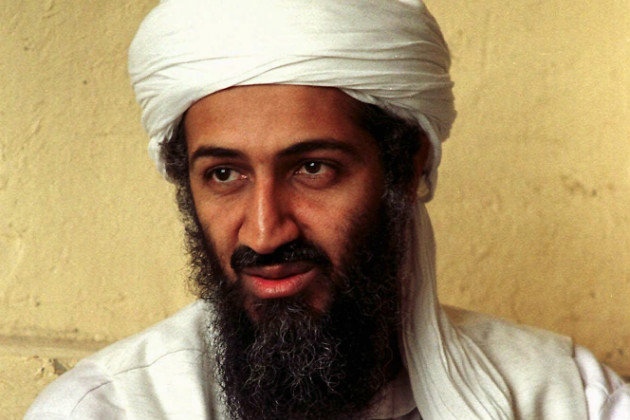
WASHINGTON — Sitting in his secret refuge, hiding from the world, Osama bin Laden spent the last months of his life rethinking strategy, worrying about his legacy and struggling to maintain control over the sprawling terrorist network that operated in his name.

Department of Defense, via Agence France-Presse — Getty Images

Osama bin Laden, shown in a photograph taken from video and released by the American military, mapped out a strategy to take advantage of the Arab Spring uprisings just a week before his death.


Multimedia


He had grown disgruntled with far-flung offshoots theoretically under his umbrella and fretted that too many of the “brothers” were alienating Muslims with attacks on fellow believers. He agitated for spectacular missions, including the assassination of President Obama. He considered a marketing campaign to change the infamous network’s name. And he gave granular instructions about everything down to how to handle ransom money.

“Make sure to get the money exchanged at money exchangers,” he wrote. “You should also get rid of the bag that the money was in because it might have a chip. The brother should take the money, get in a taxi, and go to the center of the market and get a roofed section of the market.” The cash, he added, “should be in euro or dollars.”

The portrait of Bin Laden’s life in the compound in Abbottabad, Pakistan, emerges from a sheaf of letters released on Thursday that provide a sort of anthropology of a terror network. The frustrations expressed by Bin Laden as he issued instructions sometimes in vain might be familiar to any chief executive trying to keep tabs on a multinational corporation that had grown beyond its modest origins.

Indeed, Bin Laden insisted on seeing résumés of potential leaders, tried to impose a top-down management structure and demanded that subordinates stay within their roles. He entertained fund-raising proposals like attacking drug runners to steal their money. He contemplated ways to improve news media coverage as his team soured on MSNBC but admired ABC News.

And he fretted about how he would be remembered by history. “He who does not make known his own history,” he wrote to one of his lieutenants, runs the risk that “some in the media and among historians will construct a history for him, using whatever information they have, regardless of whether their information is accurate or not.”

While there is little detail about how he managed to stay hidden under the nose of the Pakistani authorities, the letters make clear how much pressure the American drone campaign was putting on his followers in the Pakistani border areas.

In October 2010, he urged fighters to leave the border area of Pakistan where American drones dominated the skies and flee to Afghanistan. “I am leaning toward getting most of the brothers out of the area,” he wrote. “We could leave the cars because they are targeting cars now, but if we leave them, they will start focusing on houses and that would increase casualties among women and children.”

The documents were turned over to analysts by the office of the national intelligence director as the White House sought to focus attention on the anniversary of the operation by Navy SEALs that resulted in Bin Laden’s death. Jay Carney, the White House press secretary, said “renewed interest on this anniversary” meant it “was deemed an appropriate time to release them.” Republicans in past days have accused the White House of politicizing the raid.

All told, 17 letters by and to Bin Laden were released, totaling 175 pages in Arabic and dating from September 2006 to April 2011, just before he was killed. The trove was a revelation for some who study Al Qaeda. “It was revolutionary in some ways,” said Jarret Brachman, a terrorism expert. “This is a huge day for serious students of Al Qaeda.”

Analysts at the Combating Terrorism Center at the United States Military Academy at West Point, which processed and released the documents, concluded that Bin Laden often struggled to stay in charge, and the report it released even used as its subtitle, “Bin Laden Sidelined?”

“Bin Laden is not in sync on the operational level with regional jihadi groups,” said Nelly Lahoud, one of the report’s authors. “He’s displeased. He’s not approving of them. He’s worried and concerned about their incompetence.”

That assessment confirms and contrasts with the picture described by officials in the immediate aftermath of the raid, when intelligence analysts began their examination of the documents and materials found at his compound. At the time, government officials expressed surprise at how active Bin Laden was as leader, describing him as far more than a figurehead.

The letters released Thursday give a fuller sense of his role, and show that his instructions were not always heeded, at least to his satisfaction. He was frustrated with groups like Pakistan’s branch of the Taliban and looked askance at figures like Faisal Shahzad, who tried unsuccessfully to set off a car bomb in Times Square, and Anwar al-Awlaki, the American-born propagandist who was killed by an American drone strike.

Particularly striking was a roiling debate over the relationship between the central Qaeda group and the various affiliates over which Bin Laden exercised little control. Some lieutenants argued for disassociating with the branch outfits, while others pushed for more integration. Bin Laden wanted to provide advice without fully incorporating them into Al Qaeda central.

Indeed, he specifically declined a request by the Shabab in Somalia to join Al Qaeda, a decision that was effectively reversed after his death by his successor, Ayman al-Zawahri.

Mr. Zawahri’s absence from many of the letters was striking. Instead, it was clear that another Qaeda leader, Jamal Ibrahim Ishtaywi al-Misrati, a Libyan who went by the name Atiyyatullah, or Atiyya, was Bin Laden’s closest confidant. He was later killed in a drone strike.

Bin Laden was deeply concerned about Al Qaeda’s image, and one letter, whose author was unknown, outlined a plan to change the name. The letter noted that the formal name of the group had been short-handed from Al Qaeda al-Jihad to just Al Qaeda, Arabic for “The Base,” and had lost its religious connotation. In its place, the letter proposed alternatives with Islamic themes, like Monotheism and Jihad Group, Muslim Unity Group, Islamic Nation Unification Party or Al-Aqsa Liberation Group.

Bin Laden wanted followers to stop attacks in Muslim countries and focus on the United States. Otherwise, he said, “it would lead us to winning several battles while losing the war at the end.”

He ordered attempts to assassinate Mr. Obama and Gen. David H. Petraeus, then commander of NATO forces in Afghanistan. Mr. Obama’s death, Bin Laden wrote, would mean the ascension of Vice President Joseph R. Biden Jr., whom he called “utterly unprepared,” and he concluded that “the killing of Petraeus would have a serious impact on the course of the war” because he was “the man of this phase.”

Bin Laden also adhered to his own strict sense of Islamic law, even when it conflicted with his goals. He disapproved when Mr. Shahzad said he had lied upon becoming an American citizen and pledging loyalty to the United States. “You should know,” Bin Laden wrote to a subordinate, “that it is not permissible in Islam to betray trust and break a covenant.”

Ahead of I.P.O., Facebook Sets Price Range at $28 to $35

Facebook's headquarters in Menlo Park, Calif.Peter Dasilva/European Pressphoto AgencyFacebook’s headquarters in Menlo Park, Calif.

3:43 p.m. | Updated After shying away from the public markets for years, Facebook is ready for its debut.

On Thursday, Facebook set the estimated price for its initial public offering at $28 to $35 a share, according to a revised prospectus. At the midpoint of the range, the social networking company is on track to raise $10.6 billion, in an debut that could value the company at $86 billion.

The company is finalizing its prospectus, as it prepares for a road show to meet investors in cities like New York, Boston, San Francisco, Chicago, and Baltimore.

On Friday, Facebook executives will meet in New York with the sales forces of the company’s underwriters to brief them on the I.P.O. presentation, according a person with knowledge of the matter. Those salespeople will then reach out to prospective investors to begin shopping the offering. The I.P.O. has attracted a small army of 33 underwriters, led by Morgan Stanley, JPMorgan Chase and Goldman Sachs.

The filing on Thursday is the first time Facebook has officially indicated where its shares will be valued. The company is expected to begin trading on the Nasdaq, under ticker “FB,” in two weeks, following an eight- to nine-day road show, according to people familiar with the matter. Given that time frame, Facebook should begin trading May 17 or May 18, these people added.

The upcoming roadshow will help the company and its bankers gauge investor demand and settle on a final price, which could be above the expected range. Facebook’s underwriters will weigh a multitude of factors, such as demand, market conditions and how much room to leave for a first day pop. While companies like to see a healthy jump on the first day of trading, a huge pop could mean that the offering was priced far too conservatively.

If Facebook reaches for the top end of its range and if its underwriters exercise an option to sell an additional 50.6 million shares, the company will raise$13.6 billion in its offering.

Investors have been eagerly awaiting the Facebook offering, which is on track to be the largest Internet I.P.O. on record, trumping the debut of Google in 2004. They are lured by the prospect of strong growth: in the first quarter, Facebook’s daily active users, a measure of engagement, increased by 41 percent, to 526 million.

Still, Facebook is experiencing the growing pains typical of a technology start-up. While revenue continues to rise, profit sputtered in the first three months of the year, falling 12 percent, to $205 million, as expenses jumped significantly.

A spokeswoman for Facebook declined to comment.

For Facebook’s insiders, the I.P.O. represents an opportunity to take some money off the table and to take care of hefty tax charges. Facebook’s 27-year-old chief Mark Zuckerberg is planning to sell 30.2 million shares, worth $951 million, based on the mid-point of the range. Mr. Zuckerberg, who will retain voting control of 58.8 percent of the company after the I.P.O., plans to use the proceeds from thesale to cover tax obligations.

Other big sellers include Accel, one of the earliest venture backers of the social network, which is selling about 19 percent of its stake, or 38.2 million shares. Russian billionaire Yuri Milner’s DST Global is selling about 20 percent of its holdings, or 26.3 million shares.

And Goldman Sachs, which organized a large financing round for Facebook just last year, is also unloading 20 percent of its stake, or 13.2 million shares.

Source:The New York Times

PDP candidates to emerge by consensus, says Aliyu

Aliyu Aliyu

By Jide Orintunsin, Minna

Peoples Democratic Party (PDP) candidates for the 2015 general elections in Niger State will emerge through consensus to avoid post-primary crises, Governor Mu’azu Aliyu has said.

Speaking  when he hosted the  state executive council of the party at Government House, Minna the state capital.

Aliyu said  that emergence of party candidates for the next general elections through consensus would help ensure that party discipline and supremacy are upheld.

He said a channel of communication would be opened for all aspirants and stakeholders to explore, so that the consensus candidates that would emerge would deliver Niger state to the PDP.

‘’We should not allow any other party to present better candidates than those of our party,’’ Aliyu charged the party leaders.

To ensure the success of the consensus project, the governor vowed not to impose any candidate on the party at any level of the electoral process, stressing that nobody should be deceived into accepting anybody that says he (Aliyu) has endorsed their candidacy.

He then advised the party leaders and members to pay attention to party discipline, reach out to the people and communicate activities of government and the party to the electorate to make the 2015 polls easier to win for the party.

He also said that the fight against corruption would require collaboration between the government and the party, lamenting that the country’s negative image within and outside is traceable to the level of corruption.

Earlier, the State Chairman of the PDP Alhaji Abdulrahaman Enagi had expressed gratitude to the government for the moral and financial support given to the party in the state.

Enagi said with the support received by the party the state chapter of the PDP had been adjudged the best in terms of management and general administration especially with the smooth conduct of the party primaries at all levels.

-The Nation

BOKO HARAM: A war caught in ambiguity – Alkasim Abdulkadir

Alkasim Abdulkadir an experienced international freelance journalist blogs about his first encounter with the Boko Haram spokesman Abul Qaqa;

I remember when news filtered in that Nigeria’s former President –Olusegun Obasanjo had visited the family of Yusuf Mohammed, Boko Haram’s ideological leader killed under extrajudicial circumstances by the State. Obasanjo was not the President his successor Umaru Yaradua was. As the piece of news settled in I wonder what was going through the minds of the upper echelon of the group. During the telephone interview I had with the spokesperson of the group Abul Qaqa for CNN I had asked him if the group was willing to negotiate. He had remarked that even the Prophet had laid down guidelines before negotiating with his adversaries; in their case he said only the Federal Government’s unconditional release of all their members held captive can guarantee a step to the process of negotiations.

The twelve minutes interview was the most courageous act I had ever done in my entire life, as I asked shakily –choosing my words carefully I tried to reconcile the carnage I had seen at the UN building bomb site. I struggled to reconcile the voice on the phone sounding almost serenely and courteous as he gave me the details of Mohammed Abul Bara  the 27 years old man from Yobe who had driven the Honda Accord car loaded with explosives. The detail shocked me to no end. Aside the shock it also meant outside the group this was the first time they were revealing the identity of the UN House bombing to any one! It was  I scribbled fast and hard –my hand trembling. I asked some more questions forgetting others that had formed in my mind. When I asked what was the rationale of their acts he quoted in Arabic Surah Tauba Verse 14 which states: Fight them; Allah will pinish them by your hands and bring them to disgrace, and assist you against them and heal the hearts of a believing people.

This is the rallying point of all the attacks they had carried out all year long. It is the thinking and motivation of Mohammed Manga as he attempted to ram his car into the police headquarters that resulted in his death and the injuries of several policemen. It is sadly also the motivation of several hundreds of members of Boko Haram. In the words of Abul Qaqa, they are mere mortals being used by God to fight the injustice and inequality in the land; an injustice in which the UN known for its global oppression was partnering with the Nigerian government.  Before he dropped the phone he had a word for journalists and radio stations –they most stick to facts of the matter. They should get in touch with them to verify issues before going to the Press. Boko Haram didn’t want to be on a collision course with media he added. I closed my note pad and breathed in and out. The phone call sounded surreal as the images of the UN House flashed again before me. After cross-checking editorial ethics CNN released the news and the global media retold the narrative. The Security agencies released the pictures of two people that had been arrested and a man hunt for a called Mamman Nur ensued.

A typical scenario to the pointer of a city under siege is Fridays at the Abuja Central Mosque, if one was ever in doubt of the clear and present danger the scene painted here brings it closer home. That of semi-automatic gun wielding SS operative asking motorists not to park beside the mosque aided by a member of the Anti-Terrorist Squad  (ATS) checking those with bags while operatives others sit at alert in a van with the lettering ‘Anti-bomb squad’.

It’s a simple fact that ours is a case of a reactive intelligence, when those the security agents are up against are always ahead of the curve and are left to always play catch up. Our intelligence needs to move to more covert style operation, not the obvious I-am-an-S-S-guy type that we have around. This coupled with a proactive community intelligence gathering technique can change the tide of things. This should not only be applicable to militancy or terrorism alone but it should be applicable to the unsolved assassinations and even armed robberies that have bedevilled the country.

Our total lack of preparedness to tackle disasters came to fore in the wake of the UN bombing, the underbelly of our emergency response was exposed to highlight our ineffectual state.  This is despite the fact we don’t suffer from raging bush fires, tsunami, hurricanes, mudslides, volcanic eruption and earth quakes. The mere meaning of the word ‘emergency’ points to the fact that it is unexpected, but it is as if the denotation is lost on our security agencies and health care system. One of the biggest problems is not that we don’t know what to do, but how to do it. I remember begging and shouting at two policemen to allow some Red Cross officials enter the UN premises after they had begged on end. Another instance was when an Army General accosted a Civil Defence man walking with Sniffer dogs and barked at him ‘who authorized him to bring the dogs to the scene’.   The entire FCT health system which is a model to the rest of the country wasn’t prepared for an emergency of this magnitude. It didn’t expect 8 intensive care patients and more the 70 people with various degrees of injuries from the blasts as such the blood bank soon started calling for donations to augment their supply. As residents heeded the call to donate blood this in turn angered the crowd of sympathisers that had already gathered at the National Hospital.

At the UN House blast site near the epicentre rescue operation was in full uncoordinated swing with members of the FRSC disagreeing with the fire service and the  Anti-Terrorist Squad watching in disbelief, the Army and Police all trying to do  their to secure the perimeter of the building. The bottom line remained that their efforts weren’t coordinated as a team on rescue and evacuation. There were too many weak links. I remember a NEMA top official complaining that people were tampering with the evidence; I had to tell him as the NEMA official in charge of the operation he should ask them to leave and come behind the accident tape barrier. However, it was a lot of courage for the men who did the rescue and evacuation, ferrying so many injured and dead people, gathering mangled flesh in body bags required more than a requisite training but also deep humanity.

The hospitals on the other hand were and still ill equipped and under staffed by an ill motivated work force. The latter coupled with an inept and sluggish bureaucracy is the distressing quartet that is Nigeria’s red tape to a viable health sector.

The sad aspect of the aforementioned is how doctors in Nigeria get paid pittance and end up working twice as hard as they should. It is this scenario that makes doctors join the brain drain wagon to practice in other climes where their trade is highly appreciated and well remunerated.   This singular absence of inspiration is the reason for the impersonal and near loathsome nature of nurses, midwives and other paramedics towards patients.

Information management during emergencies is one area that needs tightening NEMA and the security agencies should set up a Joint Communication and Data Centre that will be authorised to give out reliable information to news agencies, relatives and the general public. Not until FCT PRO Jimoh Moshood rallied the journalists present for an on the spot briefing by Police Commissioner Micheal Zoukomor -the first official statement almost 4 hours after the explosion; before then we had gathered the bits of evidence and at some point journalists had more information than the officials. Even though Channels, AIT, ITV and even NTA were on ground and had started covering the blast.  The Nigerian Television Authority, Africa’s largest TV network located about 20 minutes from the blast site was showing the Osogbo Festival while I had already gone live on CNN. I received a call from Kristoffer Rønneberg of Aftenposten, a Norwegian Newspaper. They called after seeing my tweet on the death of a Norwegian lady later identified as Ingrid Midtgaard. They calls kept coming from BBC Wales, BBC TV, CNN Wires and later at about 8 pm I was a guest on the BBC Have Your Say Program. The last interview came at 10 PM on France 24. It is inexcusable that we wait for others to tell our people the narratives of our tragedy. The days of NTA’s editorial guidelines asking it to be pro-government should have ended in 1999.

I have always advocated for dialogue in this on going war in which we are not ready for. Military action as exemplified by similar examples in other parts of the world has the tenacity to breed more foot soldiers. Each deadlier than the last; pacifism is also a strategy.

The army of unskilled, uneducated, unemployable disenchanted young men growing in Nigeria –especially in Northern Nigeria must be giving hope beyond measure. The only war we can fight against future insurrection and the only fruitful engagement we can with future armies that may rise in this nation is to deliver continuously on the mandate of good governance and accountability. We must pray hard in order to get it right. Afterwards we must get it right.

This article first appeared in Ynaija magazine in 2011.

Alkasim Abdulkadir: has worked as a Producer for the BBC-WST he has also contributed stories to CNN, BBC and France24. He also contributes regularly to the Nigerian Dialogue online platform.

Canadians Dominate World’s 10 Strongest Banks – Bloomberg

http://www.bloomberg.com/news/2012-05-02/canadians-dominate-world-s-10-strongest-banks.html

Osama bin Laden documents released: trove of more than 6,000 Al-Qaida files declassified

More than 6,000 documents seized during the May 1, 2011 raid that killed Osama bin Laden were released on Thursday by West Point’s Combating Terrorism Center, giving the public a rare glimpse into the Al-Qaida leader’s terror plans and largely solitary life.

The raw documents–both the Arabic originals and versions translated into English–were posted on the center’s website shortly before 9 a.m. ET.

As was previously reported, the documents show that bin Laden had ordered the assassinations of President Barack Obama and U.S. Gen. David Petraeus, but did not have the resources to carry out the killings.

“Obama is the head of infidelity and killing him automatically will make Biden take over the presidency,” Bin Laden wrote in a message to one of his top lieutenants, the Washington Post noted. “Biden is totally unprepared for that post, which will lead the U.S. into a crisis.”

“What you get is that bin Laden would come up with an idea but it was a very broad aspirational idea,” an administration official told NBC ahead of the West Point release. “And then he’d turn it over to somebody and there was always some sort of disconnect.”

By the end of 2010, the official added, “there was certainly a sense of loss in terms of the senior leaders that perished, a sense that the midlevel cadre had been decimated.”

Click here to to view the files on the Combating Terrorism Center website.

20120503-232047.jpg

Gunmen Attack Potiskum Cattle Market In Yobe State, Killing 34 People-AFP


An attack on a cattle market in northeastern city of Potiskum by gunmen armed with explosives has left at least 34 dead and the toll is likely to climb, an emergency source said on Thursday.

“Thirty-four bodies were deposited at the hospital,” the official said on condition of anonymity of the attack late Wednesday in Potiskum because he was not authorised to speak publicly.

He said the toll was likely to be more than 50 dead because families were also burying relatives’ bodies without bringing them to the hospital.

A gang of gunmen with explosives have attacked a cattle market in the city of Potiskum, burning it down and leaving a number of people dead, residents and police said Thursday.

The attack late Wednesday was said to be in reprisal for an incident earlier in the day, when the gang sought to rob the market but were fought off by traders who caught one of the attackers, a police source said.

The man who was caught was doused in petrol and a tyre was placed around his neck before he was burnt to death, according to the source and residents.

“There was an attack on Potiskum cattle market yesterday by suspected armed robbers who threw explosives and burnt down the market with all the livestock,” the police official said on condition of anonymity.

“It is too early to say how many people were affected in the attack, which happened at night.”

Residents reported seeing bodies being taken away, but the number of casualties was unclear.

(AFP)
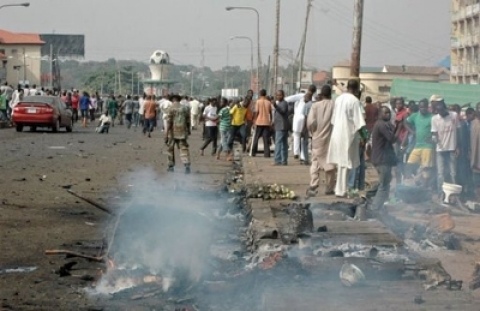
caption: A chaotic scene after a militant attack in northern Nigeria

#Nigeria Guidelines for Number Portability Released

220312T.ncc-logo.jpg - 220312T.ncc-logo.jpg

NCC logo


By Emma Okonji

The Nigerian Communications Commission (NCC) has released guidelines for the planned introduction of number portability across networks.

The new rule exempts subscribers from paying any fee that may be charged by telecoms operators, when subscribers make request to telecoms operators, asking for number porting from one network to another.

According to the guidelines released on the NCC’s website recently, a service provider is responsible for maintaining appropriate records to satisfy the billing and audit requirements of Mobile Number Portability (MNP).

Services and traffic terminated to ported numbers on an individual recipient operator’s network must be charged the same as for traffic and services terminated to non-ported numbers of the same recipient operator. Neither recipient operators nor donor operators may make a charge to the customer for porting their number.

Addressing customer care in number porting, the document explained that a customer who ports their number from one mobile service provider to another should be treated in the same way as a customer who ceases service with one mobile service provider and begins service with another.

According to the document, where customers suffer disruption to their mobile service, and it is unclear in which network the problem lies, the mobile service providers will cooperate in good faith to locate and resolve the problem.

In addressing customer complaints as regards challenges that customers may face during number porting, the NCC document stipulated that complaints specifically related to the porting process should be directed to, and be dealt with by the recipient operator who has submitted the porting transaction to the central order handling system, following their normal internal processes. Otherwise, non-porting process related complaints that relate to the provision of services to the customer should be referred to the party that is providing the contracted service that is the subject of the customer’s complaint.

In the case where it is unclear to whom the complaint should be directed and the complainer is unclear who their contracted service provider was at the particular time the issue occurred, then the complaint should be directed to the recipient operator.

The document, however, explained that the recipient and donor operators should cooperate in good faith to resolve the complaint between them and the complainer.

The objective of the guidelines, according to NCC, is to ensure protection of consumer interest through the development, monitoring and enforcement of compliance with regulations by telecommunications service providers in order to ensure better quality services, fair pricing and competition, and in line with the provisions of section 128 of the NCC Act 2003, which vests the NCC with the exclusive right to regulate numbers and number portability in Nigeria.

In telecoms parlance, number porting is the movement of subscribers’ number from one network to another without losing the original number. A customer with a particular network may decide to migrate his or her telephone number to another network, if the customer is unsatisfied with the service delivery of the initial network, and the customer does so while still retaining the initial number on the new network.

Source : Thisday

#Nigeria Naira Stable on Forex Inflow

2202F03.Naira-Notes.jpg - 2202F03.Naira-Notes.jpg

Naira notes


By Obinna Chima

The naira was stable on both the Central Bank of Nigeria’s (CBN)-regulated Wholesale Dutch Auction System (WDAS) and interbank market Wednesday due to inflow of the greenback into the system.

Similarly, the behaviour exhibited by the local currency yesterday was also attributed to an increase in the supply of the dollar by the CBN at the bi-weekly auction.

In fact, at the first WDAS session for May held yesterday, the naira closed at N155.69 to a dollar, the same amount it was at the end of Monday’s auction.

The CBN offered a total of $150 million to the 15 banks that participated in the auction. This represented an increase by 25 per cent, over the $120 million it had offered to 19 banks on Monday.

On the other hand, the local currency maintained its position at the interbank as it closed at N157.40 to a dollar, the same value it was on Monday.

The market did not open on Tuesday, due to the public holiday that was declared to commemorate the workers’ day.

Dealers said the liquidity position of the market was influenced by the sale of about $194 million to banks by two multinational oil companies. The companies were identified as Mobil and Agip.

Meanwhile, the CBN yesterday disclosed plans to auction treasury bills worth N145.05 billion next week Thursday. The bills would range between 3-month to 1-year maturities at its bi-monthly auction. Specifically, the apex bank said it would issue N32.05 billion in 91-day bills, N53 billion in 182-day bills and N60 billion in 364-day bills.

The CBN issues treasury bills regularly to tame inflationary pressure, to ensure that it reduces the volume of money supply in the economy, amongst others.

The CBN had auctioned treasury bills worth about N141 billion at the previous auction. It had sold 91-day paper, 182-day bills and 364-day bills. Yields at the previous auction fell across various tenors. This was then, driven by strong demand from offshore and local institutional investors.
“We expect the CBN to maintain tight monetary conditions and mop up excess liquidity. This means the CBN will not reduce treasury bills or Open Market Operation (OMO) rates as long as there is no turnaround in the fiscal path,” a source said.

Post Navigation