Life is short,have fun!!!

Lifestyle, Travel & Photography. If you want a lifetime memory, take a photo.

Archive for the category “Technology (ICT)”

Ahead of I.P.O., Facebook Sets Price Range at $28 to $35

Facebook's headquarters in Menlo Park, Calif.Peter Dasilva/European Pressphoto AgencyFacebook’s headquarters in Menlo Park, Calif.

3:43 p.m. | Updated After shying away from the public markets for years, Facebook is ready for its debut.

On Thursday, Facebook set the estimated price for its initial public offering at $28 to $35 a share, according to a revised prospectus. At the midpoint of the range, the social networking company is on track to raise $10.6 billion, in an debut that could value the company at $86 billion.

The company is finalizing its prospectus, as it prepares for a road show to meet investors in cities like New York, Boston, San Francisco, Chicago, and Baltimore.

On Friday, Facebook executives will meet in New York with the sales forces of the company’s underwriters to brief them on the I.P.O. presentation, according a person with knowledge of the matter. Those salespeople will then reach out to prospective investors to begin shopping the offering. The I.P.O. has attracted a small army of 33 underwriters, led by Morgan Stanley, JPMorgan Chase and Goldman Sachs.

The filing on Thursday is the first time Facebook has officially indicated where its shares will be valued. The company is expected to begin trading on the Nasdaq, under ticker “FB,” in two weeks, following an eight- to nine-day road show, according to people familiar with the matter. Given that time frame, Facebook should begin trading May 17 or May 18, these people added.

The upcoming roadshow will help the company and its bankers gauge investor demand and settle on a final price, which could be above the expected range. Facebook’s underwriters will weigh a multitude of factors, such as demand, market conditions and how much room to leave for a first day pop. While companies like to see a healthy jump on the first day of trading, a huge pop could mean that the offering was priced far too conservatively.

If Facebook reaches for the top end of its range and if its underwriters exercise an option to sell an additional 50.6 million shares, the company will raise$13.6 billion in its offering.

Investors have been eagerly awaiting the Facebook offering, which is on track to be the largest Internet I.P.O. on record, trumping the debut of Google in 2004. They are lured by the prospect of strong growth: in the first quarter, Facebook’s daily active users, a measure of engagement, increased by 41 percent, to 526 million.

Still, Facebook is experiencing the growing pains typical of a technology start-up. While revenue continues to rise, profit sputtered in the first three months of the year, falling 12 percent, to $205 million, as expenses jumped significantly.

A spokeswoman for Facebook declined to comment.

For Facebook’s insiders, the I.P.O. represents an opportunity to take some money off the table and to take care of hefty tax charges. Facebook’s 27-year-old chief Mark Zuckerberg is planning to sell 30.2 million shares, worth $951 million, based on the mid-point of the range. Mr. Zuckerberg, who will retain voting control of 58.8 percent of the company after the I.P.O., plans to use the proceeds from thesale to cover tax obligations.

Other big sellers include Accel, one of the earliest venture backers of the social network, which is selling about 19 percent of its stake, or 38.2 million shares. Russian billionaire Yuri Milner’s DST Global is selling about 20 percent of its holdings, or 26.3 million shares.

And Goldman Sachs, which organized a large financing round for Facebook just last year, is also unloading 20 percent of its stake, or 13.2 million shares.

Source:The New York Times

#Nigeria Guidelines for Number Portability Released

220312T.ncc-logo.jpg - 220312T.ncc-logo.jpg

NCC logo


By Emma Okonji

The Nigerian Communications Commission (NCC) has released guidelines for the planned introduction of number portability across networks.

The new rule exempts subscribers from paying any fee that may be charged by telecoms operators, when subscribers make request to telecoms operators, asking for number porting from one network to another.

According to the guidelines released on the NCC’s website recently, a service provider is responsible for maintaining appropriate records to satisfy the billing and audit requirements of Mobile Number Portability (MNP).

Services and traffic terminated to ported numbers on an individual recipient operator’s network must be charged the same as for traffic and services terminated to non-ported numbers of the same recipient operator. Neither recipient operators nor donor operators may make a charge to the customer for porting their number.

Addressing customer care in number porting, the document explained that a customer who ports their number from one mobile service provider to another should be treated in the same way as a customer who ceases service with one mobile service provider and begins service with another.

According to the document, where customers suffer disruption to their mobile service, and it is unclear in which network the problem lies, the mobile service providers will cooperate in good faith to locate and resolve the problem.

In addressing customer complaints as regards challenges that customers may face during number porting, the NCC document stipulated that complaints specifically related to the porting process should be directed to, and be dealt with by the recipient operator who has submitted the porting transaction to the central order handling system, following their normal internal processes. Otherwise, non-porting process related complaints that relate to the provision of services to the customer should be referred to the party that is providing the contracted service that is the subject of the customer’s complaint.

In the case where it is unclear to whom the complaint should be directed and the complainer is unclear who their contracted service provider was at the particular time the issue occurred, then the complaint should be directed to the recipient operator.

The document, however, explained that the recipient and donor operators should cooperate in good faith to resolve the complaint between them and the complainer.

The objective of the guidelines, according to NCC, is to ensure protection of consumer interest through the development, monitoring and enforcement of compliance with regulations by telecommunications service providers in order to ensure better quality services, fair pricing and competition, and in line with the provisions of section 128 of the NCC Act 2003, which vests the NCC with the exclusive right to regulate numbers and number portability in Nigeria.

In telecoms parlance, number porting is the movement of subscribers’ number from one network to another without losing the original number. A customer with a particular network may decide to migrate his or her telephone number to another network, if the customer is unsatisfied with the service delivery of the initial network, and the customer does so while still retaining the initial number on the new network.

Source : Thisday

#Nigeria NCC Suspends Spectrum Licences Till 2015

b301102-Eugene-Juwah.jpg - b301102-Eugene-Juwah.jpg

Executive Vice-Chairman of NCC, Eugene Juwah


By Emma Okonji

The Nigerian Communications Commission (NCC) has said it would not issue spectrum licences to operators until 2015 when telecoms broadcasting operators must have migrated from analogue to digital spectrum.

Executive Vice-Chairman of NCC, Dr. Eugene Juwah gave the declaration in Lagos, while responding to the shortfall in broadband penetration in the country at a broadband forum organised by Accenture.

Juwah who lamented the shortage of spectrum licenses in the country, said by the end of the migration, most of the frequency slots currently being occupied by broadcasters would become available for auction.

He said the commission was already in talks with Code Division Multiple Access (CDMA) operators that are currently using the 790 Mega Hertz and the 862 Mega Hertz frequency band to free them up by migrating to Long Term Evolution (LTE) technology in carrying out their operations.

According to him, the frequencies that were hitherto auctioned to them were not being fully utilised, insisting that such frequencies are better utilised for broadband penetration.

Juwah also promised to auction the reaming slots in the 2.3 Giga Hertz spectrum band when other expected spectrums must have been made available by their current users.

Addressing the regulatory intervention to deepen broadband access in the country, Juwah said NCC had adopted the Open Access Model (OAM) that would help unbundle broadband into three layers for easy broadband deployment. “The model provides a framework for sophisticated
infrastructure sharing and it will help unbundle broadband,” he said.

He listed the three layers to include passive layer, active layer and retail layer, stressing that no single operator would be allowed to operate in more than one layer, in order to achieve even distribution of broadband.

“With the model, bandwidth will be provided by the active infrastructure providers to the retail service providers on a fair and non-discriminate basis. The active infrastructure providers will buy bulk bandwidth from submarine cable companies, which are then delivered via optical fibre owned by the passive infrastructure provider,” Juwah said, adding that the implementation of the model will bridge the gaps in broadband deployment, eliminate last mile issue, reduce the price of bandwidth for end users and unlock the market for massive broadband usage in Nigeria.

RIM’s market share heading below 5%

Jonathan Ratner, National Post
Monday, Apr. 30, 2012

Research In Motion Ltd.’s global market share may soon be in danger of dipping below 5%, according to RBC Capital Markets analyst Mark Sue, who lowered his estimates on the smartphone maker.

With supply chain data showing a backup in RIM products, he now forecasts the company will sell 9 million BlackBerrys in the quarter ending in May. That compares to the consensus estimate of 10.5 million units.

“Limited scale at that point can lead to shrinking operating margins and in our worst case scenario RIM may burn cash next year,” Mr. Sue told clients. “The good news is that RIM has no debt.”

Given the limited visibility to RIM’s near-term fundamentals, the analyst moved his sector perform rating to speculative risk from above average risk, while maintaining a US$13 price target on the stock.

“In our opinion, shares aren’t trading on fundamentals, but instead on the potential for value creating strategies: licensing, partnerships, joint ventures, and other strategic alternatives,” Mr. Sue said.

“In the ever competitive smartphone market, Nokia, RIM, Motorola, Sony, LG, and a slew of others are donating market share while Samsung and Apple continue to gain market share,” he added. “We believe even RIM’s core enterprise market is at risk to rising bring-your-own-device pressures and switching to iPhone and Android. RIM is resorting to price cuts to boost sell-through, but that may not be enough to stem the tide.”

With RIM expected to show off prototype BlackBerry 10 devices at its developer conference in Orlando this week, its high-end LTE device may garner interest from core BlackBerry fans in North America. However, Mr. Sue believes RIM is late to the market as everyone wants apps and RIM has few compared to the competition.

The analyst expects the company’s average selling price will decline by 20% in fiscal 2012, service average revenue per user will dip 11%, and unit sales will fall 19%.

-Financial Post.

BBC News – Cyber-security bill Cispa passes US House

BBC News – Cyber-security bill Cispa passes US House.

Why your wi-fi network is never safe


Why your wi-fi network is never safe.

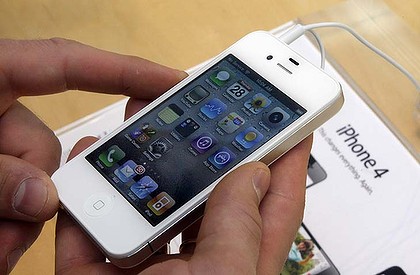
Apple iPhone | Apple sells 35 million iPhones in Second Quarter Q2


Apple iPhone | Apple sells 35 million iPhones in Second Quarter Q2.

A bet against Instagram that cost $200m


Marc Andreessen Photo: Terrence McCarthy/The New York T  Read more: http://www.smh.com.au/technology/technology-news/a-bet-against-instagram-that-cost-200m-20120423-1xgst.html#ixzz1t76ufen4

A bet against Instagram that cost $200m.

NCA fines Glo Mobile $200,000 for failing to launch | Daily Guide Newspaper

NCA fines Glo Mobile $200,000 for failing to launch | Daily Guide Newspaper.

Post Navigation