Life is short,have fun!!!

Lifestyle, Travel & Photography. If you want a lifetime memory, take a photo.

Archive for the month “May, 2012”

EXCLUSIVE: Here’s The Inside Story Of What Happened On The Facebook IPO


“And now for some more bombshell news about the FacebookIPO

Earlier, we reported that the analysts at Facebook’s IPO underwriters had cut their estimates for the company in the middle of the IPO roadshow, a highly unusual and negative event.

What we didn’t know was why.

Now we know.

The analysts cut their estimates because a Facebook executive who knew the business was weak told them to.

Put differently, the company basically pre-announced that its second quarter would fall short of analysts’ estimates. But it only told the underwriter analysts about this.

The information about the estimate cut was then verbally conveyed to sophisticated institutional investors who were considering buying Facebook stock, but not to smaller investors.

The estimate cut appears to have influenced the investment decisions of at least some institutional investors, dampening their appetite for Facebook stock, and crucially, affecting the price at which they were willing to buy Facebook stock.

As I described earlier, at best, this “selective disclosure” of the estimate cut is grossly unfair to investors who bought Facebook stock on the IPO (or at any time since) and didn’t know about it.

At worst, it’s a violation of securities laws.

This latest chapter in the Facebook IPO story began this morning, when Reuters’ Alistair Barr reported that the research analysts at the company’s lead underwriters—Morgan Stanley, Goldman Sachs, and JP Morgan—had cut their earnings estimates for Facebook during the company’s IPO roadshow. This was highly unusual, if not unprecedented (I’ve been in and around the tech IPO business for almost 20 years, and I’ve never heard of it happening.)

Analysts cutting estimates is generally regarded as significant negative news for stocks. This is especially the case when the analysts who cut their estimates are very close to a company—and, therefore, are thought to have particularly good information.

(In the old days, before the implementation of Regulation Fair Disclosure, companies used to manage the market’s expectations by telling trusted analysts to change their estimates. Reg FD banned that practice.)

Muppet Beaker

An investor who wasn’t told about Facebook’s estimate cut.

The fact that some potential Facebook investors were told of the analysts’ estimate cuts and others were not would seem to be a major “selective dissemination” issue.

It is inconceivable that a reasonable investor would consider the sudden reduction of the underwriter analysts’ estimates to be immaterial to an investment decision.

The SEC and FINRA appear to have acknowledged this, and they may now investigate what happened.

More broadly, everyone is still trying to understand what happened with the pricing of the IPO, which was hyped up to be the offering of the century. We now have some more information on that.

Given the PR and legal disaster that the Facebook IPO is rapidly becoming, most official communications channels have gone silent. Facebook declined to comment. Morgan Stanley did not return a call and email seeking comment.

We have spoken to several sources familiar with aspects of the transaction. We do not have complete details yet, but a general picture of what happened is starting to take shape. For now, please regard most of the information below as scuttlebutt, as it has not yet been confirmed.

The story we are hearing is this…

THE FACEBOOK IPO

In early May, as Facebook prepared to kick off its IPO roadshow, the research analysts at the company’s lead underwriters developed financial forecasts to facilitate the marketing and pricing of the IPO.

Such estimates are usually developed through close collaboration between the underwriters’ research analysts and company management. These estimates are viewed by sophisticated investors as having been “blessed” by the company: They are perceived as revenue and earnings targets that the company has reviewed and is confident it will hit. Sophisticated investors use these estimates when they are developing “bids” for the stock, as a tool with which to help determine the price they are willing to pay.

Importantly (and absurdly—the SEC needs to change this), these estimates are not published anywhere.

Rather, in conjunction with industry convention, these estimates are conveyed verbally to institutional investors who are considering investing in the IPO.

This is what happened with Facebook.

As the Facebook roadshow began, institutional investors who were considering investing in the stock were verbally given the underwriters’ initial estimates for the company. And, initially, there was a lot of institutional enthusiasm for the stock.

Several days later, however, on May 9th, Facebook filed an amended IPO prospectus with the SEC.

This prospectus contained new disclosure language that had not previously appeared in Facebook’s SEC filings. The language was on page 57 of the prospectus, in a section discussing the company’s recent financial and user trends:

Based upon our experience in the second quarter of 2012 to date, the trend we saw in the first quarter of DAUs increasing more rapidly than the increase in number of ads delivered has continued. We believe this trend is driven in part by increased usage of Facebook on mobile devices where we have only recently begun showing an immaterial number of sponsored stories in News Feed, and in part due to certain pages having fewer ads per page as a result of product decisions.

The appearance of this language unnerved some sophisticated investors and analysts, who took it as a  sign that Facebook’s business might have deteriorated. The language was vague, however, and—to this former analyst, at least—it did not convey that Facebook’s second quarter was weaker than expected.

Soon after Facebook amended its prospectus, all three analysts at the company’s lead underwriters—Morgan Stanley, JP Morgan, and Goldman Sachs—cut their estimates for Facebook’s Q2 and the full year.

These estimate cuts were conveyed verbally to sophisticated institutional investors.

And, not surprisingly, these investors viewed the estimate cuts as a startling and negative development.

One important question, of course, is why all three underwriter analysts cut their estimates.

David Ebersman

Facebook CFO, David Ebersman.

It seemed inconceivable that all three analysts could have read the language above and concluded independently that Facebook’s Q2 was weak and therefore decided to take the highly unusual step of cutting estimates in the middle of a company’s IPO roadshow.

More likely, it seemed, someone had directed the analysts to cut their estimates—most likely someone with inside knowledge of how Facebook’s Q2 was progressing.

And we have now heard from one source that that is what happened.

One of the underwriter’s analysts has said he was told by a Facebook financial executive to cut his estimates.

According to another source with insight into the Facebook IPO process, until the underwriters’ analysts cut their estimates, demand for Facebook’s stock among sophisticated institutional investors was high. Once these investors heard about the estimate cut, however, they became more cautious about the IPO.

(Again, an estimate cut like this during a roadshow would be hard to interpret as anything but negative. One institutional investor I spoke to said he has looked at more than 1,200 IPOs over the course of his career, and he has never heard of this before.)

The estimate cut, moreover, was followed by three additional pieces of information that were interpreted negatively by some institutional investors:

1) The price range for the deal was increased, which made little sense in light of the estimate cut,

2) The size of the deal was increased, which meant that more stock would be sold, and

3) Many smart institutional Facebook shareholders like Goldman Sachs decided to sell more stock on the deal—the “smart money,” in other words, was cashing out.

Meanwhile, during private roadshow meetings, Facebook executives were reportedly “signalling” to some sophisticated investors that Facebook’s advertising revenue would not grow as rapidly as some potential investors had hoped. Facebook’s advertising business is driven primarily by company-to-company sales efforts, not by the self-serve ads that drive Google’s business. Facebook executives reportedly made clear to sophisticated investors that this would limit the rate at which Facebook’s ad business could grow.

By the second week of the roadshow, after the estimate cut and price increase, some institutional investors became more cautious about the IPO. According to one investor who looked at the deal, institutions “got the willies” and started to talk about paring back their stock orders.

Meanwhile, out in the real world, demand for Facebook stock was hitting a fever pitch. One senior stockbroker at a major brokerage firm reported that he “had never seen such demand” for an IPO.

These individual investors, needless to say, were not likely aware that the research analysts at the company’s lead underwriters had cut their estimates for the company. They were also, presumably, unaware that Facebook’s Q2 was weaker than expected.

At the end of last week, the time came to decide on the IPO price for Facebook’s stock.

This process was handled by Facebook’s lead underwriter, Morgan Stanley, and Facebook executives.

According to one source (unconfirmed–this really is just scuttlebutt), based on the book of orders submitted by both institutional and retail investors, Morgan Stanley found that there were two distinct price levels at which investors were interested in buying stock.

Institutional investors, having digested the news of the underwriter estimate cut, were comfortable buying Facebook stock at $32 a share.

Retail investors, meanwhile, who were presumably unaware of the estimate cut, were comfortable buying Facebook at $40 a share.

Knowing that a big percentage of the IPO stock could be sold to retail investors instead of institutional investors, Facebook and Morgan Stanley decided to price the IPO at $38.

Although the precise allocations could not be learned, a source says that Morgan Stanley allocated a far larger percentage of the Facebook deal to individual investors than is normally the case in an IPO like this.

On Friday, May 18th, Facebook’s stock opened at $42. It spent most of the day above $40, and then sank quickly. With heavy support from Morgan Stanley, the stock closed on Friday at just above the IPO price.

Given the amount of stock that had been sold, Morgan Stanley could not support Facebook’s stock price indefinitely without exposing itself to huge losses. In two trading days this week, as the IPO hype wore off and news of the analyst-estimate cut spread, Facebook’s stock plummeted.

The stock closed today at just over $31 a share, about the price that institutional investors were reportedly comfortable paying for it.

The SEC and FINRA have already said they may look into the Facebook IPO process. The Massachusetts Attorney General has also just announced that has subpoenaed Morgan Stanley over the issue.

So, at some point soon, we will likely get the full story.

In the meantime, it’s hard to conclude anything other than this:

In one of the biggest IPOs in history, in which a huge amount of stock was sold to small investors, privileged Wall Street insiders once again got top-notch information…and individuals got the shaft.”

Source: The Business Insider.

Where are Facebook’s friends? Shares hit again

Facebook‘s shares fell sharply again overnight, as two top US financial regulators called for a review of the circumstances surrounding its troubled initial public offering last week.

The separate calls for review, by Securities and Exchange Commission Chairman Mary Schapiro and FINRA Chairman Rick Ketchum, added pressure on the company, its underwriters and the Nasdaq, all of which have taken blame for the stock’s harried opening and subsequent sharp decline.

After Friday’s nearly flat close and Monday’s 11 per cent plunge, Facebook shares plunged another 8.9 per cent to close at $US31. At that price the company has shed more than $US18 billion in market capitalisation from its $US38-per-share offering price last week.

Advertisement: Story continues below
Facebook co-founder Mark Zuckerberg (centre) speaks from the company's headquarters as he remotely rings the bell to open the trading in Facebook shares.On the slide … Facebook co-founder Mark Zuckerberg rings the bell to open the trading in Facebook shares on Friday.
With Facebook shares all but impossible to sell short, investors have sought out almost any related vehicle to bet against the social network. Over the past three trading days, prices plunged on two closed-end funds that owned pre-IPO shares.

Firsthand Technology Value Fund and GSV Capital Corp both dropped more than 25 per cent even though their Facebook holdings make up only a small fraction of assets.

“Until investors can actually short Facebook, they have to keep shorting other things that can give them some sort of proxy for Facebook,” said Thomas Vandeventer, manager of the Tocqueville Opportunity Fund, which owns shares of both the battered closed-end funds.

“There was a quick rush to exit yesterday, and when it broke the deal price it became self-fulfilling that there was going to (be) additional pressure,” said Michael James, a senior trader at regional investment bank Wedbush Morgan in Los Angeles.

Investors were still shaking their heads over the botched opening trading of Facebook when Reuters reported late Monday that the consumer internet analyst at lead underwriter Morgan Stanley cut his revenue forecasts for Facebook in the days before the offering.

JPMorgan Chase and Goldman Sachs, which were also underwriters on the deal, each revised its estimates during the road show as well, according to sources familiar with the situation.

“The allegations, if true, are a matter of regulatory concern” to the Financial Industry Regulatory Authority and to the SEC, FINRA’s Ketchum told Reuters.

One mutual fund source said they had never, in a decade of experience, seen an underwriter cut a company’s outlook during the road show prior to an offering.

The SEC’s Schapiro said investors should be confident in investing, but she conceded there were questions to answer.

“I think there is a lot of reason to have confidence in our markets and in the integrity of how they operate, but there are issues that we need to look at specifically with respect to Facebook,” she told reporters as she exited a Senate Banking Committee hearing.

Still overvalued?

Brokers who over-ordered shares in the expectation that supply would be limited continued to complain they received too much stock to handle and were left in the dark about forecast changes.

One Morgan Stanley Smith Barney adviser said that the fact that institutional investors received information that retail investors did not is “a huge issue for the entire industry.

“Night and day the institutional clients get things that we don’t get. It’s a big issue,” the adviser said, adding there was surprise within the brokerage that Morgan Stanley, as lead underwriter, had not done more to support the share price.

As bad as the declines have been, though, a view persists that the stock remains overvalued.

Monday’s closing price of $US34.03 implied a 24 per cent annual growth rate for Facebook earnings over the next 10 years – a rate that would rank above 90 per cent of the companies in that industry.

Thomson Reuters Starmine, meanwhile, more conservatively estimates a 10.8 per cent annual growth rate — almost exactly the mean for the technology sector – which would value the stock at $US9.59 a share, a 72 per cent discount to its IPO price.

More than one villain

Investors said the challenge for the young company is to prove it can grow at a rate that justifies its lofty valuation and demonstrates its maturity.

Wall Street is a severe taskmaster and they’re going to want to see quarterly results, then guidance, then subsequently they’re going to want to see that guidance beaten, and then the guidance raised,” David Rolfe, chief investment officer of Wedgewood Partners, said on Monday evening.

Besides the pressure on Facebook, there is also an intense focus on Nasdaq, which has shouldered much of the blame for the trading failures. The exchange has set aside money to compensate customers, but some on Wall Street are warning its ability to snag future big IPOs is at risk.

But Nasdaq shareholders gave the company a pass Tuesday – the exchange operator’s annual meeting only lasted a few minutes and top executives did not get any questions at all on what went wrong with Facebook or what they were doing to correct it.

Barry Ritholtz, a widely followed financial blogger and the chief market strategist at Fusion IQ in New York, took all sides – Facebook, Morgan Stanley and Nasdaq – to task in the sharpest terms on his blog Tuesday.

“Thus, what we see are a series of bad decisions made by Facebook’s executives going back many years. The insiders got greedy, too clever by half, in how they used secondary markets. They picked a bad banker and an awful exchange,” Ritholtz said.”

Reuters

Source: Sydney Morning Herald

IG: Police Constable to Earn N50,000

By Chiemelie Ezeobi

“Acting Inspector-General of Police (IG), Alhaji Mohammed Abubakar, said Monday in Ikeja, Lagos State, that the least paid police officer (constable) would go home with a monthly salary of N50,000, if his proposal to the Presidency scales through.

This will mark a sharp increase, as a constable is currently paid N28,000 a month.

He made the disclosure at the Police Command Headquarters while addressing the personnel as part of his visit to the state.

He said: “We are looking into the welfare of our officers and we have made a proposal to the Presidency for the basic salary of constables to be a minimum of N50, 000.”
His declaration sent the policemen at the briefing ground into a boisterous celebration.

Abubakar said he took the decision to seek improvement in the welfare of the personnel to boost their morale.

Soon after pledging to upgrade the welfare of his officers, Abubakar sounded a note of warning to errant officers.
He said any policeman found wanting of the laid down rules would not be spared.

He also said 50,000 officers of the Force were being trained in intelligence and crime investigation to check the insecurity in the country.

According to him, 16,000 of the 50,000 would get intelligence-based police training, while another 10,000 would go for detective course training.

Abubakar disclosed this when he led top police officers on a courtesy visit to Governor Babatunde Fashola in continuation of his familiarisation tour of police commands in the country.

The News Agency of Nigeria (NAN) reported that Abubakar had earlier addressed officers and men of the command, stakeholders and traditional rulers.

He said the security situation in the country called for more proactive measures if the nation must win the war against violence.

The police boss pledged that he would restore the lost glory of the police, but noted that this might not be possible without the support of the officers and the public.

“We want to build a people-friendly police, which every Nigerian would be proud to be associated with; a force people would be willing to assist by offering information, and they will see the result immediately,” he said.

Abubakar added: “At this point in time, any officer that is not willing to embrace the change will fall by the way side.”
He commended the Lagos State Government for supporting the force, stressing that if other states in Nigeria emulated the state, the crime situation would be drastically reduced.

The IG said that about 300 patrol vehicles would be deployed in the nation’s high ways to replace the dismantled road blocks.

“The vehicles will replace the recently dismantled road blocks and help to boost the effective patrolling of our highways,” he said.

Abubakar said unfortunately, road blocks were being used for purposes different from their original intention.

He said the road blocks, as used in the country, had been turned into an aberration which affected effective policing.
He further said the road blocks were being used to extort money from motorists over the years, rather than to fight crime.

“We have gone ahead to stop road blocks because we do not understand the reason why these road blocks should be there.

“This is the only country in the world that you have permanent road blocks. But really in security situations, road blocks are temporary measures that are only put in place after particular security issues have been taken care of.
“Unfortunately, we have made it a permanent feature of our security manoeuvres,” he said.

According the IG, “That is why we are doing everything possible to build the capacity of our officers. Capacity building is the key to effective policing in the country and from our analysis those road blocks were not doing us any good.

“In fact, they were greatly damaging the country’s reputation and that of the Police Force. And so, we decided that those road blocks should go.”

He added that all the four premier police colleges in Enugu, Ikeja, Maiduguri and Kaduna would soon be rehabilitated and repositioned to deliver quality training to men of the force.

Abubakar said that the police were currently in a major transformational process, promising that the Force would soon metamorphose into a people-friendly, effective-crime fighting establishment.

He urged Nigerians to support the Force’s Community Policing Initiative by volunteering relevant information that would further strengthen the security of lives and property.
Abubakar promised to strengthen the operations of police institutions to enable them to undertake their responsibilities as officers’ training schools.

In his speech, Fashola commended the police for their efforts to curb crimes, in spite of insufficient equipment.
He hoped that Abubakar, who had passed through the rank and file to the top, would be in a better position to take the force to a higher level.

The governor urged Abubakar to address issues such as rape, sale of alcohol by those underage, and assault on children and women.”

Source: Thisday Newspaper

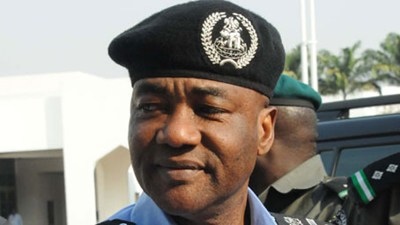
20120522-212911.jpg
Acting Inspector-General of Police, Alhaji Mohammed Abubakar

Pakistan restores Twitter after ban over ‘offensive content’

A Pakistani resident browses a newspaper website on Sunday, after the country's government blocked access to Twitter.
A Pakistani resident browses a newspaper website on Sunday, after the country’s government blocked access to Twitter.

By Katie Hunt, for CNN

STORY HIGHLIGHTS
  • Pakistan blocks Twitter for much of Sunday over content considered offensive to Muslims
  • Tweets related to Facebook competition to post images of prophet Muhammad
  • Move comes after Facebook was blocked for two weeks in 2010

“(CNN) — Pakistan has restored access to Twitter after blocking the popular social networking site over the posting of content it deemed an affront to Muslims, Pakistan’s telecom authority said Monday.

Mohammed Younis, the authority’s director of public relations, said Twitter was blocked on Sunday morning because of “some material considered to be offensive to the Muslim community,” but access was restored by Sunday evening.

A spokesperson for Pakistan’s Ministry of Information Technology told CNN that Twitter was blocked because the site did not remove links and references to a competition taking place on Facebook to post images of the Muslim prophet Mohammed.

“The government is in contact with Twitter and had asked them to remove the material. When they didn’t, it was decided that the site would be blocked,” said ministry spokesman Naveed Ahmed.


Pakistan blocked Facebook in May 2010 in response to a similar contest that called on people to draw depictions of Mohammed.

The “Everybody Draw Mohammed Day” Facebook page offended many Pakistanis as Islam discourages any visual representation of God or prophets like Mohammed.

Younis said it was the IT ministry’s decision to reverse the ban but he could not confirm whether Twitter had removed the tweets deemed offensive.

However, he said Facebook had responded to requests to remove controversial content in Sunday’s case. No-one from the ministry or Twitter was available for comment.

Facebook confirmed that it had restricted access to some content on its site in Pakistan after a request from the authorities.

“While we do not remove this type of content from the site entirely unless it violates our Statement of Rights and responsibilities, out of respect for local laws, traditions and cultures, we may occasionally restrict its visibility in the countries where it is illegal, as we have done in this case,” Facebook said in an emailed statement.

Twitter is hugely popular in Pakistan, with a reported six million account holders, including public figures such as politicians, singers and sports stars. Exiled former president Pervez Musharraf is on Twitter, as is Imran Khan, the cricketer turned politician.

It seemed many users were able to get around Sunday’s outage.

“The fact that despite their ‘Twitter Ban’, we are still tweeting from Pakistan, should tell them how stupid it is to censor internet,” tweeted Marvi Sirmed, a Pakistani columnist and human rights activist with 21,973 followers.”

Source: CNN News

Alibaba will buyback half of Yahoo stake for $7.1bn

The agreement paves the way for Alibaba to consider a share sale.


“US internet company Yahoo said it has reached a deal to sell part of its stake in China‘s biggest internet company Alibaba Group.

Alibaba will buy back half the 40% stake owned by Yahoo, following years of negotiations.

The deal will raise about $7.1bn (£4.5bn) for Yahoo, which has been losing ground to rival Google and Facebook in online advertising.

The agreement also allows Alibaba to consider an initial public offering.

Shareholders

Both companies revealed in a statement that Alibaba will pay Yahoo $6.3bn in cash and up to $800m in Alibaba preferred stock.

For Yahoo, the deal gives it the ability to pay dividends, make acquisitions, or buy back its own shares, something its stockholders have been asking for.

Analysis

image of Juliana Liu Juliana Liu Hong Kong corespondent, BBC News

Alibaba gets a roadmap to independence. Yahoo gets to translate a fortuitously profitable investment into cash for its shareholders.

Importantly, Yahoo has the right to hold onto 10% of Alibaba shares until after a possible future listing.

The fine print seems to point to an initial public offering in 2015, although Alibaba is not committed to any specific time frame.

A listing would be one of the biggest technology offerings in the world.

That is because, among its many subsidiary units, it owns Taobao.com, where consumers sell to other consumers.

It has 370 million registered users, more than the entire population of the US.

Some reports say the value of goods sold on Taobao even exceeded eBay‘s back in 2010.

In addition to Taobao.com, Alibaba also owns Tmall.com, where 70,000 Chinese and international brands sell their products online.

“We look forward to delivering the proceeds of the near-term transaction to our shareholders,” said Timothy R Morse, chief financial officer at Yahoo.

Some analysts have said that most of Yahoo’s value is based on its Asian assets, and selling them will allow its core US operations to be valued by investors.

‘New chapter’

The agreement also allows the Chinese group to buy more of Yahoo’s remaining 20% stake, if Alibaba pushes ahead with a sale of its own shares on the stockmarkets, a move that many observers expect.

The deal is welcome news for Alibaba which has long been looking to buy back the part of its company owned by Yahoo. However, negotiations have suffered many setbacks.

“This transaction opens a new chapter in our relationship with Yahoo,” said Jack Ma, chief executive officer of Alibaba Group, which runs the popular Chinese online market place Taobao.

He also said both companies would continue to work together, with Yahoo’s global audience being an attractive opportunity for Alibaba, as it seeks growth outside China.”

Source: BBC News

Deadly suicide bombing rocks Yemeni capital

At least 10 people have been killed in a suicide bomb attack in the Yemeni capital, Sanaa, security sources say.

One unconfirmed report said as many as 50 people might have been killed.

The assailant targeted soldiers practising for a military parade to mark National Unity Day on Tuesday, which the president is due to attend.

The bomber, who was wearing military uniform, blew himself up among the soldiers as they marched through Sabin Square, near the presidential palace.

Witnesses said remains of the victims were scattered across the square, where large military parades are often held.

National Unity Day marks the anniversary of the unification of the Marxist People’s Democratic Republic of Yemen, also known as South Yemen, and the Yemen Arab Republic, known as North Yemen, in 1990.

Monday’s attack comes 10 days after the military launched an offensive against Islamist militants linked to al-Qaeda in the Arabian Peninsula (AQAP) in the southern province of Abyan.

Over the weekend, at least 33 militants and 19 soldiers were reportedly killed in clashes near the town of Jaar, in Abyan, which has been under control of Ansar al-Sharia – an offshoot of AQAP – since last year.

On Sunday, a US military instructor was shot and wounded by unidentified gunmen as he drove through the eastern Red Sea port of Hodeida. Ansar al-Sharia later said in a statement that it had been behind the attack.”

Source: BBC News

Russian Airforce to Get First T-50 Fighters in 2013


“The Russian Air Force will receive the first batch of prototypes of its fifth-generation T-50 fighter for performance testing in 2013, Col. Gen. Alexander Zelin said on Thursday.

The T-50, developed under the PAK FA program (Future Aviation System for Tactical Air Force) at the Sukhoi experimental design bureau, is Russia’s first new major warplane designed since the fall of the Soviet Union.

“The work on the fifth-generation fighter is going according to schedule,” Zelin, a former Air Force commander, told a news conference in Voronezh (central Russia). “The third prototype has joined the testing program and the fourth is being built.”

The T-50 made its maiden flight in January 2010 and three prototypes have since been undergoing flight tests.

Zelin earlier said that the number of T-50 aircraft involved in testing would be increased to 14 by 2015.

The fighter was first shown to the public in August 2011, in Zhukovsky near Moscow, at the MAKS-2011 air show.”

NATO activates missile shield despite Russian anger


NATO leaders launched Sunday the first phase of a US-led missile shield for Europe, risking the wrath of Russia which has threatened to deploy rockets to EU borders in response.

A NATO official told AFP that US President Barack Obama and his allies “just decided” at a Chicago summit to put a US warship armed with interceptors in the Mediterranean and a Turkey-based radar system under NATO command in a German base.

The alliance insists the shield is not aimed at Russia and aims to knock out missiles that could be launched by enemies such as Iran, but Moscow fears that the system will also serve to neutralize its nuclear deterrent.

Missile defense is indispensable. We are faced with real missile threats,” NATO Secretary General Anders Fogh Rasmussen said on the eve of the summit, adding that 30 states either have or seek ballistic missile technology.

“Against a real threat we need a real defense,” he said.

The standoff has tested Russian-US relations for much of the past decade and been one of the primary issues addressed by Obama when he launched a diplomatic “reset” with Moscow in 2009.

Russian military chief General Nikolai Makarov said this month one option was for Russia to station short-range Iskander missiles in its Kaliningrad exclave near Poland, a long-running threat that has alarmed Eastern European states.

NATO had hoped that Russian President Vladimir Putin would come to Chicago, but instead he sent a lower level delegation to represent Moscow during the summit’s discussion on Afghanistan.

Putin, who returned to power after succeeding his protege Dmitry Medvedev this month, was often at odds with the previous US administration over missile defense in his first two terms of office.

“Russia is sensitive about its nuclear capability because that’s what makes it a superpower,” said Nick Witney, a London-based defense expert at the European Council on Foreign Relations.

In a bid to appease its former Cold War foe, the Western military alliance invited Russia to cooperate in the system at the last summit in November 2010 in Lisbon, but the two sides have struggled to find common ground.

“This is not a project targeted against Russia, but a project we want to push forward with Russia in the interest of Europe’s security,” said German Foreign Minister Guido Westerwelle. “And therefore the door for Russia will stay open.”

Moscow has called for joint control over the system and for NATO to sign a legally-binding guarantee that it is not aimed at Russia.

But NATO has balked at both demands, insisting on keeping two separate systems and refusing to sign a legally-binding document.

The US election also appears to have affected the pace of negotiations.

An open microphone famously caught Obama telling then president Medvedev in March that he could negotiate some concessions on the system if Russia gave him “space” until after the election this year.

The system will be deployed in four phases and become fully operational by 2018.

Spain will host four US Aegis ships at its port in Rota while Poland and Romania have agreed to host US land-based SM-3 missiles in the coming years.

The United States has tested missile defense technology for years but analysts have raised questions over whether the shield is a full-proof defense against incoming rockets from rogue states.

“They have scored successes (in tests) but it’s easier to hit things when you know something is about to come than when something is coming out of the blue,” Witney said.

“There is a huge number of technical unknowns on both sides of this equation,” Witney said, pointing out that there are also doubts over whether Iranian missiles could reach deep into Western Europe.”

Source: DefenceTalk

Military activities reported near Israel-Gaza border

A Palestinian doctor attends to a wounded man at a hospital in Gaza City on Thursday.
May 17, 2012 From Kareem Khadder and Talal Abu Rahma, CNN

“STORY HIGHLIGHTS

  • Israeli forces crossed into Gaza, Israeli and Palestinian officials said Thursday
  • Palestinian officials report injuries and tank fire east of Gaza City
  • Israeli officials confirm tank fire

(CNN) — Israeli tank fire wounded seven Palestinians in a farm field east of Gaza City on Thursday, Palestinian medical and security officials said.

A spokesman for the Israel Defense Forces initially denied tank fire was used in an operation against suspected terrorists approaching the border fence near the Karni crossing. However, the IDF later confirmed that an initial investigation “suggests” that tank shells were fired.

Separately, Israeli forces carried out small operations in or near Gaza on Thursday morning, with officials on both sides giving conflicting accounts of events.

According to Palestinian officials, Israeli forces crossed into the town of Beit Lahiya, detaining at least a dozen Palestinians and injuring one. An Israel Defense Forces spokesman confirmed military activity at the location but described it as “routine,” adding that no injuries were reported and that there was no confirmation of arrests.

Palestinian medical and security officials described a third event, saying that the Israeli military crossed 500 meters (about 545 yards) into Palestinian territory south of Gaza City but that the activity passed without incident.

The IDF spokesman did not confirm the event.”

Source : CNN News

Australia, US sign cyber security deal

“AUSTRALIA and the United States have formalised closer relations on cyber security that will allow for greater sharing of information.

Attorney-General Nicola Roxon signed the statement of cooperation with the US Secretary for Homeland Security Janet Napolitano during a visit to Washington this week.

The new agreement will increase collaboration between the two nations on critical infrastructure, especially digital control systems.

More information will be shared on operational cyber security issues and among cyber incident response teams.

“Countries everywhere are increasingly reliant on critical infrastructure such as telecommunications, which enable online activities that contribute to global commerce and trade and play an increasingly important role in national security,” Ms Roxon said in a statement today.”

Source: The News Australia

Post Navigation