Life is short,have fun!!!

Lifestyle, Travel & Photography. If you want a lifetime memory, take a photo.

Archive for the category “News”

US woman faked breast cancer for breast implants

A PHOENIX woman has been charged with fraud and theft after US authorities say she told people she had breast cancer and needed treatment so she could get money from them to buy breast implants.

Police reports filed in court say 27-year-old Jamie Lynn Toler told her former boss she needed a double mastectomy and breast reconstruction and was uninsured. She told the same tale to her mother and grandparents.

Authorities say Toler helped organise fundraisers and collected more than $8000 beginning in September.

Medical records obtained by police show she did not have cancer and paid a plastic surgeon with the cash.

Toler, who was arrested Wednesday, was released on bond on Thursday after a brief initial court appearance.

Source :The Daily Telegraph Australia

“On his part, Professor Wole Soyinka deplored the killing of Mr. Oyerinde, vowing, “the agents of darkness and retrogression will not triumph.” In a text message on the issue, Mr. Soyinka said, “The hand of the assassin is clear as day. It reaches all the way back to the killing of Bola Ige. Please convey my deepest condolences to his (Oyerinde’s) widow, children and colleagues.”

Source – Sahara Reporters

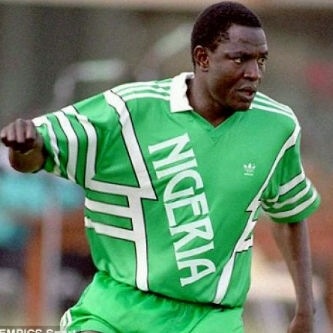
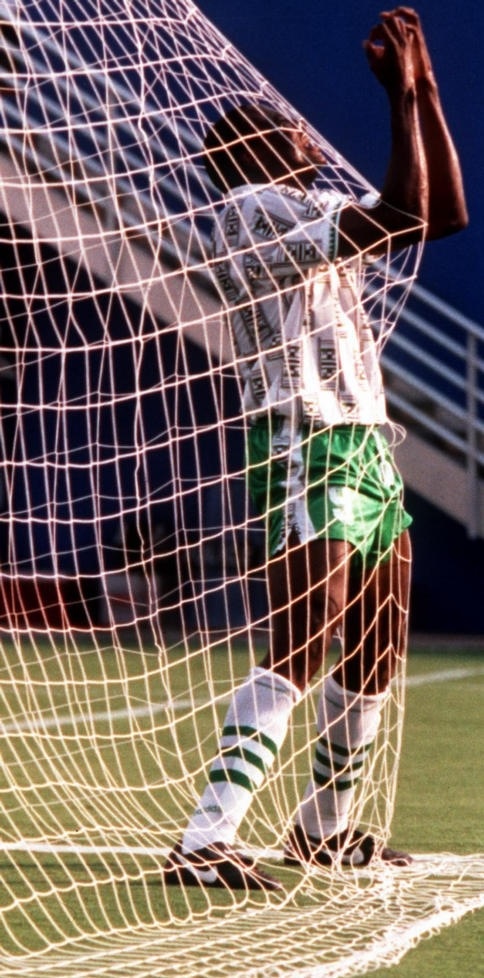
Rasheed Yekini African football Legend is dead

News coming in says Ex Super eagles striker Rasheed Yekini died today in Ibadan. He would be remembered for the classical goals he scored in his days as world class striker especially the first goal in the USA (Atlanta) 1994 World Cup.

20120505-080734.jpg

20120505-080953.jpg

Sudan vows to end fighting with South Sudan

Children carry their family's belongings as they go to Yida refugee camp in South Sudan outside Tess village in the Nuba Mountains in South Kordofan, 2 May 2012
Thousands of people have fled their homes as a result of the fighting

Sudan has promised to cease hostilities with South Sudan and comply with a UN Security Council resolution.

However the foreign ministry also said that Khartoum reserved the right to respond to “aggression” from the South.

The statement came hours after Juba alleged fresh bombing by the Khartoum government’s forces.

A UN resolution on Wednesday backed an African Union plan demanding both sides cease hostilities, amid fears of an all-out war between the neighbours.

The Security Council called for a written commitment by both governments within 48 hours, and threatened sanctions if its terms were not met.

The South has already said it accepts the terms of the roadmap.

The BBC’s James Copnall in Khartoum says that both sides appear to have been brought back to the negotiating table, but tension is still high.

In a statement, a foreign ministry spokesman said Sudan would “fully commit to what has been issued in the resolution about stopping hostilities with South Sudan according to the time limits issued”.

It added that it hoped the “other party will commit to stop the hostilities completely and withdraw its troops from the disputed areas so as not to put SAF [Sudanese Armed Forces] in a situation where it has to defend itself”.

Under the roadmap, the two countries have until next Tuesday to restart negotiations and three months to reach an agreement.

Our correspondent says that while both countries have now committed themselves to the roadmap, they have also accused each other of new attacks.

In its statement, he says, Sudan pointed out the numerous ways in which it considers it has been attacked by South Sudan in the last few days.

Meanwhile, South Sudan said that Sudanese warplanes had bombed a military position in Unity state, and said that there had also been a ground attack.

The latest crisis began last month when the south seized a disputed oil field at Heglig.

Disputes over the sharing of oil revenue is a major cause of conflict between Juba and Khartoum.

South Sudan took most of the oil reserves when it seceded in July 2011, but relies on pipelines to seaports in Sudan for distribution.

The South seceded from Sudan as part of a 2005 peace treaty following two decades of civil war in which some 1.5m people died.


Show regions
Map showing position of oilfileds in Sudan, source: Drilling info international

Both Sudan and the South are reliant on their oil revenues, which account for 98% of South Sudan’s budget. But the two countries cannot agree how to divide the oil wealth of the former united state. Some 75% of the oil lies in the South but all the pipelines run north. It is feared that disputes over oil could lead the two neighbours to return to war.

Source- BBC  News

#Nigeria #Lagos Tanker Drivers Get 4 Days to Quit Apapa-Oshodi Express Road

050512N.Apapa-gridlock-N.jpg - 050512N.Apapa-gridlock-N.jpg

Apapa gridlock


By Gboyega Akinsanmi


Lagos State Government Thursday  issued a four-day ultimatum to all articulated vehicle drivers to desist from unauthorised parking along Apapa-Oshodi expressway or face harsh punitive measures.


The gridlock caused by the tankers has virtually brought to a halt economic activities on the axis, forcing the closure of many businesses.

The state government issued the ultimatum after an emergency meeting with the National Union of Petroleum and Natural Gas Workers (NUPENG), Petroleum Tanker Drivers (PTD) and Road Transport Employers Association of Nigeria (RTEAN) Wednesday night.


The state Commissioner for Transportation, Mr. Kayode Opeifa, who led his counterpart in the Local Government Ministry, Mr. Ademorin Kuye, and Chairman of the state Taskforce on Special Offence Unit, Mr. Bayo Sulaiman, to the meeting, said enforcement would commence next Monday.

Opeifa said the state government could no longer watch and fold its arms to allow such display of lawlessness in the state, adding that the tanker and trailer drivers who failed to comply would have their vehicles towed.


He said the state government “wants you to do business but it does not want you to inconvenient others. Enough is enough. We want to make sure the Apapa expressway, all through to Ijora bridge is free of traffic”.

“We want to see that the road that leads to Tin Can is also free and that the police station at Ijora to Port is free of traffic. We want to see that tankers on Creek Road are evacuated so that the road can be free,” he added.


He added that “all shanties under Liverpool bridge should be cleared. We seek your cooperation to ensure that your people remove their vehicles from the road. Those people whose towing vehicles have broken down on the road should also remove them”.

According to him, “we want to fix Wharf road, Creek road and the Apapa-Oshodi expressway. We also want access to Beach land estate.  Vehicles obstructing residents’ movement to the estate should be removed.”
Opeifa said the taskforce, officials of the Kick against Indiscipline (KAI), the state Traffic Management Authority (LASTMA), and other government agencies had been fully mobilised for the onslaught on the tanker drivers if they failed to evacuate their vehicles from the road by Sunday midnight.


Last Sunday, Fashola visited Apapa area and expressed disgust at the high level of nuisance perpetrated by the tanker and trailer drivers and vowed to dislodge them to allow smooth flow of traffic in the area.

Also speaking, Sulaiman said all routes to Apapa must be free, adding that tanker drivers should not cultivate the habit of parking their vehicles on the road as his men were ready to swing into action.
But Kuye appealed to people trading under the bridge at Liverpool to vacate the area as the place was known to harbour criminal elements in the state.


He said tanker and trailers drivers should not endanger the lives of people in the area as Apapa served as one of the hub of business activities of the nation.

It was gathered that representatives of the various unions at the emergency meeting agreed to comply with the ultimatum issued by the government.

Source :Thisday

The Rigmarole in Nigeria’s Aviation

jonathan-bkpgx.jpg - jonathan-bkpgx.jpg

By Simon Tumba
Early this month I was watching Quest Means Business on CNN, and the story was on how Ryan Air, Europe’s second largest regional carrier was making efforts to cut cost, by cajoling its cabin crew into losing weight, which was aimed at reducing the weight on the aircraft, and further cut the cost of the airline’s operation. More cost cutting measures include, using less ice in the drinks served passengers and cutting the size of inflight magazines.
The lower the weight carried aboard the aircraft, the lower the fuel consumption, hence, the lower the airline’s cost of operation, of which fuel constitutes about 40 per cent of an airline’s operating costs. A reduction in the cabin, any cabin crew weight, from 100 kilos to 50 kilos, would save the carrier about GBP 5,000 monthly or annually.
But what got me thinking was another angle to the story that Ryan Air had planned to remove the arm rests to its seats in order to reduce weight of the aircraft; all in a bid to cut cost! The airline, last year, removed two toilets out of three in its fleet, in a cost cutting plan aimed at reducing fares. Ryan Air’s business mantra is to offer low fares, no matter what, without compromising safety.
Unfortunately this cannot be replicated in Nigeria for three major reasons: most Nigerian carriers are in business with no knowledge of the nitty-gritty of the business; they lack a decent business plan, business model and innovative ideas on how to approach the business with reasonable expansionary strategy. Secondly, there is lack of suitable credit lines from the banking sector and harsh government policies and economic climate prevalent in the industry. A third reason is that the Nigerian Civil Aviation Authority (NCAA) would not permit innovative ideas like Ryan Air’s, either because of political pressure, ignorance, or both.
About two years ago, an innovative Nigerian carrier decided to launch low fares mixing and matching its pricing strategy along a rejuvenated Business Class, but that drew the flak of NCAA, which insisted that the model was anti-competitive and unwelcome in the Nigerian market. There were all kind of claims that the airline was over selling seats and diluting the market. It was alleged that a foremost and dominant carrier which was losing market share to this innovative was behind the pressure mounted by NCAA.
But quite frankly, airline business is not a Jankara market business. It requires strategic thinking on how to develop a brand, identifying a niche market, targeting market audience, reaching them, knowing what makes them tick, keeping customers loyal to the brand, et al. The business truly turns men mad, as they grow grey hair overnight! It’s a very thin margin business where the best run airlines make an average of 10 per cent return on investment. Over the last 50-60 years airlines have made more loses than profits.
A market largely dominated by foreign carriers, is bound to create problems as is being witnessed with the EU carriers, especially British Airways, which appears to be the scapegoat. BA has been in this market for over 70 years, and over this period has developed brand loyalty for two or more generations in some families.
The recent wave of anti-BA sentiment is unnecessary and misplaced for many reasons: It puts Nigeria on the wrong side of investment map, especially in the airline industry. After the Justice George Oguntade panel struck out the case against BA and Virgin Atlantic, someone thought they had to get their pound of flesh and the fare discrimination campaign was resurrected with so much frenzy and misplaced national sentiment. Truly, there is a huge fare disparity between Ghana and Nigeria in the premium cabins, and it takes a discerning mind to know why this is so.
Fares are generally a combination of many factors: cost of operations, market profile, capacity, etc. A major factor many fail to understand is that the profile of Nigeria’s airline market, based on capacity, probably has one of the highest demand for premium seats in the world. On the supply side, only BA offers First Class seats directly to London, with a total of 28 seats a day. There are 168 Business Class seats daily in the Nigerian market on Arik, BA and Virgin Atlantic, making a total of 196 premium seats a day directly to the UK.
Nigerians are globally known for their flamboyance and high taste for the good things of life, including air travel. An average Nigerian millionaire travels First or Business Class. Nearly 60 per cent of Nigerians in the premium cabins are paid for by the government. Check this roll call of government officials who travel in premium cabins at least once or more a year: at the state level, speakers of the 36 houses of assembly with their spouse(s), 108 first class chiefs (traditional rulers), 36 governors and their spouses(s), 72 deputy speakers/governors with their spouse(s). Others are at least 500 commissioners, aides of the governors, state legislatures and directors in the ministries and parastatals, chairmen and councilors of 774 local governments.
At the federal level starting with the presidency, we have special advisers, senior special advisers and permanent secretaries, 42 ministers and their advisers, directors; the legislature covers 109 Senators and 360 members of the House of Representatives as well as their senior aides; and departments and agencies of government includes security agencies, heads of parastatals and their directors. In the judiciary, starting from the Supreme Court, Appeal Court, Federal High Courts and State High Courts, Sharia and Magistrate Courts, we also have judges and grand khadis who also fly in premium cabins overseas.
This gives a significant picture of the premium market in Nigeria. That is why the EU carriers are inundated with calls to confirm the seats of ministers, legislators, governors and other officials who may be on the wait list. The premium cabins have been elevated to a form of status symbol, where you need to belong to be reckoned with. Where in the world do you have ministers and legislators travelling in premium cabins regularly?
In January 2012, Prime Minister David Cameron of Britain, the world’s seventh largest economy, travelled on a regular BA Business Class from London to Washington to meet President Obama, although that was against protocol. But that saved his nation over 200,000 GBP. He even rejected a First Class ticket. With this sense of modesty, Cameron ordered his cabinet members to fly Economy Class. In Canada, also, there are very stringent rules governing official trips of ministers. The issue is that if our politicians, civil servants and policy makers in government would cut their high taste for premium cabins, premium fares would drop.
The huge disparity in airfares in an equidistant zone is nothing new. Brussels a 45 minute flight from London, shares a wide fare disparity on the New York route (6 hours 40 mins from London and 8 hours from Brussels). Yet a First Class seat to New York from London is $14,800, while in Brussels it costs, $8,781; a Club World ticket costs $6,462 from London while it is $2,625 from Brussels. But the economy fare is cheaper out of London than it is from Brussels at $1,070 and $2,043 respectively – quite similar to the disparity between Ghana and Nigeria.
However, based on the Bilateral Services Agreement (BASA) signed between the UK and Nigeria, the latter has no business brow beating BA into reducing fares, or interfering in issues relating to fixing fares. Apart from anti-trust issues, for which we lack a law, NCAA has no basis interfering or commenting on the fares of airlines. The irony is that the same NCAA often presides over meetings with local airlines to increase fares. It is laughable that NCAA would not condone the ‘infractions’ by foreign airlines, but approves similar ‘infractions’ by local airlines.
The BASA with the UK has a ‘double disapproval’ clause where parties must totally agree or disagree on any issue; otherwise, the aggrieved party is required to approach an international arbitration panel for resolution. Where in the world do we find a regulatory body fixing the prices of services or products? When MTN and Econet introduced high call rates at the initial stage of their business in Nigeria, market forces through Glo forced them to change their pricing strategy. So let the market forces check the exorbitant fares of BA. The level of personal vendetta against BA is driving embarrassing government decisions and pronouncements.
Policy makers in our aviation industry are painting a worrying picture for local and foreign investors in the sector, and this must stop. It is globally recognised that this sector is a major catalyst to economic development, which we dearly need. I feel sad that in this modern age, there are calls for the re-establishment of another national carrier. The same corruption, free tickets galore, political cronyism, and parochial and myopic business decisions that killed Nigeria Airways will continue with the new carrier. Knowing the level of corruption in Nigeria today, the airline is a dead duck, as there is no any government-owned commercially driven enterprise running efficiently and profitably today.
Unfortunately, Arik Air which should be in a position to take advantage of the vast opportunities in the market is unable to see beyond its nose. The airline hasn’t displayed any idea, model or innovation to tap into this huge market. For instance, its economy seats have the best leg room in this market, but there has been no marketing strategy on its part to leverage on this advantage. Arik has hired many competent foreign experts with credible experience to turn the airline into a world class success, but often, they get fired or quit for whatever reason.
Nigeria’s aviation like the nation is at a crossroads and we need a serious surgical operation to get it back to life. May God help Nigeria!
•Tumba  is the CEO of SY& T Communications Ltd, a PR firm.

Source- Thisday

#Nigeria No plan to prosecute oil thieves now – FG

May 4, 2012 by Ihuoma Chiedozie, Abuja
Attorney-General of the Federation and Minister of Justice, Mohammed Bello Adoke (SAN)

Against the expectations of Nigerians, the Federal Government on Thursday said it was not ready to prosecute individuals and firms indicted in the N1.7tn oil subsidy scam.

The Attorney-General of the Federation and Minister of Justice, Mohammed Bello Adoke (SAN), who spoke government’s mind in a statement, said it would be guided by the dictates of due process and the rule of law in its handling of the report of the House of Representatives AdHoc Committee on Fuel Subsidy Regime.

Apparently responding to widespread calls, particularly from civil society, for government to take an immediate decisive action on the report, the AGF said the probe was “mainly fact-finding.” He stressed that the Federal Government would conduct thorough investigations in the matter before commencing prosecution.

He hinted that a forensic audit of the accounts of the Nigerian National Petroleum Corporation, directed by President Goodluck Jonathan in 2010, was part of the ongoing investigations that would result in the possible prosecution.

He re-echoed Jonathan’s declaration that the Federal Government was determined to prosecute all those indicted in the report, no matter how highly placed.

However, the AGF noted that the report as well as the resolutions of members of the House on the document were yet to be transmitted to the executive.

He said when received, the report and the resolutions would be passed to the anti-graft agencies for perusal. He stated that the anti-graft agencies would then be expected to assemble ingredients required to raise criminal charges that might be filed against the indicted persons.

The statement reads in part, “The attention of the office of the Attorney-General of the Federation and Minister of Justice has been drawn to recent calls by some groups and well-meaning Nigerians for the prosecution of those allegedly indicted in the Report of the House of Representatives AdHoc Committee on Fuel Subsidy Regime.

“It is pertinent to reiterate government’s position as aptly captured by Mr. President’s initial reaction to the report of the fuel subsidy probe to the effect that any person found wanting will be prosecuted, irrespective of the person’s standing in the society.

“Nigerians must, however, appreciate that in discharging this onerous responsibility, government must be guided by the dictates of the rule of law and due process as required of any democratically elected and responsible government.

“In this regard, the need to ensure that thorough investigations are carried out by relevant law enforcement agencies cannot be overemphasised.

“This is more so, as the exercise carried out by the House of Representatives is mainly fact-finding.

“I also wish to point out that the report of the ad hoc committee and the resolutions adopted by the House of Representatives have yet to be transmitted to the executive arm of government.”

Adoke cautioned against stampeding the anti-graft agencies into embarking on a hasty prosecution.

“Experience has shown that whenever our law enforcement agencies are stampeded to arraign suspects, the end result is usually the discharge of such suspects by the courts ostensibly for want of evidence.

“Nigerians must, therefore, allow our law enforcement agencies to conduct painstaking investigations that will ultimately satisfy the standard of proof required in criminal cases,” he said.

He drew attention to a forensic audit of the accounts of the NNPC, directed by Jonathan in 2010, and urged Nigerians to wait patiently for the outcome of the investigations and subsequent prosecutions that may arise from the subsidy probe conducted by the House, as well as a similar probe by the Senate.

He said, “I, therefore, humbly urge Nigerians to have faith in the processes being undertaken and to patiently wait for the outcome of the investigations and subsequent prosecutions that may flow from the fuel subsidy probe conducted by the House of Representatives and the ongoing probe by the Senate of the Federal Republic of Nigeria.”

On the threat by the Save Nigeria Group to mobilise Nigerians for a protest if action is not taken on the report after the expiration of a two-week ultimatum, Adoke said, “In this respect, I wish to observe that the ultimatum being given by some groups and the threat to embark on demonstrations and strike actions will only compound the problem and divert attention, as well as, the energy that would otherwise have been channelled into productive use by law enforcement agencies.”

Source – The Punch

#Nigeria States should not depend on handouts from FG — Aregbesola

Osun State Governor, Rauf Aregbesola

Osun State Governor, Mr. Rauf Aregbesola, in an interview with journalists in Osogbo bares his mind on the style of his administration and other sundry issues.TUNDE ODESOLA was there

What is your reaction to people, who believe that you are arrogant?

Am I really an arrogant person? You can say I am unusual. I am not your conventional governor. I don’t have the attitude of people you traditionally find in this position. If you say I do not behave like a classical public functionary I will say yes. Since 2004, I had prepared what would be my programme in government. I developed a six-point integral action plan. Everything we are doing today is in strict compliance with the provision of that agenda. Three of them are basically agricultural. We say we would banish hunger, poverty, unemployment. All those are based on agriculture. If there is serious food production, hunger will be history, unemployment and poverty will reduce.

Some think that you don’t give the Osun State University the deserved attention?

Education has lost its focus. People are just going to school, especially at the basic level. What is the total population of Uniosun? At best, it will be 5,000. In the basic education phase, we have at least 750,000 pupils without any future who are certainly doomed in terms of the school that they go and the quality of education. I put together an education summit with clear a guideline on how to make education functional and beneficial to the society. We realised that virtually all the public schools in the state were constructed by the late Pa Obafemi Awolowo. The schools were built with mud.

Mud in this part of the world has a lot of iron which gets oxidised and leads to big cracks. The buildings are already collapsing. We have no choice but to clear the debris and weak structures to build functional infrastructure for education. I intend to build within the next 24 months, 20 high schools with each having capacity for 3,000 pupils and 50 middle schools with capacity for 900 pupils each. I will also build elementary schools (100) with 1,000 capacity at urban centres and as low as 50 in the very rural communities.

It is not just infrastructure alone, we also want to assess out teachers and prepare them in terms of giving the students the best guide. We are re-orientating and motivating our teachers. But I have no problem with the university teachers. But, I do not come to terms easily with the philosophy that fund should only be pumped to the university or that school fees be increased. If you have basic education that is in doldrums and you have no provision to improve it while you focus on tertiary education, who will attend the university? The second is the high fee regime.

There was no one living and working in Osun State that could afford to send their wards to that university because of the high fee. If the highest paid worker and business men could not afford to sponsor their wards to the state university whose interest is the university serving? Our university is well supported. But my commitment is on strengthening the basic education though I will not abandon the tertiary education.

You were reported to have promised to capture 80 per cent of Lagos food market in your agricultural programme. What steps have you taken in the last one year to achieve this?

There was never a time we targeted capturing 80 per cent of Lagos food market. One would be extremely selfish and uncaring to take 80 per cent of the entire food exchange value in Lagos. I believe that if states in the South-West states take 10 per cent each, and they are five, outside Lagos itself, that is 50 per cent. The remaining can be left to other states to have their own share. Why must we have such desire? In terms of location, the states are the closest to Lagos. As such, we should take a maximum advantage of that. That was my projection.

Before I set out for the governorship seat, I made it a primary objective to develop the agricultural potential of Osun to capture just 10 per cent of the food market value in Lagos. Immediately we assumed office, we declared to the world that it would be totally wrong for any entity — be it human or geographical — to claim independent existence and still be dependent on others. When a territory depends absolutely on others, it is no longer independent but a possession of that authority that gives it life.

What exists at present is that most of the states are in this sort of derogatory relationship whereby without the handout of another government — whether federal or central — they cannot survive. Our goal is first of all to ensure that we reverse that ugly trend. We want to be like Lagos, which in the worst scenario can still survive on its own. We have looked around and there is no other way we can have independent survival outside agriculture. After all, the majority of our people, aged though, are into subsistence agriculture. Our primary objective is to help subsistence farmers multiply their production through expansion of their farming capacity, improvement on the techniques of farming and assistance to move their goods to railway terminal for upward movement to Lagos free of charge.

Toward this end, we went to the Nigeria Railway Corporation to finalise agreement to ensure free freight of agricultural produce from Osogbo to Lagos. This is not limited to produce of Osun alone. If yours is from Sokoto and it gets here, for as long as it is agricultural produce, we will transport it for you free. Essentially, this is to motivate our farmers. We are clearing land for potential farmers who could come from any part of the world. We produce improved seedling for high yield free of charge and give fertiliser at subsidised rate. As I am talking to you, we have over 300 metric tons of fertiliser in our store.

Agriculture is the primary focus of our administration. We invest most in agriculture and commit more of our time and energy to it. We have cleared 3,000 hectares of land for agriculture, including land for rice cultivation. If you know, it costs a lot of money to clear 1,000 hectares of land. We are equally opening access roads to farms and providing electricity and water. We are being supported by France and World Bank in the rural accessibility programme where we are targeting a total of 500 kilometres of rural roads to service farmers in various locations.

What it means is that we may not tar all the roads but we shall ensure that all the water crossings are with bridges and gutters so that there will be no reason for farmers not to be able to move their goods from the farm to the nearest centre. But farmers have yet to take advantage of the free freight because they are still held down by the old method of transportation. There will be no discrimination on sources of produce. If produce gets to Dagbolu, which is the centre, the Osun State Government will move it free of charge to Lagos.

The railway is not functioning well, how will you ensure transportation of produce when farmers eventually subscribe fully to your programme?

I have moved people free of charge from Lagos to Osun on a daily basis. I want to tell you that I am improving on the Memorandum of Understanding between our government and the Nigerian Railway Corporation.

The railway has its own challenges and the corporation won’t move beyond its challenges. I don’t worry myself with the problem of the corporation; I only use the railway. I need wagon and locomotive engine and operate at will. If I have enough commodities to move, I can move every hour. You worry about how I do it; that is the creativity. That is why I am different. But the truth is that as of today, my facilities are not fully ready. I have not completed Dagbolu (the food hub) to the level I want and I am still working on Osogbo station.

My Lagos depots are not fully ready. I am looking at having 57 Osun markets in each of the 57 local governments and development centres so that this products on getting to Lagos will be transported straight to the food marts and whoever is interested will get them at Osun prices. The goal is to make farm produce available at farm gate prices in Lagos. What determines the frequency of my rail is the availability of produce.

Source- The Punch
#Nigeria Police detain journalists to prevent access to Saraki

May 4, 2012 by Eniola Akinkuotu
Commissioner of Police, Lagos State Command, Mr. Umaru Manko

No fewer than six journalists were locked up in the office of the Police Public Relations Officer of the Special Fraud Unit in Lagos on Thursday when former Kwara State Governor Bukola Saraki visited the unit to respond to allegations of a N9bn loan scam levelled against him.

Saraki, who  was  supposed to be at the command at 10am on Thursday, arrived an hour later.

He drove into the SFU premises in black Mercedes Benz Sports Utility Vehicle with Abuja number plate CH 165 RBC amid tight security.

His aides shielded him from journalists, who had stormed the premises before he alighted, to meet with the Commissioner of Police, Mr. Tunde Ogunsakin

The governor’s aides appealed to journalists not to take photographs of the member of the Senate but the pleas fell on deaf ears.

Journalists then gathered at the office of the PPRO, Mrs. Ngozi Isintume, but two hours later, as Saraki exited the building, the journalists were locked inside the office of the PPRO to prevent them from taking pictures of Saraki.

“I have been given orders that no journalist must come out. Stay in there until Saraki leaves,” a policeman said as journalists attempted to force the door open.

Sources said Saraki was given preferential treatment by the police as opposed to other persons who had been invited to the SFU over the same allegations.

The senator was supposed to have reported to the SFU on April 20 but pleaded for an extension by three days. But on April 24, he obtained an injunction at an Abuja High Court to restrain the police from arresting him.

On April 28, the SFU declared the lawmaker wanted but he responded by saying he would be at the SFU at 9am on Monday.

On Monday however, Saraki refused to go to the SFU, instead went to the Force Headquarters, Abuja, where he was quizzed by Ogunsakin after being ordered by the Acting Inspector-General of Police, Mr. Mohammed Abubakar to come to Abuja.

Our correspondent learnt that Mohammed had served as CP of the Kwara State command when Saraki was governor.

The SFU had alleged that a group of companies — Joy Petroleum Limited, Skyview Properties Ltd, Dicetrade, and Limkers Nigeria Ltd — were given loans by the bank under the management of former Managing Director of Intercontinental Bank, Mr. Erastus Akingbola.

The loans were allegedly promoted by Saraki between 2004 and 2009 when he was the Governor of Kwara State.

The SFU noted that the loans/facilities worth billions of naira were used to purchase shares in blue chip companies and choice landed properties in Lagos and Abuja, some of which were used to secure the loans.

However, Akingbola’s successor following the shake up by the Central Bank of Nigeria, Mr. Mahmood Alabi, granted a waiver of N9,97bn, representing about 82 per cent of N11.97bn indebtedness.

#Nigeria EFCC can’t fight corruption with 3,000 workers – Lamorde

May 4, 2012 by John Alechenu, Abuja
Chairman, Economic and Financial Crimes Commission, Mr. Ibrahim LamordeMr. Ibrahim Lamorde

Chairman, Economic and Financial Crimes Commission,
| credits: File copy

Chairman of the Economic and Financial Crimes Commission, Ibrahim Lamorde, has said it is near impossible for the agency to fight corruption with a staff strength of less than 3,000 in a nation of 160 million people.

Lamorde said this in an address during the distribution of a book, The Monster Called Corruption and the Monkey Leaders, jointly produced by the EFCC and the Universal Basic Education Commission, in Abuja, on Thursday.

He said the anti-corruption agency had been paying  emphasis on prevention through enlightenment and education of Nigerians.

Lamorde, who was represented by a senior official of the commission, Mr. David Tukura, said the anti-graft war could only be won when every Nigerian was brought on board.

He  said, “Corruption is indeed a scourge, we have to combat it. To this end, public enlightenment is critical to the success in the fight against corruption, hence the engagement of schools at all levels.”

Minister of State for Education, Chief Nyesom Wike, who was represented by the Executive Secretary of UBEC, Ahmed Modibo, said there was a need for greater transparency in the UBEC process aimed at improving access and quality of education.

Wike said enlightenment and education on anti-corruption for students would improve on their personal knowledge and encourage them to serve as whistle blowers on people involved in anti-social activities.

Source- The Punch

Post Navigation