Life is short,have fun!!!

Lifestyle, Travel & Photography. If you want a lifetime memory, take a photo.

Archive for the category “Security & Crime News”

Australia expels Syria’s Charge D’Affairs Jawdat Ali

Syria massacre

The bodies of some of the 108 people, including 32 children, awaiting burial after a massacre in the Syrian town of Houla at the weekend. Picture: AFP

“SYRIA’S top diplomat in Australia, Jawdat Ali, was today expelled by the Gillard Government in protest about the massacre of an estimated 100 people in his country, many of them children.

Foreign Affairs Minister Bob Carr said the Syrian Charge D’Affairs has 72 hours to leave the country.

Senator Carr said Australia condemned the atrocities perpetrated against civilians in the village of Haoula.

Mr Ali was summoned to the Department of Foreign Affairs in Canberra today and told he was being expelled.

On Monday, Mr Ali was told Australia expected the Syrian Government to cease military operations and abide by the ceasefire brokered by special Envoy Kofi Annan.

“This massacre of civilians in Haoula is a hideous and brutal crime,” Senator Carr said.

The United Nations has condemned Syria for the slaughter.

Australia, the European Union and the United States have imposed sanctions on Syria. Australia has put travel and financial restrictions on 106 individuals and 28 entities and imposed an arms embargo.”

Source: News.com.au

‘US commandos parachuted into North Korea’


“US and South Korean special forces have been parachuting into North Korea to gather intelligence about underground military installations, a US officer has said.

  • Thousands of tunnels built since the Korean war
  • Commandos sent in with minimal equipment
  • Entire tunnel infrastructure “hidden from satellites”

Army Brigadier General Neil Tolley, commander of US special forces in South Korea, told a conference held in Florida last week that Pyongyang had built thousands of tunnels since the Korean war, The Diplomat reported.

“The entire tunnel infrastructure is hidden from our satellites,” Gen Tolley said, according to The Diplomat, a current affairs magazine. “So we send (South Korean) soldiers and US soldiers to the North to do special reconnaissance.”

“After 50 years, we still don’t know much about the capability and full extent” of the underground facilities,” he said, in comments reported by the National Defense Industrial Association’s magazine on its website.

Gen Tolley said the commandos were sent in with minimal equipment to facilitate their movements and minimise the risk of detection by North Korean forces.

At least four of the tunnels built by Pyongyang go under the Demilitarised Zone separating North and South Korea, Gen Tolley said.

“We don’t know how many we don’t know about,” he admitted.

Among the facilities identified are 20 air fields that are partially underground, and thousands of artillery positions.

In February, South Korea’s Yonhap news agency reported that had built at least two new tunnels at a nuclear testing site, likely in preparation for a new test.”

Source: News.co.au

#BreakingNews Al Qaeda’s No. 2 in Afghanistan killed in air strike, NATO says

“AL-Qaeda’s second most senior leader in Afghanistan, a key figure in commanding attacks on foreign forces, has been killed in an air strike, NATO has announced.

Sakhr al Taifi, a Saudi, was killed in a precision air strike Sunday in northeastern Kunar Province.

“Sakhr al Taifi, also known as Musthaq and Nasim, was al Qaeda’s second highest leader in Afghanistan, responsible for commanding foreign insurgents, in addition to directing attacks against coalition and Afghan forces,” NATO’s International Security Assistance Force (ISAF) said in a statement.

Taifi traveled frequently between Afghanistan and Pakistan and carried out orders from the terror network’s senior leadership, ISAF said.

He armed insurgents in eastern Afghanistan and also organized the transport of militants into the country.

Taifi was identified along with another al Qaeda terrorist and targeted in an air strike. No Afghan civilians were injured, the force said.”

Source: The News .Com.au Australia

Blast in Kenya capital Nairobi ‘may have been bomb’

“The BBC’s Kevin Mwachiro: “There were lots of clothes and shoes that were strewn in front of the store”

Kenya’s police say an explosion which injured 33 in the capital, Nairobi, may have been caused by a bomb, after initially blaming an electrical fault.

The blast tore apart a shopping complex on Moi Avenue at lunchtime.

A witness has said a bag was abandoned next to her just before the explosion.

Prime Minister Raila Odinga has said the blast had a terrorist link. Militant group al-Shabab has repeatedly threatened to stage revenge attacks after Kenya sent troops to Somalia.

There has been a string of grenade and bomb blasts across Kenya in recent months, killing several people.

Shoes and clothes scattered

Five of those injured are said to be in a critical condition.

Police spokesman Eric Kiraithe told the BBC he no longer believed an electrical fault had caused the blast, as police commissioner Mathew Iteere had initially suggested.

A man injured during an explosion is assisted from the scene in Kenya"s capital Nairobi, May 28, 2012. Some 28 people are said to have been injured by the blast

In a statement, Mr Kiraithe said the cause of the explosion had not been established.

“The investigating team is exploring the possibility that the blast was caused by criminals using an improvised explosive device,” he said.

“Initial examination of the scene indicates that the possibility of a conventional bomb is remote.”

Mr Odinga told reporters at the site of the blast: “This is terrorism… this is a heinous act, we are under threat, but we will not be cowed.”

Kenya Power, the country’s sole electricity distributor, has also ruled out any electrical malfunction as the cause of the blast.

The BBC’s Kevin Mwachiro says glass and shoes and clothes from the small shops inside the building were scattered across the street.

TV pictures have shown people pouring into the streets from nearby buildings to get away from the scene of the fire, the AP news agency reports.

Moi Avenue is a major road which would have been busy during the lunch hour, AP says.

According to an eyewitness, there was a huge blast and debris flew in different directions injuring people in the vicinity, the Nation newspaper reports.

The powerful explosion shook buildings in the surrounding area and the evacuation process began, the Nation says.”

Source : BBC News


Abyei dispute: Sudan ‘to withdraw troops’

Sudan will begin pulling its troops out of the disputed border region of Abyei on Tuesday, an army spokesman has said.

Abyei is claimed by both Sudan and South Sudan, which became independent in 2011 after a long civil war. Sudan’s forces seized Abyei in May 2011.

Its status was left undecided in the 2005 peace deal between the sides, and a referendum on the issue has been postponed indefinitely.

Peace talks between the two states are scheduled to begin on Tuesday.

In the talks due to be held in the Ethiopian capital Addis Ababa, the two countries are expected to cover several border disputes that have caused friction, including Abyei.

Sudan has decided to redeploy its troops out of Abyei in order to “offer a good environment for the talks”, military spokesman Sawarmi Khaled Saad said in a statement quoted by the AFP news agency.

He said Khartoum was responding to a request from the talks’ mediator, former South African President Thabo Mbeki.

‘Guarantee’

It has also asked for a “guarantee” recognising that Abyei is part of its territory, the spokesman added.

Analysis

James Copnall BBC News, Khartoum

The Sudanese military spokesman avoided the word “withdrawal” – “redeployment” sounds so much less like a defeat.

Certainly, if the Sudanese troops do leave Abyei – and many in South Sudan will be sceptical until it actually happens – Khartoum will negotiate from a weaker position.

But the Sudanese leadership is clearly hoping to burnish its reputation with this decision, which comes the day before a meeting in which progress – or not – on the African Union’s roadmap is to be evaluated.

There is also the prospect of UN sanctions for any failure to make real progress in the negotiations.

There are strong feelings in both countries about Abyei.

The Misseriya, a Sudanese group, take their cattle through the region every year.

The Dinka Ngok, the permanent residents of the area, want Abyei to be part of South Sudan.

But even if from now on the only troops in Abyei are UN peacekeepers, the underlying problem of how to decide its future remains.

On Sunday, former US President Jimmy Carter said after meeting Sudanese President Omar al-Bashir that Khartoum was ready to pull its forces out of Abyei.

Tens of thousands of civilians were displaced when the Sudanese army took control of the region in three days of clashes with South Sudanese troops in May 2011.

The dispute in Abyei is rooted in ethnic conflict between farmers from the pro-South Sudan Dinka Ngok community and the pro-Sudan Misseriya nomads.

In April, cross-border clashes centred on the neighbouring oil-rich region of Heglig brought Sudan and South Sudan close to all-out war.

South Sudan says Sudanese warplanes bombed several locations on its border, although Khartoum denies this.

The same month, the South’s troops occupied Heglig for a week. It said it pulled out in response to international pressure, but Sudan said it reconquered the territory.

The UN Security Council has called on both countries to cease all bombing and cross-border fighting, and to return to talks aimed at resolving their outstanding disputes.

Security is a key issue, and one that Sudan says must be resolved before anything else, the BBC’s James Copnall in Khartoum reports.

Outstanding issues also include oil and the situation of the estimated half a million South Sudanese still living in Sudan, our correspondent says.

But the level of distrust between the two sides is considerable, and rapid progress on the many areas of substantial disagreement is unlikely, he adds.

Sudan: A country divided
Show regions
Map showing position of oilfileds in Sudan, source: Drilling info international

Both Sudan and the South are reliant on their oil revenues, which account for 98% of South Sudan’s budget. But the two countries cannot agree how to divide the oil wealth of the former united state. Some 75% of the oil lies in the South but all the pipelines run north. It is feared that disputes over oil could lead the two neighbours to return to war.”
Source; BBC News

IG: Police Constable to Earn N50,000

By Chiemelie Ezeobi

“Acting Inspector-General of Police (IG), Alhaji Mohammed Abubakar, said Monday in Ikeja, Lagos State, that the least paid police officer (constable) would go home with a monthly salary of N50,000, if his proposal to the Presidency scales through.

This will mark a sharp increase, as a constable is currently paid N28,000 a month.

He made the disclosure at the Police Command Headquarters while addressing the personnel as part of his visit to the state.

He said: “We are looking into the welfare of our officers and we have made a proposal to the Presidency for the basic salary of constables to be a minimum of N50, 000.”
His declaration sent the policemen at the briefing ground into a boisterous celebration.

Abubakar said he took the decision to seek improvement in the welfare of the personnel to boost their morale.

Soon after pledging to upgrade the welfare of his officers, Abubakar sounded a note of warning to errant officers.
He said any policeman found wanting of the laid down rules would not be spared.

He also said 50,000 officers of the Force were being trained in intelligence and crime investigation to check the insecurity in the country.

According to him, 16,000 of the 50,000 would get intelligence-based police training, while another 10,000 would go for detective course training.

Abubakar disclosed this when he led top police officers on a courtesy visit to Governor Babatunde Fashola in continuation of his familiarisation tour of police commands in the country.

The News Agency of Nigeria (NAN) reported that Abubakar had earlier addressed officers and men of the command, stakeholders and traditional rulers.

He said the security situation in the country called for more proactive measures if the nation must win the war against violence.

The police boss pledged that he would restore the lost glory of the police, but noted that this might not be possible without the support of the officers and the public.

“We want to build a people-friendly police, which every Nigerian would be proud to be associated with; a force people would be willing to assist by offering information, and they will see the result immediately,” he said.

Abubakar added: “At this point in time, any officer that is not willing to embrace the change will fall by the way side.”
He commended the Lagos State Government for supporting the force, stressing that if other states in Nigeria emulated the state, the crime situation would be drastically reduced.

The IG said that about 300 patrol vehicles would be deployed in the nation’s high ways to replace the dismantled road blocks.

“The vehicles will replace the recently dismantled road blocks and help to boost the effective patrolling of our highways,” he said.

Abubakar said unfortunately, road blocks were being used for purposes different from their original intention.

He said the road blocks, as used in the country, had been turned into an aberration which affected effective policing.
He further said the road blocks were being used to extort money from motorists over the years, rather than to fight crime.

“We have gone ahead to stop road blocks because we do not understand the reason why these road blocks should be there.

“This is the only country in the world that you have permanent road blocks. But really in security situations, road blocks are temporary measures that are only put in place after particular security issues have been taken care of.
“Unfortunately, we have made it a permanent feature of our security manoeuvres,” he said.

According the IG, “That is why we are doing everything possible to build the capacity of our officers. Capacity building is the key to effective policing in the country and from our analysis those road blocks were not doing us any good.

“In fact, they were greatly damaging the country’s reputation and that of the Police Force. And so, we decided that those road blocks should go.”

He added that all the four premier police colleges in Enugu, Ikeja, Maiduguri and Kaduna would soon be rehabilitated and repositioned to deliver quality training to men of the force.

Abubakar said that the police were currently in a major transformational process, promising that the Force would soon metamorphose into a people-friendly, effective-crime fighting establishment.

He urged Nigerians to support the Force’s Community Policing Initiative by volunteering relevant information that would further strengthen the security of lives and property.
Abubakar promised to strengthen the operations of police institutions to enable them to undertake their responsibilities as officers’ training schools.

In his speech, Fashola commended the police for their efforts to curb crimes, in spite of insufficient equipment.
He hoped that Abubakar, who had passed through the rank and file to the top, would be in a better position to take the force to a higher level.

The governor urged Abubakar to address issues such as rape, sale of alcohol by those underage, and assault on children and women.”

Source: Thisday Newspaper

20120522-212911.jpg
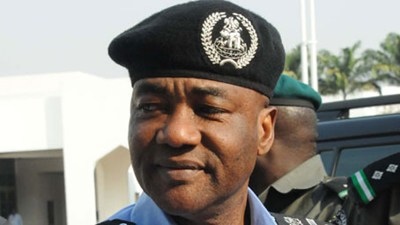
Acting Inspector-General of Police, Alhaji Mohammed Abubakar

Deadly suicide bombing rocks Yemeni capital

At least 10 people have been killed in a suicide bomb attack in the Yemeni capital, Sanaa, security sources say.

One unconfirmed report said as many as 50 people might have been killed.

The assailant targeted soldiers practising for a military parade to mark National Unity Day on Tuesday, which the president is due to attend.

The bomber, who was wearing military uniform, blew himself up among the soldiers as they marched through Sabin Square, near the presidential palace.

Witnesses said remains of the victims were scattered across the square, where large military parades are often held.

National Unity Day marks the anniversary of the unification of the Marxist People’s Democratic Republic of Yemen, also known as South Yemen, and the Yemen Arab Republic, known as North Yemen, in 1990.

Monday’s attack comes 10 days after the military launched an offensive against Islamist militants linked to al-Qaeda in the Arabian Peninsula (AQAP) in the southern province of Abyan.

Over the weekend, at least 33 militants and 19 soldiers were reportedly killed in clashes near the town of Jaar, in Abyan, which has been under control of Ansar al-Sharia – an offshoot of AQAP – since last year.

On Sunday, a US military instructor was shot and wounded by unidentified gunmen as he drove through the eastern Red Sea port of Hodeida. Ansar al-Sharia later said in a statement that it had been behind the attack.”

Source: BBC News

Russian Airforce to Get First T-50 Fighters in 2013


“The Russian Air Force will receive the first batch of prototypes of its fifth-generation T-50 fighter for performance testing in 2013, Col. Gen. Alexander Zelin said on Thursday.

The T-50, developed under the PAK FA program (Future Aviation System for Tactical Air Force) at the Sukhoi experimental design bureau, is Russia’s first new major warplane designed since the fall of the Soviet Union.

“The work on the fifth-generation fighter is going according to schedule,” Zelin, a former Air Force commander, told a news conference in Voronezh (central Russia). “The third prototype has joined the testing program and the fourth is being built.”

The T-50 made its maiden flight in January 2010 and three prototypes have since been undergoing flight tests.

Zelin earlier said that the number of T-50 aircraft involved in testing would be increased to 14 by 2015.

The fighter was first shown to the public in August 2011, in Zhukovsky near Moscow, at the MAKS-2011 air show.”

NATO activates missile shield despite Russian anger


NATO leaders launched Sunday the first phase of a US-led missile shield for Europe, risking the wrath of Russia which has threatened to deploy rockets to EU borders in response.

A NATO official told AFP that US President Barack Obama and his allies “just decided” at a Chicago summit to put a US warship armed with interceptors in the Mediterranean and a Turkey-based radar system under NATO command in a German base.

The alliance insists the shield is not aimed at Russia and aims to knock out missiles that could be launched by enemies such as Iran, but Moscow fears that the system will also serve to neutralize its nuclear deterrent.

Missile defense is indispensable. We are faced with real missile threats,” NATO Secretary General Anders Fogh Rasmussen said on the eve of the summit, adding that 30 states either have or seek ballistic missile technology.

“Against a real threat we need a real defense,” he said.

The standoff has tested Russian-US relations for much of the past decade and been one of the primary issues addressed by Obama when he launched a diplomatic “reset” with Moscow in 2009.

Russian military chief General Nikolai Makarov said this month one option was for Russia to station short-range Iskander missiles in its Kaliningrad exclave near Poland, a long-running threat that has alarmed Eastern European states.

NATO had hoped that Russian President Vladimir Putin would come to Chicago, but instead he sent a lower level delegation to represent Moscow during the summit’s discussion on Afghanistan.

Putin, who returned to power after succeeding his protege Dmitry Medvedev this month, was often at odds with the previous US administration over missile defense in his first two terms of office.

“Russia is sensitive about its nuclear capability because that’s what makes it a superpower,” said Nick Witney, a London-based defense expert at the European Council on Foreign Relations.

In a bid to appease its former Cold War foe, the Western military alliance invited Russia to cooperate in the system at the last summit in November 2010 in Lisbon, but the two sides have struggled to find common ground.

“This is not a project targeted against Russia, but a project we want to push forward with Russia in the interest of Europe’s security,” said German Foreign Minister Guido Westerwelle. “And therefore the door for Russia will stay open.”

Moscow has called for joint control over the system and for NATO to sign a legally-binding guarantee that it is not aimed at Russia.

But NATO has balked at both demands, insisting on keeping two separate systems and refusing to sign a legally-binding document.

The US election also appears to have affected the pace of negotiations.

An open microphone famously caught Obama telling then president Medvedev in March that he could negotiate some concessions on the system if Russia gave him “space” until after the election this year.

The system will be deployed in four phases and become fully operational by 2018.

Spain will host four US Aegis ships at its port in Rota while Poland and Romania have agreed to host US land-based SM-3 missiles in the coming years.

The United States has tested missile defense technology for years but analysts have raised questions over whether the shield is a full-proof defense against incoming rockets from rogue states.

“They have scored successes (in tests) but it’s easier to hit things when you know something is about to come than when something is coming out of the blue,” Witney said.

“There is a huge number of technical unknowns on both sides of this equation,” Witney said, pointing out that there are also doubts over whether Iranian missiles could reach deep into Western Europe.”

Source: DefenceTalk

Military activities reported near Israel-Gaza border

A Palestinian doctor attends to a wounded man at a hospital in Gaza City on Thursday.
May 17, 2012 From Kareem Khadder and Talal Abu Rahma, CNN

“STORY HIGHLIGHTS

  • Israeli forces crossed into Gaza, Israeli and Palestinian officials said Thursday
  • Palestinian officials report injuries and tank fire east of Gaza City
  • Israeli officials confirm tank fire

(CNN) — Israeli tank fire wounded seven Palestinians in a farm field east of Gaza City on Thursday, Palestinian medical and security officials said.

A spokesman for the Israel Defense Forces initially denied tank fire was used in an operation against suspected terrorists approaching the border fence near the Karni crossing. However, the IDF later confirmed that an initial investigation “suggests” that tank shells were fired.

Separately, Israeli forces carried out small operations in or near Gaza on Thursday morning, with officials on both sides giving conflicting accounts of events.

According to Palestinian officials, Israeli forces crossed into the town of Beit Lahiya, detaining at least a dozen Palestinians and injuring one. An Israel Defense Forces spokesman confirmed military activity at the location but described it as “routine,” adding that no injuries were reported and that there was no confirmation of arrests.

Palestinian medical and security officials described a third event, saying that the Israeli military crossed 500 meters (about 545 yards) into Palestinian territory south of Gaza City but that the activity passed without incident.

The IDF spokesman did not confirm the event.”

Source : CNN News

Post Navigation