Life is short,have fun!!!

Lifestyle, Travel & Photography. If you want a lifetime memory, take a photo.

Commonwealth Bank cuts 40bp from borrowing rates

Commonwealth bank.Commonwealth Bank … Borrowing rates to drop 40 basis points, but deposit rates remain “under review”. Photo: Jessica Shapiro

Commonwealth Bank will lower its standard variable interest rate by 40 basis points – joining National Australia Bank in holding back some of the Reserve Bank’s 50 basis-point cut earlier this week.

Standard variable rate loans at CBA drop to 7.01 per cent, effective from Friday, May 11. Notably, the bank did not reveal its rate changes for deposits, saying those rates remain under review.

Today’s CBA move outpoints NAB, which yesterday cut 32 basis from its borrowing rates. Westpac and ANZ are yet to announce their decisions, with ANZ delaying its decision until next Friday.

“In making this decision, the group has continued to balance the interests of its 1.8 million home loan borrowers with those of its 11 million depositors,” CBA said in a statement.

The lending rate move leaves the bank’s standard variable rate 2 basis points higher than National Australia Bank’s standard variable rate of 6.99 per cent.

The RBA on Tuesday slashed its official cash rate by 50 basis points to 3.75 per cent in a bid to spur the faltering economy. The size of the central bank’s cut was interpreted by commentators as giving the big four banks scope to retain more of their margin when trimming their mortgage rates.

A 40 basis-point cut on a standard 25 year, $300,000 variable rate mortgage would trim the monthly repayments by $81 to $1,998, according to RateCity.

Deposit rates

While NAB lowered its borrowing rates by 32 basis points, the bank cut its deposit rates by the full 50 basis points.

Commonwealth Bank said this morning that its deposit rates “remained under review” but no changes had been made to them in conjunction with today’s mortgage rate announcement.

Today’s announcement from the CBA comes as Westpac posted a bumper first-half profit as it and ANZ consider how much of this week’s official interest rate cut to pass on to customers.

Westpac’s first-half cash profit came in at $3.195 billion, up 1 per cent from a year earlier, and slightly more than the $3.12 billion profit expected by analysts.

Westpac will reveal its interest rate plans on Friday, chief executive Gail Kelly said today.

The Westpac result followed a day after ANZ Bank reported first-half underlying profit of just under $3 billion, a bumper result that added pressure on the bank to pass on in full the RBA’s official interest rate cut.

czappone@theage.com.au

Businessman posts $1.5m bail but authorities hold onto $40m assets

A MILLIONAIRE businessman charged over a $63 million tax evasion and money laundering scheme has been allowed to return to his Gold Coast mansion after posting bail of $1.5 million. But more than $40 million in luxury assets, including houses, cars and yachts owned by Michael John Issakidis, 67, and an associate will remain in the hands of the authorities after being seized in raids last month. The Australian Federal Police and Australian Tax Office say the seven-month investigation into Mr Issakidis is the largest under Project Wickenby, the federal government’s pursuit of wealthy alleged tax evaders. Advertisement: Story continues below Prime real estate in Sydney and on the Gold Coast as well as several Rolls-Royces, a Lamborghini, an Aston Martin, a Mercedes-Benz and yachts have been seized under the new federal proceeds of crime laws, the AFP said. Mr Issakidis faced Central Local Court last week charged with dealing in the proceeds of crime of more than $1 million and conspiring to cause loss to the Tax Office. Magistrate Antony Townsden granted him bail on the condition he live at his Paradise Point home on a $1 million bail. Rhonda Laraine Issakidis and Nance Beverley Toope also agreed to each post $250,000 with the court. Earlier this year, Mr Issakidis sued ”Baby” John Burgess for $30,000 in unpaid rent the former TV host owed on his sub-penthouse in the Gold Coast’s Q1 building. Greek-born Mr Issakidis is the managing director of NeuMedix Health Group, a group of investment and health technology companies. His bail conditions prevent him from contacting NeuMedix’s co-founder and director Anthony James Dickson. NeuMedix is involved in a program at Griffith University‘s botanical medicine for population health, which is developing herbal medicine to treat dengue fever. Wickenby investigators allege from 2006 Mr Issakidis, through a complex unit trust structure, over-inflated the prices of Australian patents once they were transferred offshore and claimed corresponding depreciation expenses of $63 million. They further allege these funds were laundered through an account in Britain and accounts in Hong Kong before being transferred back into Australia. Mr Issakidis will reappear in the Downing Centre Local Court on August 7.

Courtesy: Sydney Morning Herald

Henry Okah insists President Jonathan masterminded two bomb attacks

02/05/2012 09:43:00 Elor Nkereuwem & Ini Ekott

Premium Times.

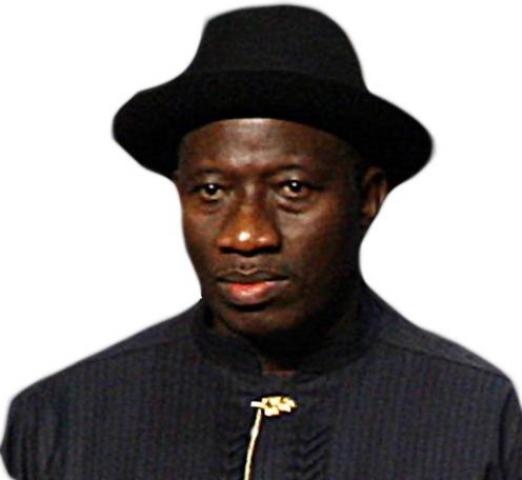
President Goodluck Jonathan
Mr. Okah says the President and his aides organized the attacks in a desperate political strategy to demonize political opponents, and win popular sympathy ahead of the 2011 elections.

Henry Okah, the detained leader of the Movement for the Emancipation of the Niger Delta (MEND), blamed for the 2010 Independence Day bomb that killed at least 10 people with many more injured, is to tell a South African court the attacks were sponsored by President Goodluck Jonathan.

That, he said, came after the president and those working for him, had engineered similar attacks earlier in March 2010.

“It is my belief that President Goodluck Jonathan’s government working with a faction of MEND planned and executed the bombings of 14 March 2010 and 1 October 2010,” Mr. Okah said in an affidavit deposed at a South African court.

The president’s spokesperson, Reuben Abati, could not be reached to comment for this story. Calls to his mobile telephone was neither answered nor returned.

The sworn affidavit is expected to be filed at the court between Tuesday and Wednesday as Mr. Okah renews his bid to secure a bail after spending more than one year in a South African jail.

His trial is set to start October 1, 2012, exactly two years since a devastating blast that occurred less than a kilometer from the Eagles Square in Abuja where President Jonathan was attending Nigeria’s 50th anniversary.

The militant group, MEND, which authorities said Mr. Okah headed, claimed responsibility for the attack. Mr. Okah has denied membership of the group and plotting the attacks.

Instead, in a shocking deposition that further deepens the complexity of an already convoluted case, Mr. Okah, who lives in South Africa, said Mr. Jonathan and his aides organized the attacks in a desperate political strategy to demonize political opponents, and win popular sympathy ahead of the 2011 elections.

“The purpose of the 14 March 2010 bombing in my opinion was to create an atmosphere of insecurity in the Niger Delta where President Goodluck Jonathan at that time, was fighting to oust the governor Mr. Emmanuel Uduaghan whom President Goodluck Jonathan intended to replace with his Minister for Niger Delta, Mr Godsday Orubebe,” Mr. Okah said in a 194-page affivadavit obtained by PREMIUM TIMES.

“The bombing on 1 October 2010 was a platform for the elimination of political opposition from the north in the form of General Ibrahim 8abangida. The bombing of 1 October 2010 was also intended by the President Goodluck Jonathan Government to create anti North sentiments nationwide in order to galvanize support from other sections of Nigeria against other northern candidates in the Presidential elections,” he said.

The allegations first came to light in an interview Mr. Okah granted Arabic satellite television, Al Jazeera in October 2010 weeks after the blast. In the interview, he blamed the attacks on Mr. Jonathan’s aides and claimed he was arrested for refusing to influence MEND, to retract its claim of responsibility.

Since then, Mr. Okah has been denied bail at least twice, with one at the South Gauteng High court, Johannesburg where he is filing a new application for bail based on “new facts.”
Ahead of the start of trial October, Mr. Okah confirmed he has been availed with the details of evidences planned to be used against him.

The statements and exhibits, contained in a police docket obtained by the investigating officer, bear allegations the Nigerian government- now through its South African counterpart- put forward against the alleged former militant leader.

The previously known details contain claims of alleged phone communication between Mr. Okah and the those who carried out the attacks, allegedly on his orders, computer records, photographs purporting to show incriminating images and other materials.

His new appeal for bail is based on those evidences which he describes as being “extremely weak”. Mr. Okah said none of the exhibits had been substantiated to be linking him to the crime, and concluded that based on those claims, “It was unlikely that the state will be successful in a criminal prosecution against me.”

Despite Mr. Okah’s repeated denials of links to MEND and its attacks, his narration paints a picture of a former powerful figure whose influence over ex-militants, was courted by politicians, in the same breath regarded as a threat.

He spoke with Mr. Jonathan several times on phone, a telltale aspect of a long-standing relationship he said started in 1999 while the president was the deputy governor in Bayelsa state.

While the nation faced a leadership crisis during the sickness of late President Umar Yar’adua in 2009, Mr. Okah emerged a prominent figure in the aftermath of a successful amnesty programme for the Niger Delta militant, initiated by Mr. Yar’adua.

Politicians knew he could influence the ex-fighters and even what continued to go on in the oil rich creeks. It was a role President Jonathan needed, Mr. Okah’s statement pointed out, as did prospective opponents for the 2011 election like former military ruler, Mr. Babangida, and even current petroleum minister, Diezani Alison-Madueke.

Mr. Jonathan repeatedly sent his aides, including Godsday Orubebe (Niger Delta minister), Oronto Douglas, and others to him in South Africa, to seek his support, he said.
His indifference, amid reports he was rooting for Mr. Babangida, as well as his refusal to rein MEND in on the statement, informed his arrest, Mr. Okah said.

He claim he was close to Jonathan so much so, Mrs. Alison-Madueke, then a minister of Mines and Steel, needed his support for President Jonathan to pick her ahead of Odein Ajumogobia, for the petroleum slot.

“The last call I received from Ms Madueke was at 6:41:35 on 4 April 2010 during which she thanked me for my contribution in influencing her appointment as Minister of Petroleum,” he said.

He said he was in touch with the president’s close aides when the October 1, 2010 bomb came off, and had no inkling his arrest was being planned.

20120502-220329.jpg

Osama Bin Laden: The night he came for dinner

By M Ilyas Khan BBC News, Islamabad


Osama Bin Laden

What happens when your surprise dinner guest turns out to be the world’s most wanted man? A year on from the death of Osama Bin Laden, two men tell how they came to host the then leader of al-Qaeda.

Late one night in the summer of 2010, on the fringes of the Waziristan region in north-western Pakistan, half a dozen men of a local tribal family waited nervously for the arrival of a guest whose identity they didn’t know.

They had been alerted to this visit weeks earlier, by someone they describe simply as an “important person”. They were not given any names, and the exact time of the guest’s arrival was conveyed to them just a few hours in advance.

At about 23:00, when the world around them was in deep sleep, they heard the rumble of the approaching vehicles.

“A dozen big four-wheel drive jeeps drove into the compound,” recalls one family elder who agreed to speak to me about it. “They seemed to converge from different directions.”

Death of Bin Laden

White House watches the raid
  • President Obama ordered 2 May 2011 raid on al-Qaeda leader’s compound
  • He and his staff watched via video link as Navy Seals staged their attack
  • Bin Laden buried at sea at undisclosed location 12 hours after being shot in head

One of the 4x4s drove up close to the veranda, and from its back seat emerged a tall and frail-looking man. He wore flowing robes and a white turban.

The waiting men couldn’t believe their eyes. Standing before them was none other than Osama Bin Laden, the most wanted man in the world.

“We were dumb-struck,” says the elder. “He was the last person we’d expected to turn up at our doorstep.”

He stood beside the vehicle for a while, shaking hands. The elder says he kissed Bin Laden’s hand and pressed it against his eyes in a gesture of reverence.

Then, putting his hand lightly on the shoulder of one of his assistants, Bin Laden walked into the room they’d set up for him. The villagers didn’t follow him in. Only a couple of his own men kept him company.

This happened exactly one year before Bin Laden was killed in a secret operation of the US Navy Seals in the Pakistani garrison town of Abbottabad, located some 300km (186 miles) to the north-east of this remote tribal compound.

We were dumb-struck – he was the last person we’d expected to turn up at our doorstep”

The shock of his death prompted one of his former hosts to tell close friends about this unexpected visit, which is how I came to know about it.

After some persuasion, I was able to speak to two of the men who’d met Bin Laden on that occasion. Both requested that their names and locality be kept secret.

During the three hours Bin Laden spent with them, they said he offered prayers, rested, and ate the lamb chops, chicken curry and rice they’d prepared for him and his entourage.

All that time, his hosts weren’t allowed to leave the compound, or let anyone in. Armed men took positions at the main gate, along the walls and on the roof.

There was a slight commotion among the guards when one of the hosts requested that his 85-year-old father be allowed to see Bin Laden.

“Consider this to be his dying wish,” he pleaded. The message was passed to Bin Laden, who agreed to see the old patriarch.

Four armed men escorted the son home to fetch his father. The old man was only told about Bin Laden’s presence once they were back inside the compound.

They said the old man spent 10 minutes with Bin Laden, pouring out his admiration and prayers for him, and offering time-tested advice on tribal warfare, all in his native Pashto language, which Bin Laden apparently didn’t understand.

This brought smiles to the faces of Bin Laden’s hosts and his guards, they say.

Bin Laden and his men departed in just the same way as they’d come – their 4x4s leaving the compound in a bustling confusion – and heading out in different directions, giving his hosts little chance to determine which way Bin Laden’s vehicle went.

While my interlocutors were quite open about the details of the visit, they didn’t want to discuss the identity of the “important man” who had asked them to host Bin Laden. They were also reluctant to share information on who else was in the entourage.

Following Bin Laden’s death a year later, both Pakistani and American officials had insisted that the al-Qaeda chief had lived in total seclusion for nearly five years, without once leaving his Abbottabad compound.

That would seem not to be the case. And many questions remain unanswered.

The area where he showed up in 2010 is in the middle of a vast tribal hinterland which was, and to an extent still is, the focus of a number of military operations against militants. Troops stationed there were on high alert and had set up dozens of security checkpoints to monitor commuters along both regular and rarely frequented routes.

‘The most dangerous place on Earth’

Map of Federally Administered Tribal Areas between Pakistan and Afghanistan
  • Region known as Federally Administered Tribal Areas (Fata) is largely mountainous and forms Pakistan’s western-most border with Afghanistan
  • It is semi-autonomous and acts as buffer between the two countries
  • Pakistani military used area as launching pad for Afghan mujahideen during Soviet invasion of Afghanistan in 1980s
  • After 9/11, autonomous status of region and tribal way of life began to change, due to influx of Taliban fighters and Pakistani military operations
  • Waziristan region in particular has been a hotbed of Taliban activity and military operations have been ongoing for several years

Profile: Pakistan’s troubled Waziristan region

How did he get past those posts undetected?

The Pakistanis have always denied having any knowledge of his whereabouts or providing any support to Bin Laden.

There’s also the question of who was planning his itinerary, what was the purpose of his visit and, above all, how frequently did he pay midnight visits to unsuspecting hosts?

Coming face to face with Somalia’s al-Shabab

Al-Shabab fighter in Elasha Biyaha, February 2012
It is usually difficult for journalists to have access to al-Shabab controlled areas

Freelance journalist Hamza Mohamed recounts the day he was able to put a human face to the Somali Islamist insurgent group al-Shabab, in this article published in the latest issue of the BBC’s Focus on Africa magazine.

There is shelling not far from the hotel where I am staying. At the break of dawn I will be making my way out of Mogadishu and into al-Shabab-controlled Elasha Biyaha, to meet the group’s media coordinator.

There I will request access to report from areas under al-Shabab’s control.

Earlier in the day I made a call to see if the coordinator could meet me the next day. Surprisingly, he agreed to a 09:00 meeting.

Al-Shabab are notorious for denying access to foreign media – let alone granting a meeting at such short notice.

Al-Shabaab are notorious for denying access to foreign media – let alone granting a meeting at such short notice”

It is just after 06:00 when Nur, my driver, turns up at the hotel, but there is no sight of Awiil, my fixer.

Nur tells me that Awiil, who has a young family, did not want to risk being caught in Somalia‘s ever-changing front lines.

After about 15 minutes of driving at break-neck speed and negotiating two chaotic government checkpoints manned by nervous-looking skinny soldiers, we reach Elasha Biyaha.

This is a “pop-up” town that came into being when Mogadishu’s residents left the anarchy of the city for the relative calm of its outskirts.

Checkpoints and tinted windows

In the distance we see a black flag hanging from a dried tree branch. Unlike the previous two checkpoints, there is no heavy presence of soldiers manning this one.

It quickly becomes clear that this is one of the frontiers of the conflict: On one side the transitional government and African Union troops and on the other al-Shabab fighters.

From the shade of an acacia tree two seemingly teenage boys – the younger-looking one with a shiny AK47 rifle hanging from his left shoulder – wave our 4×4 to the side of the road.

BBC map

What seems to be the elder of the two has a headscarf wrapped around his face. He stands back, letting the younger one approach our car.

The tint on our car windows has attracted their attention. In Somalia, most 4x4s are tinted to keep the occupants’ profile as low as possible. He is not impressed.

Nur acknowledges our “fault” and explains that we have our camera kit on the backseat and leaving expensive gear in a car with non-tinted window in Mogadishu is calling for it to be stolen.

In a soft and polite voice, the teenager explains to us that tinting is not allowed and walks towards a house 500 metres away, telling us he is going to seek advice from what we think are his superiors.

Nur and I turn to each other asking what other rules we might be breaking. I notice Nur still has his shirt firmly tucked. He quickly untucks it.

Out of anxiety, I ask whether the al-Shabab youth might also take exception to my Nike trainers and we both break into nervous laughter.

All this time the elder of the two boys is standing not far from our car – listening but not responding to our small talk.

After waiting for about five minutes, while replays of press reports of al-Shabab’s notoriously harsh justice system run through my head, he comes back and tells us we are free to continue our journey but must wind down the tinted windows.

Beehive of commerce

We are at the frontline, but there is no sight of men in trenches. There is also no sight of pick-up trucks mounted with anti-aircraft guns.

It is hard to imagine how this very lightly armed checkpoint was stopping the heavily armed government and African Union troops. Perhaps there were more fighters with superior weapons waiting in the nearby bushes.

I had expected to be asked whether I pray five times a day, not about my taste in women”

After a short drive we reach the centre of Elasha Biyaha, a beehive of commerce and trade.

Unlike the battle-scarred buildings of Mogadishu all the buildings here are new, with their tin roofs glowing in the mid-morning sun.

On both sides of the only tarmac road in the town, stores sell goods from matchsticks to sacks of rice.

Also noticeably different from Mogadishu is the absence of men with guns in the streets of the town – even though this is a “front line”.

People stop and stare at us, only for them to smile and resume their activities when I greet them in Somali.

We head to the hotel where our meeting is scheduled to take place. We get there in time but there is no sign of our contact.

A quick call and we find out to our surprise he is in fact in Mogadishu, a city controlled by government and AU soldiers, attending a funeral for two religious elders who died in the shelling the night before.

Facebook profile

After two hours’ wait a tall, slim figure with a goatee and a broad smile comes walking towards us.

Al-Shabab spokesman Sheikh Ali Mohamud Rage in Elasha Biyaha In February there was a demonstration in Elasha Biyaha to back al-Shabab joining al-Qaeda

With arms outstretched, he says my name and gives me a hug as if I am an old friend. I ask how he picked me out of the crowd in the hotel.

He says: “You look like the picture on your Facebook profile.”

My heart goes into overdrive. How much more could he possibly know about me? What about my Twitter account? Does he read my tweets?

After a few seconds of nervous silence, he gives a broad smile and soft pat on my shoulder saying: “Don’t worry you look better in real life.”

Over freshly made mango smoothies, he apologises for not being on time.

Probably in his late 20s, he looks nothing like you may imagine a typical Islamist insurgent to be. There are no robes or heavy beards.

He is wearing a crisply ironed shirt and trousers with the Islamic scarf loosely resting upon his head, protecting it from the intense morning sun.

As the main man of al-Shabab’s media campaign you would think he would be escorted by heavily-armed and masked bodyguards – but there are no signs of security or even a pistol for protection.

‘No stealing’

As we are having drinks he notices I do not wear a wedding ring.

The conversation changes to what kind of women I prefer, and why I have not married.

People fleeing Elasha Biyaha. January 2012 Many people have fled from areas controlled by al-Shabab

He offers to assist me in finding a potential wife and he adds that if I cannot afford the dowry he will happily contribute.

I had expected to be asked whether I pray five times a day, not about my taste in women.

We talk until the midday call for prayers goes out, and I suggest we go to the mosque. Somalia brings out the fear of God in everyone.

Nur and I are used to carrying our kit with us wherever we go, but he suggests we leave it in the car.

Remembering that we were told to keep the tinted windows down, I say we are happy carrying the kit with us.

He insists, assuring us if anything happened he would personally pay for our kit.

After prayers we go to a restaurant for a lunch of boiled camel meat, rice and stew. Between chewing the tough camel meat and the soft basmati rice he gives me the news I have been hoping for – the freedom to report from al-Shabab-controlled areas.

We return to our car after lunch; our kit is still there, albeit dusty from the strong wind and in full display to all the locals.

“This is an al-Shabab area, nobody touches what’s not theirs,” the man tells me.

As we begin our drive back to Mogadishu he reassures us of our safety.

Feeling a bit more confident, I retort with a smile that while this may be true, we cannot be safe from drone strikes.

“Dieziani Allison-Madueke Called Me Over 20 Times In Quest to Become Minister For Petroleum,” Claims Henry Okah in Affidavit

Diezani Allison-Madueke
By SaharaReporters, New York

In an affidavit to be filed in a South African court, detained Mr. Henry Okah claims that in just the first few days of April 2010, after Mr. Goodluck Jonathan became Acting President of Nigeria, one Mrs. Diezani Allison-Madueke called him over 20 times for help to become Petroleum Minister.


In her calls, Ms. Madueke explained that she “was competing for the post of the Minister of Petroleum with the now Minister of Foreign Affairs, Mr, Odein Ajumogobia,” and asked for assistance “to tip the scale in her favor.”


In the 42-page affidavit, Mr. Okah claims Mrs. Madueke specifically asked him to speak to President Jonathan and “put a good word for her,” furnishing him with up to date information on the president’s availability via calls and text messages.  Mr. Okah then spoke to President Jonathan in the early hours of April 5, 2010, he says in the affidavit, following which Mrs. Madueke later called to thank him for his contribution in influencing her appointment as Minister for Petroleum.


Okah says in the affidavit that he reluctantly accepted to speak to Ms. Madueke at the prompting of now presidential adviser, Mr. Oronto Douglas, who, he said, called him on April 4, 2010, saying that Ms. Diezani Allison-Madueke was desperate to speak to him.  Mr. Douglas underlined Mrs. Madueke’s need of Okah’s assistance in persuading President Jonathan to appoint her Minister for Petroleum.


In March of 2010, Mr. Jonathan had sent Douglas to meet Okah in South Africa, according to the affidavit.  During their meeting, which took place between March 31 and April 1, Mr. Douglas informed Okah that the Northern region of Nigeria was doing everything to prevent Jonathan from being the president.


Mr. Okah has been in a South African Prison since October 2, 2010. He is charged under the Terrorist Act’s Protection of Constitutional Democracy against Terrorist and Related Act, Act 33 of 2004. He has been denied bail by various courts in South Africa.


Okah was linked with the 2010 Independence Day bombing of the Eagle Square in Abuja.  Okah is facing charges that Chima Orlu, who allegedly supervised the operation, acted under his instructions.  Prosecutors allege that he was in communication via phone and SMS with Mr. Orlu and another co-perpetrator, Ben Jessy Ebere.


In Mr. Okah’s new affidavit, he affirms that on the day of the bombing, he received a call from Mr. Moses Jituboh, the Head of Personal Security to President Jonathan, who asked him to continue to cooperate with the President. As Mr. Okah asserted in 2010, following the bombing, Mr. Jituboh also asked him to shift the blame of the bombing to radical elements in the North.


Following the emergence of new facts, Mr. Okah is reapplying for bail. In his response to new information in his police docket that contains evidential material that will be used in his trial.  Okah is facing trial at South Gauteng High Court that is estimated to last over 18 months.


He is pleading with the court to grant him bail because the case against him is weak and the state cannot provide evidential material to support their case.


The case will begin on October 1, 2012 by which time he would have spent 2 years in jail. The State has lined up over 50 witnesses from Nigeria to appear in court in South Africa. Okah also plans to call over 100 witnesses in his defense.

UK House of Commons Culture, Media and Sport Committee report on News International and Phone-hacking

Hello all you can download UK House of Commons Culture, Media and Sport Committee report on News International and Phone-hacking here: ukreport


Source: Sydney Morning Herald

Avery’s tragedy: baby whose bucket list was read by millions around the world dies

May 2, 2012 – 3:40PM

Avery's father posted this picture, which was taken about 20 minutes before she fell ill.Smiling in her final moments … Avery’s father posted this picture, which was taken about 20 minutes before she fell ill.

Even in her final moments Avery Canahuati was smiling.

Keeping a smile on her face despite suffering from a genetic disorder was one of many things she achieved in just five months of life, inspiring people around the world.

Texas couple Laura and Michael Canahuati compiled a “bucket list” for their daughter, who was born in November and diagnosed last month with spinal muscular atrophy (SMA) type one, after finding out she had months to live.

Advertisement: Story continues below
Paying tribute ... Avery's parents, pictured with their daughter.Never lost hope … Avery’s parents, pictured with their daughter.

The list was posted on a blog and a Facebook page and her story went viral, attracting widespread media attention and millions of readers.

Her bucket list included things like going to her first baseball game, waking up smiling, eating a cupcake and wearing a giant bow.

During the project to raise awareness about SMA, which was started only four weeks ago, she even received a card from President Barack Obama, along with a picture of the first family.

Avery Canahuati ... died aged five months.Avery Canahuati … died aged five months.

Mr Canahuati updated the blog overnight, saying Avery died on Monday afternoon, local time, after one of her lungs collapsed and she went into cardiac arrest.

“I immediately performed CPR on her and was able to bring her back to life, but only for a brief period of time before she passed away shortly after arriving at the hospital,” he wrote.

“Avery’s passing this quickly came as a complete shock to all of us, as she had just been given a thumbs up at her last doctors appointment only three days ago.

“While we were aware of the severity of her diagnosis, we never lost hope for Avery and even in her passing, we still have hope for our daughter and all of her friends.”

He also posted a photograph of Avery which he said was taken about 20 minutes before she fell ill.

“She was sitting on her mommy’s lap looking at me and all it took to get her to smile this big was for me to keep saying ‘Hi’.”

Mr Canahuati also wrote the final items on the bucket list, including “not let SMA take my smile away”.

The blog was written in Avery’s voice and encouraged followers to donate to SMA research in a bid to reach at least $US1 million.

Two weeks ago the couple told their story to KHOU-TV, with Mrs Canahuati describing the moment Avery’s legs went limp.

“I just started screaming and it just doesn’t seem real,” she said.

“Mike always told me we’ve got all the time in the world to cry. We could cry when she’s no longer here.

“For now we want to enjoy the time we do have with her and make memories with her.”

Mr Canahuati said: “We could watch her die or we can let her live.

“And through letting her live, we’re going to try and educate other people about this so they don’t have to go through it too.”

According to the Spinal Muscular Atrophy Association of Australia the disorder is a type of degenerative motor neuron disease, like Muscular Dystrophy.

It is believed SMA happens in one in 6000 to one in 20,000 births and there is no known cure.

smh.com.au

Afe Babalola heads panel on Ekiti airport

Ekiti State Governor Kayode Fayemi has inaugurated a nine-man committee, chaired by the legal luminary, Aare Afe Babalola (SAN), to examine the possibility of establishing an airport in the state.

He said his administration is committed to the transport sector as a key area in the state’s development.

The governor said his administration has invested heavily in road construction and rehabilitation in the 16 local government areas to drive home its commitment to the development of the transport sector.

Dr. Fayemi said the proposed airport would bring Ekiti State into the limelight with its emerging economy and attract investors as well as tourists, who have flair for comfort.

He noted that though the establishment of an airport would require a lot of money, the state government, through a Public Private Partnership (PPP) arrangement, would accomplish the task.

The governor said the airport has become necessary as the Federal Government is establishing an Export Conditioning Centre and a silo in the state while the Ikogosi Resort would also attract many visitors and tourists.

A statement by the Chief Press Secretary to the governor, Olayinka Oyebode, listed the terms of reference of the committee as: examining the viability and feasibility of an airport in Ado-Ekiti, the state capital, and proposing a practical implementation roadmap for same.

Fayemi was optimistic that when the Ikogosi Resort becomes functional, the proposed airport would market it. A South African hotel management group has agreed to manage the resort for the government.

Babalola described the inauguration as “historic in the history of Ekiti State”.

He noted that the project is dear to members of the committee.

The eminent lawyer tied the lack of industries in the state and the failure of the take-off of the Ikogosi Resort to the absence of an airport.

“There is an urgent need for meaningful industrial development in Ekiti by involving foreign developers from China, Europe, Japan, the Middle East and America. Any foreigner who comes to Ekiti with the intention of establishing an industry and who comes through Lagos by road to Ado-Ekiti or from Abuja by road, otherwise called the death traps, would never come back to Ekiti,” he said.

Other members of the committee are: Sir Remi Omotoso, Afolabi Esan, Segun Ologunleko, Femi Tolani, Kayode Jegede, Babajide Arowosafe, Jide Adeniji and Capt. Bolaji Agbelusi.

-The Nation

Ekiti PDP elders call for removal of secretary as crisis deepens

By Sulaiman Salawudeen, Ado-Ekiti

The crisis in the Ekiti State chapter of the Peoples Democratic Party (PDP) deepened at the weekend, with party leaders  in Irepodun/Ifelodun Local Government Area calling for  Secretary Dr Tope Aluko’s expulsion.

Aluko allegedly stormed the venue of a meeting of the party at Igede-Ekiti and shot into the air to disperse the people.

Three persons were reportedly injured in the melee as people scampered for safety. They are said to be hospitalised.

The party leaders accused Aluko of some offences, saying his activities were dangerous.

Aluko was elected on March 18 during the state congress.

The leaders also called for the expulsion of Mr. Dapo Olagunju and Mr. Deji Aluko, two leaders of the party in the community, for allegedly fueling the crisis in the party.

A leader of the party in the area, Evang. Gbenga Adekunle Moses, described the action of the trio as having “the potentials to permanently castrate the party in the state”.

Moses urged President Goodluck Jonathan and the PDP National Chairman, Alhaji Bamangar Tukur, to suspend Aluko “pending conclusion of investigations into the matter”.

He said the party has petitioned Police Commissioner Ibrahim Maishanu, adding that Aluko, who is a friend of former Governor Ayodele Fayose, has been invited for questioning on the matter.

Moses said: “We were in the meeting when, suddenly, the man, who claimed to be the PDP Secretary, emerged in a Peugeot 406 car and fired a gunshot into our midst.

“In fact, some of our members had to escape through the windows and fled for their lives. Many people were injured. This community is one of the strongholds of the PDP in Ekiti State. In the last election, we recorded about 4,000 votes while Aluko could only record 300 votes in Iyin-Ekiti for the PDP.

“This is an unfortunate incident for a man of his calibre. We want him expelled from our party for dragging the name of the party into the mud.”

Since the March state congress, where candidates loyal to Fayose won the key positions, members loyal to the former Governor Segun Oni have formed a parallel exco.

Aluko denied the allegation. He said the group stormed Liberty Hotel in Igede-Ekiti and attacked a former council Chairman, Mr Toba Daramola, and Chief Femi Akomolafe.

The party secretary said the former council chief had called a meeting to resolve some issues when about 200 youths stormed the venue.

According to him, the two party leaders denied Igede-Ekiti the position of Secretary.

Aluko said: “The hotel was damaged by the gun-wielding hoodlums. It is there for you to see.”

Aluko added: “When Akomolafe and Daramola were attacked, they called on me. I had to go there as a party leader. As soon as they sighted me, they started attacking my car. I fled the scene immediately and called the DPO, who later intervened.”

Post Navigation